



Satellite and Space News


BREAKING NEWS
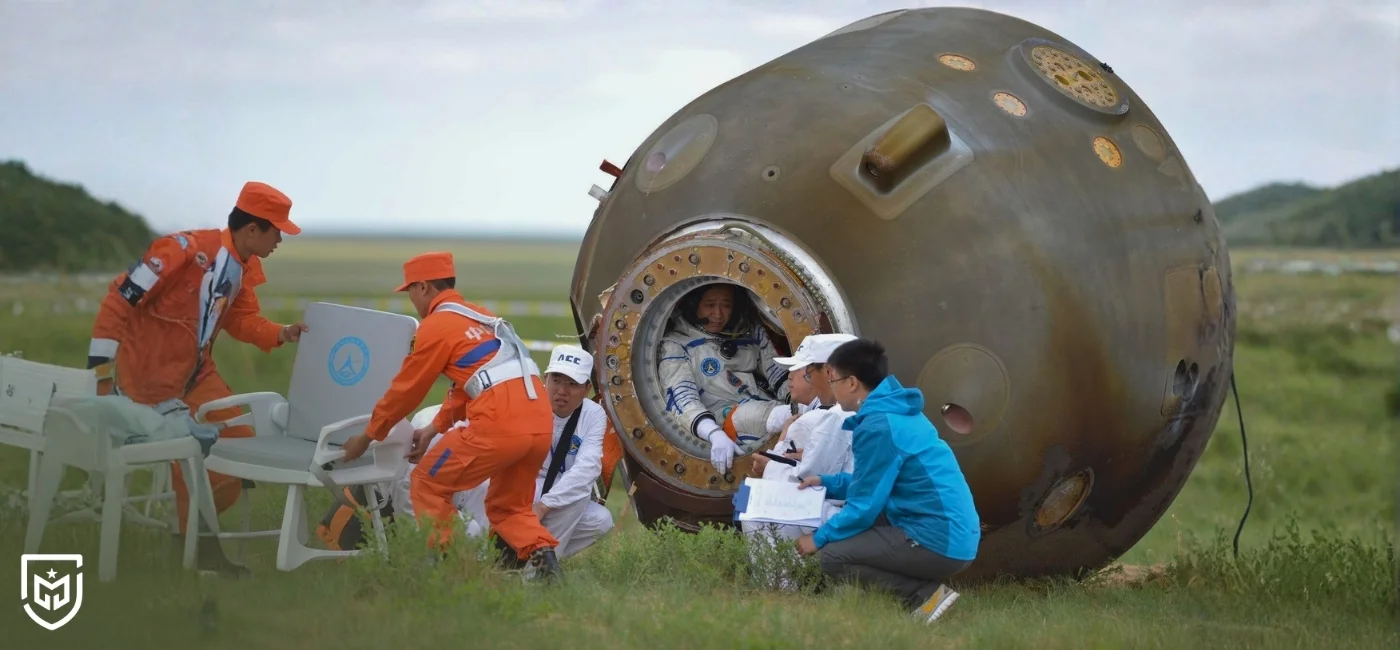
A significant incident has drawn attention to the growing threat of space debris in low Earth orbit. China’s Shenzhou-20 crewed spacecraft, docked with the Tiangong Space Station, sustained damage believed to have been caused by a piece of orbital debris. Following detailed technical assessments, Chinese authorities decided that the spacecraft should return to Earth without astronauts on board.
According to a statement by the China Manned Space Agency (CMSA), the Shenzhou-20 capsule successfully landed at the Dongfeng Landing Site in the Inner Mongolia Autonomous Region. Inspections revealed a small crack on one of the spacecraft’s windows, suspected to be the result of a high-velocity debris impact. Although minor in appearance, such damage posed potential risks during atmospheric reentry, leading to the precautionary decision.
Shenzhou-20 had originally launched on April 24, 2025, transporting a three-member taikonaut crew to the Tiangong Space Station. Their planned return on November 5, 2025, was postponed after the damage was detected. To ensure crew safety, the taikonauts later returned to Earth aboard the Shenzhou-21 spacecraft, which arrived at the station as part of a routine crew rotation mission.
Meanwhile, China maintained uninterrupted operations aboard its space station. The next spacecraft, Shenzhou-22, was dispatched to retrieve the newly arrived crew, in line with China’s six-month rotational mission schedule. The incident once again highlighted the increasing dangers posed by space debris to both crewed and uncrewed missions, reinforcing the need for improved debris monitoring and mitigation strategies in Earth orbit.


The cookies used on our website are used to provide you with a better user experience and to improve our website. You can manage your cookie preferences from the options below.
 Süheyla Yıldız
Post Comment
Comments
No comments yet.
Related News
Swedish-Developed Lunar Neutrals Telescope Delivered to TÜBİTAK SPACE for Moon Mission-1
Japan's RV-X reusable rocket completes first test flight
Turkey's indigenous atomic clock undergoing space testing
NATO Summit Defense Industry Forum Marks New Era in Ankara
Japan's H3-30S Rocket Successfully Deploys French Satellite to Orbit
Turkey updates artificial intelligence strategy based on defense industry success
Artificial Intelligence Uncovers 1,300 Cosmic Anomalies in NASA’s Vast Archive
Land News, Missile and Rocket Systems, Electronic Systems, Naval News, Satellite and Space News