


Satellite and Space News
Missiles and Rockets


BREAKING NEWS
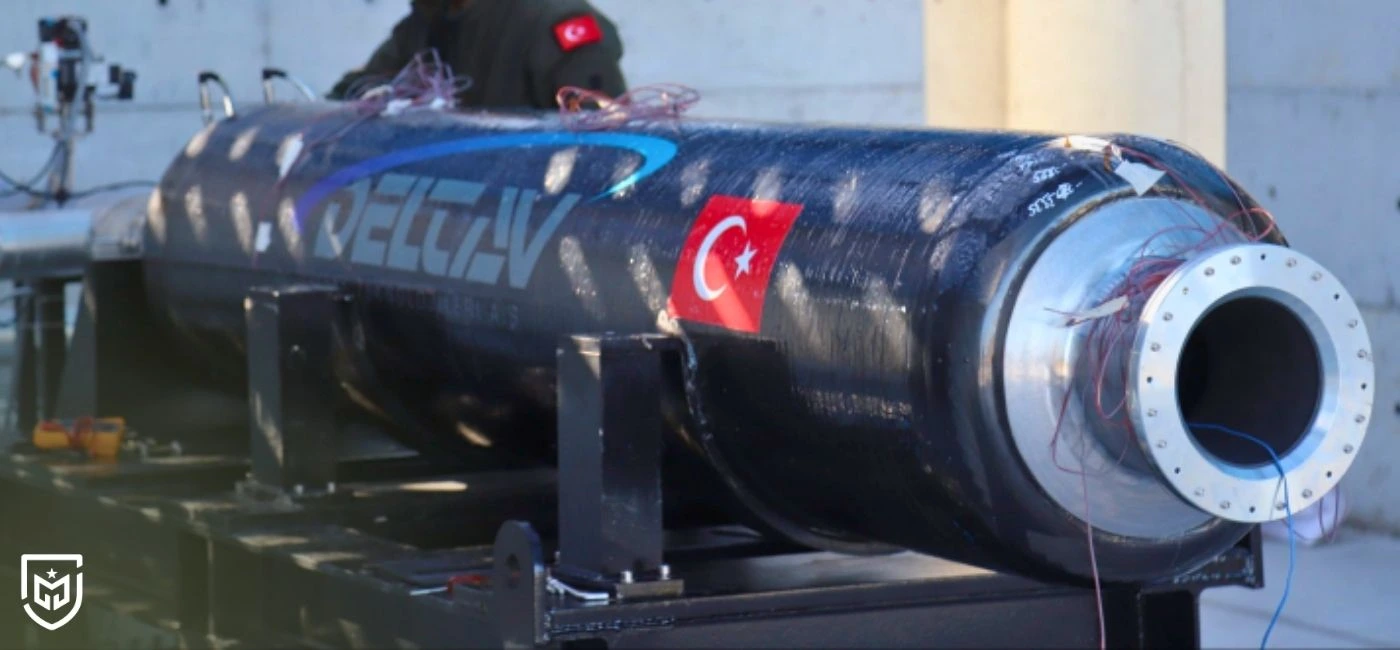
Turkey is taking a historic step toward full independence in space technology. A recently signed agreement between Turkish Aerospace Industries (TUSAŞ) and Delta-V Space Technologies marks the beginning of a new era: for the first time, a Turkish-made satellite will be launched into orbit by a Turkish-made rocket. The project, centered around a high-resolution electro-optical micro-satellite, demonstrates Turkey’s growing technological strength and ambition to become a major player in the global space industry.
Defense industry expert Yusuf Akbaba notes that Delta-V has been developing propulsion and launch systems for years, joining other Turkish companies like ROKETSAN and Baykar, which are also working on space technologies. He explains that Turkey’s reliance on foreign firms such as SpaceX for previous launches has underscored the need for self-sufficiency. “Space is not a domain where you can afford to depend on others,” Akbaba said, emphasizing that in a world of increasing geopolitical tension, countries must control their own critical technologies.
With this project, Turkey aims to master every step of the process — from manufacturing the satellite to launching it, separating stages safely, and positioning it precisely in orbit. Very few countries in the world have achieved such a level of autonomy. According to Akbaba, mastering launch and propulsion systems will have direct benefits for Turkey’s military capabilities, especially in the development of long-range, precision-guided missile systems. “Launching a satellite into orbit and guiding a ballistic missile over long distances rely on the same fundamental technologies,” he explained.
The collaboration between TUSAŞ and Delta-V thus extends far beyond a single space mission. It represents an investment in Turkey’s future defense and aerospace architecture, complementing ongoing projects like the Cenk medium-range ballistic missile and other indigenous rocket programs. By integrating knowledge gained from space exploration into defense applications, Turkey is positioning itself as a strategic technological power in both military and civilian domains.
Through the National Space Program, Turkey has already built a foundation with its domestically produced satellites, ground stations, and aerospace infrastructure. Now, by taking control of its own launches, Ankara not only aims to circumvent technology embargoes but also hopes to become a regional space launch service provider in the coming years.


The cookies used on our website are used to provide you with a better user experience and to improve our website. You can manage your cookie preferences from the options below.
 Rabia Kılıç
Post Comment
Comments
No comments yet.
Related News
Swedish-Developed Lunar Neutrals Telescope Delivered to TÜBİTAK SPACE for Moon Mission-1
Bayraktar AKINCI Successfully Strikes Target with TOLUN-P in Electronic Warfare Environment
Surveyor USV Demonstrates Operational Capability with JAGM Missile at RIMPAC
TUSAŞ expands tactical UAV family with AYAZ platform
US accelerates Maverick air defense missile against hypersonic threats
Defense Minister: S-400 Talks Key to F-35 Return
AKYA Torpedo Successfully Destroys Exercise Target
France integrates anti-UAV rocket system into Rafale fighter jets