


Satellite and Space News


BREAKING NEWS
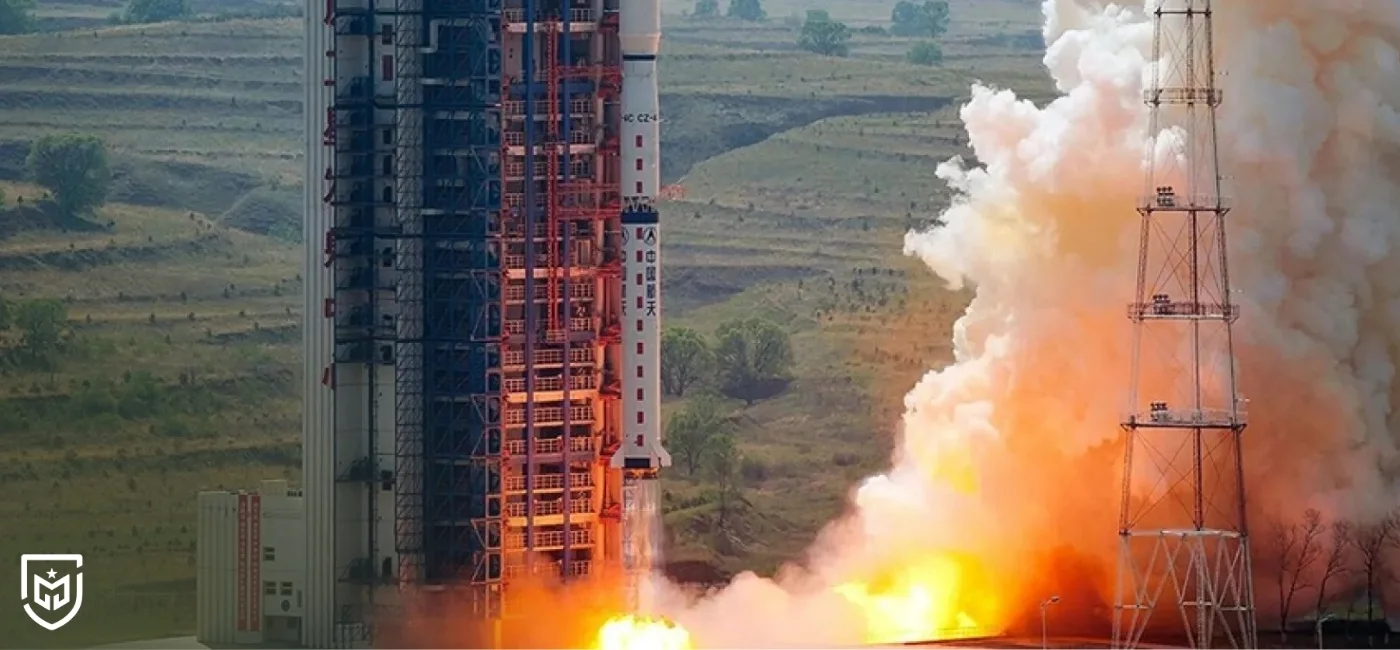
hina has achieved a major milestone at the intersection of space technology and artificial intelligence. The Chinese space technology company Guoxing Aerospace Technology, also known as ADA Space, has successfully integrated Alibaba’s generative artificial intelligence model Qwen3 into a space-based computing network consisting of 12 satellites orbiting the Earth. This development marks a significant breakthrough, as it represents the first time a general-purpose AI model has been deployed and operated directly on an active satellite constellation.
According to China’s Xinhua news agency, Vang Yabo, Vice President of the Chengdu-based company, shared details of the experiment during a conference held in Guangzhou. He explained that commands and questions sent from ground control were processed by the AI model in orbit, which then performed reasoning tasks and transmitted the results back to Earth. Remarkably, the entire process—from issuing commands on the ground to receiving AI-generated outputs from space—was completed in just two minutes.
Company officials emphasized that this test is considered a “first-of-its-kind” demonstration, showcasing how a general-purpose AI system can be uploaded from Earth and used operationally within a satellite network. ADA Space launched its initial 12 space-computing satellites into low Earth orbit in May 2025. Under its ambitious Star-Compute project, the company aims to establish a massive space-based computer network consisting of 2,800 satellites by 2025. Of these, 2,400 satellites will be dedicated to AI inference tasks, while 400 will support AI training operations.
Meanwhile, global competition in space-based AI technologies continues to intensify. In November 2025, Washington-based space computing company Starcloud equipped a satellite with NVIDIA H100 GPUs and deployed the NanoGPT model developed by Andrej Karpathy, one of the founders of OpenAI. These developments signal that space-based artificial intelligence systems are likely to play a critical role in future civilian, scientific, and defense-related applications.


The cookies used on our website are used to provide you with a better user experience and to improve our website. You can manage your cookie preferences from the options below.
 Süheyla Yıldız
Post Comment
Comments
No comments yet.
Related News
ROKETSAN Emphasizes International Cooperation at 77th Space Congress
HÜRSAT-1 Satellite Set for Launch in Mid-2027
TUSAŞ Unveils HÜRSAT: New Generation Earth Observation Satellite Family
ASELSAN's GÖKBAĞI constellation: 198-satellite project unveiled
TUSAŞ and ROKETSAN Sign HÜRSAT-2 Satellite Agreement
Swedish-Developed Lunar Neutrals Telescope Delivered to TÜBİTAK SPACE for Moon Mission-1
Japan's RV-X reusable rocket completes first test flight
Turkey's indigenous atomic clock undergoing space testing