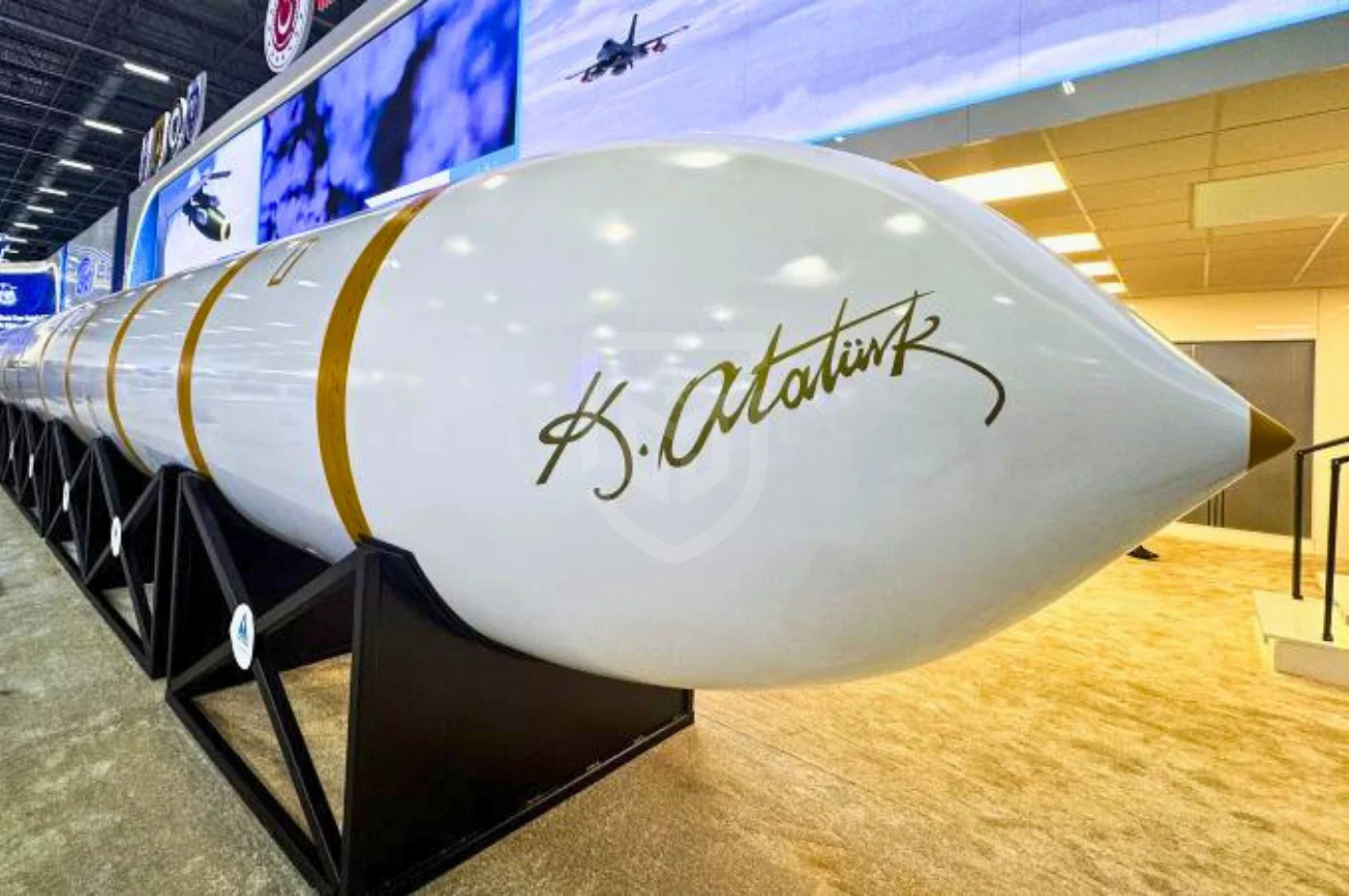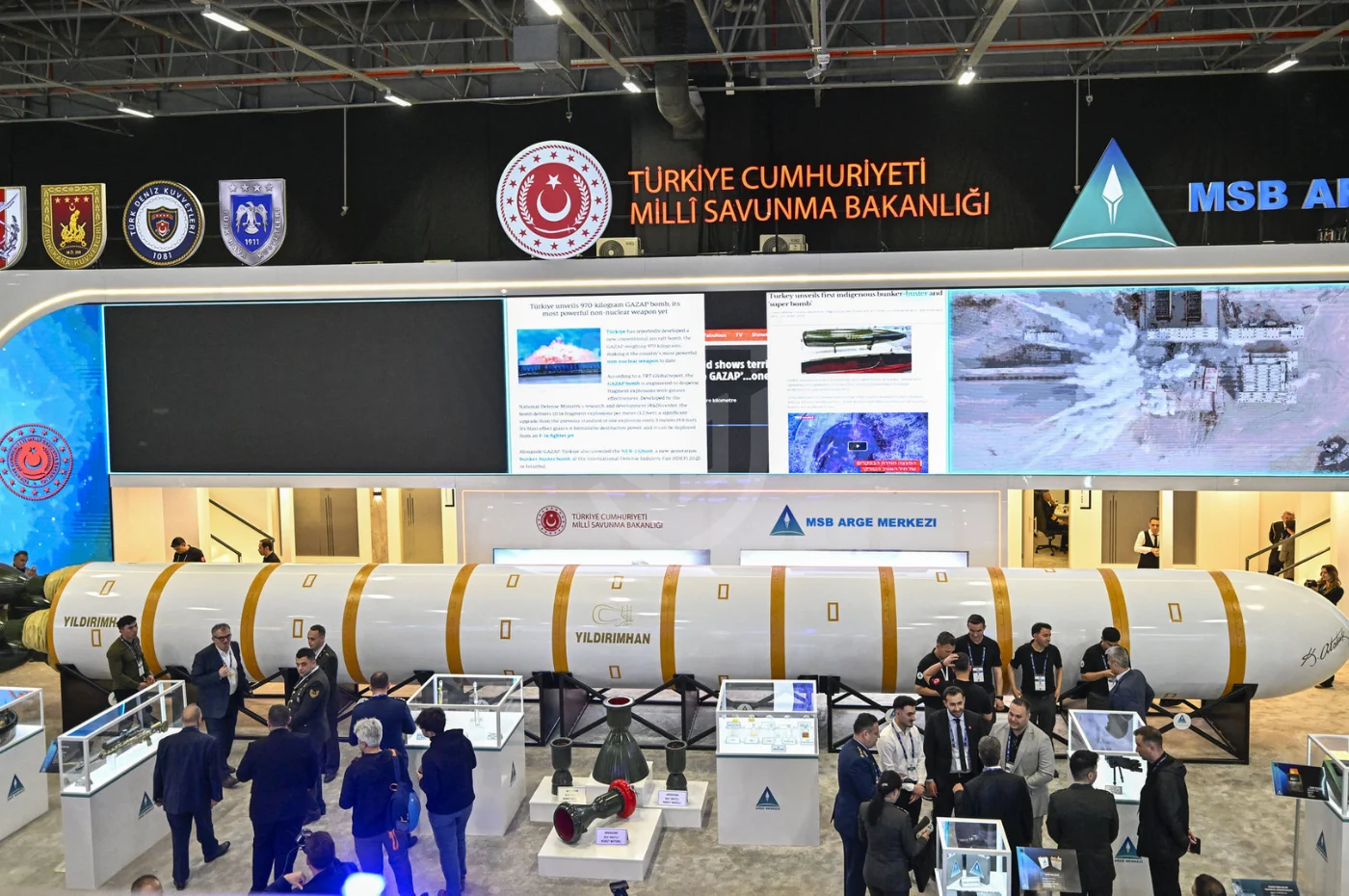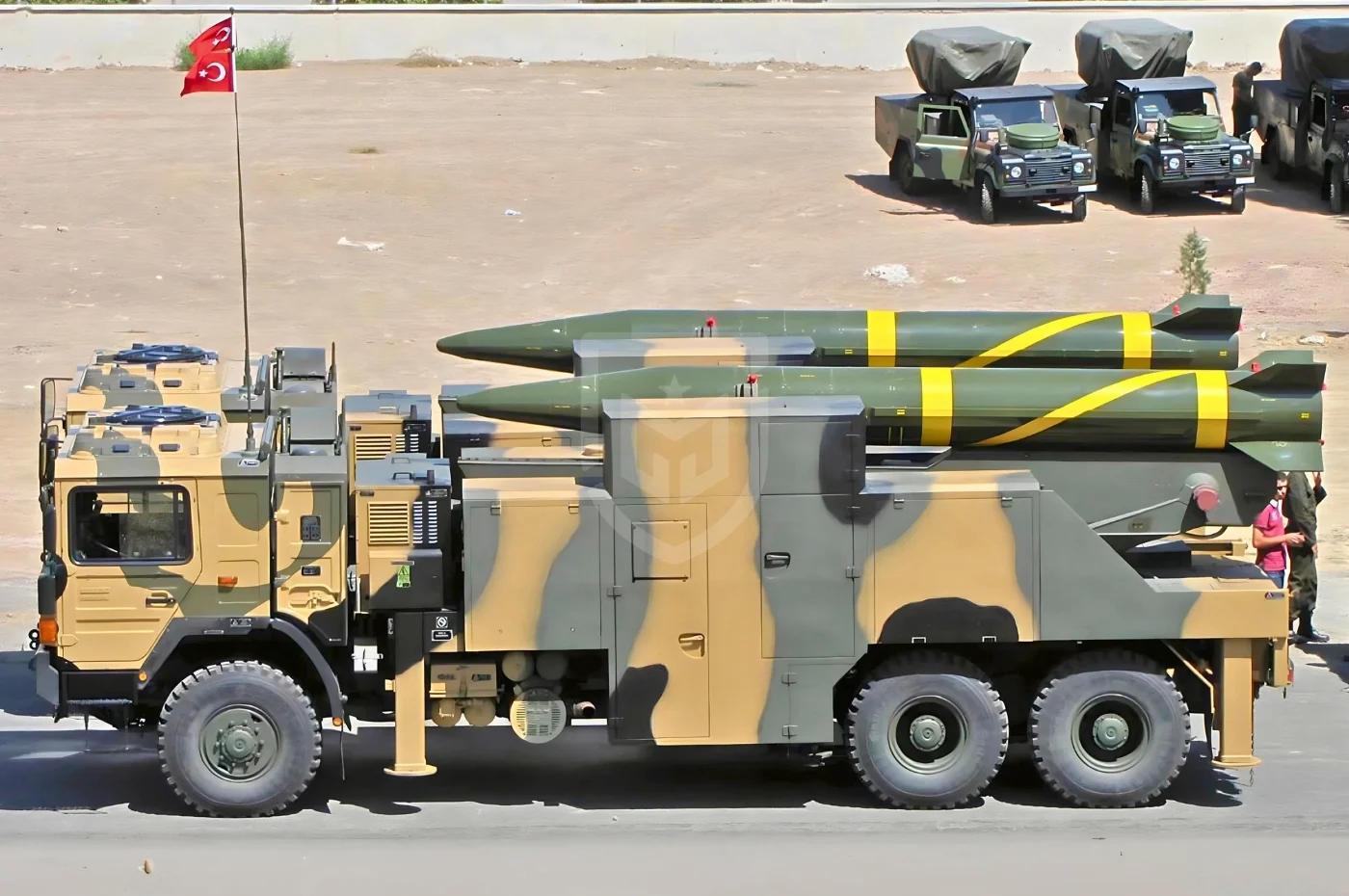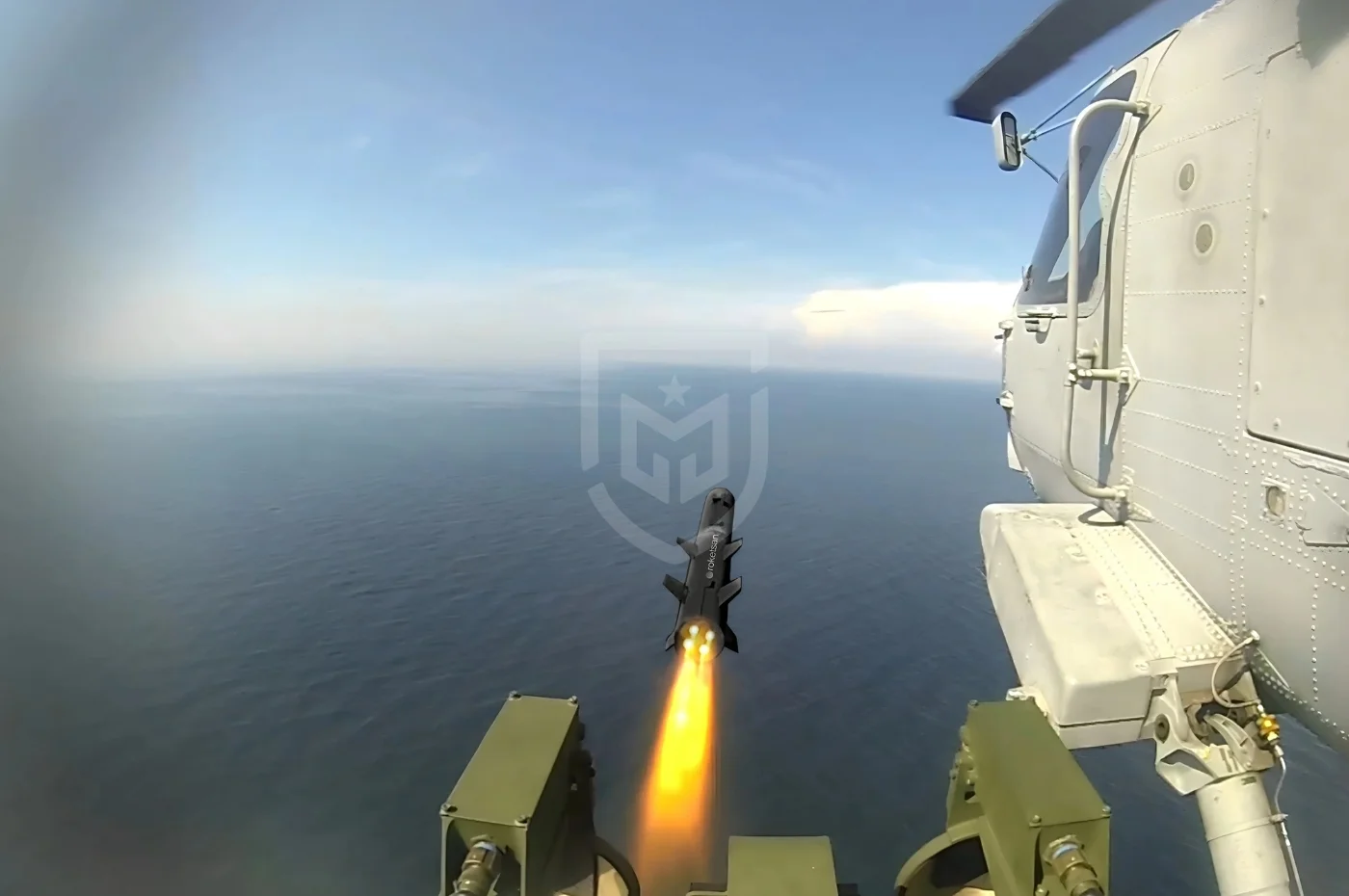

Yıldırımhan represents a significant step in Türkiye’s long-range missile ambitions. While Türkiye has previously developed and tested shorter- and medium-range ballistic missile systems such as Bora, Tayfun, and Cenk, Yıldırımhan is described in open sources as a much longer-range system aimed at strategic deterrence and deep-strike capability.
Operationally, the missile’s role is not tactical battlefield fire support but strategic deterrence. A missile with a declared range of approximately 6,000 km would theoretically allow engagement of high-value fixed targets far beyond Türkiye’s immediate region. These could include air bases, command-and-control centers, strategic logistics hubs, missile-defense infrastructure, military ports, and other critical facilities. There is no verified public information indicating nuclear warhead integration; therefore, in open-source analysis, Yıldırımhan should be assessed as a conventionally armed strategic ballistic missile project unless official information states otherwise.
From a doctrine perspective, a system like Yıldırımhan depends on more than the missile itself. Its real effectiveness would require a complete targeting chain, including intelligence, surveillance, reconnaissance, satellite or long-range sensor support, secure communications, mission planning software, command authorization procedures, and post-strike assessment. Public sources do not yet clarify which Turkish command-and-control architecture, datalink structure, or targeting network Yıldırımhan would use.
One of the most distinctive technical claims about Yıldırımhan is its liquid-fuel propulsion. Public reports have described it as Türkiye’s first liquid-fueled, hypersonic-speed long-range missile system. The reported propulsion architecture includes multiple rocket motors, while the fuel system has been associated with high-energy liquid propellants such as nitrogen tetroxide-based oxidizers and hydrazine-family fuels. Exact motor performance, staging, fuel mass, burn duration, and flight profile are not publicly available.
The engagement process of such a ballistic missile would generally include target-coordinate preparation, mission planning, launch preparation, boost phase, midcourse ballistic flight, re-entry, and terminal impact phase. However, Yıldırımhan’s actual guidance method, navigation architecture, terminal maneuver capability, penetration aids, decoys, or re-entry vehicle design have not been publicly confirmed.
Survivability is another area where public information is limited. Long-range ballistic missiles normally require protected basing, mobility, concealment, rapid mission planning, secure communications, and hardened support infrastructure. Whether Yıldırımhan will be launched from a mobile transporter-erector-launcher, a fixed site, or another launch architecture has not been officially clarified.
Against modern threats, the missile’s main theoretical advantages would be range, speed, and strategic depth. Ballistic missiles are generally difficult targets for air-defense systems because of their high speed and steep terminal trajectory. However, advanced missile-defense networks using early-warning radars, space-based sensors, exo-atmospheric interceptors, and terminal-phase interceptors are specifically designed to counter such threats. Since Yıldırımhan’s penetration features are not public, its actual ability to defeat modern missile defense cannot be assessed with certainty.
The most accurate public assessment is that Yıldırımhan is a strategic missile development program with highly ambitious performance targets. It has not yet been publicly confirmed as a fully tested, serially produced, or operationally deployed weapon system.
Detailed Technical Information
Dimensions and Weight
- No official, fully verified technical data sheet has been released for Yıldırımhan’s length, diameter, launch weight, stage configuration, or total mass. Some open-source claims may exist, but without an official manufacturer or ministry technical document, these figures should not be treated as confirmed.
Propulsion System
- Yıldırımhan is described as a liquid-fueled long-range ballistic missile. Open-source reporting has associated the missile with high-energy liquid propellants, including nitrogen tetroxide-based oxidizers and hydrazine-family fuels. The system has also been described with a multi-engine rocket propulsion architecture. Public information does not include thrust level, specific impulse, chamber pressure, burn time, fuel mass, engine cycle, or staging details.
Performance
- The publicly stated range is approximately 6,000 km. This places the missile near or within the intercontinental ballistic missile category, as the commonly used ICBM threshold is above 5,500 km. Reported speed figures include hypersonic values, but public sources do not clearly specify whether these apply to boost phase, midcourse flight, re-entry, or terminal phase. Confirmed flight-test range, accuracy, CEP, launch reaction time, and operational flight profile are not publicly available.
Sensors and Detection Capability
- Yıldırımhan is not a sensor platform in the conventional sense. As a ballistic missile, it would rely on external targeting and mission-planning infrastructure. Public sources do not confirm whether it has terminal seekers, radar guidance, optical guidance, astro-inertial navigation, GNSS updates, or other advanced guidance systems.
Target Detection, Tracking, and Identification
- No public data confirms Yıldırımhan’s ability to detect, track, or identify targets independently. Its effective use would depend on external intelligence and targeting networks. Public sources do not confirm whether it can engage mobile targets, receive in-flight target updates, or perform terminal target discrimination.
Guidance and Fire Control
- The guidance architecture has not been officially disclosed. Long-range ballistic missiles may use inertial navigation, satellite-assisted correction, astro-inertial correction, terminal updates, or a combination of these methods. For Yıldırımhan, none of these have been publicly confirmed. Fire-control software, mission-planning architecture, target-coordinate processing, and launch authorization procedures are also not public.
Warhead / Payload
- Open-source reports describe Yıldırımhan as having a heavy warhead capacity, reportedly around 3 tons. The exact warhead type is not publicly known. There is no confirmed public information on whether the missile uses high-explosive, penetrator, fragmentation, thermobaric, submunition, or other warhead options. There is also no verified public information indicating nuclear warhead integration.
Command, Control, and Datalinks
- The missile’s command-and-control integration has not been publicly disclosed. It is not known whether Yıldırımhan will be connected to a national strategic command network, NATO-linked infrastructure, independent secure communication architecture, or a dedicated Turkish long-range strike command system.
Electronic Warfare and Countermeasure Resistance
- Public sources do not provide confirmed information about electronic warfare resistance, anti-jamming navigation, GNSS-denied operation, cyber protection, decoys, penetration aids, or missile-defense countermeasures.
Deployment, Mobility, and Logistics
- The launch platform has not been officially clarified. Because Yıldırımhan is described as a liquid-fueled missile, logistics, storage, fueling safety, maintenance, and launch preparation are especially important. Public sources do not confirm whether the missile is road-mobile, silo-based, transported separately from its fuel system, stored fueled, or prepared immediately before launch.
Crew and Operating Concept
- The number of personnel required to operate Yıldırımhan has not been publicly disclosed. Battery structure, command vehicle, support vehicles, fueling units, maintenance teams, and security units are also not publicly known.
Frequently Asked Questions
What is the Yıldırımhan missile used for?
- Yıldırımhan is intended as a long-range strategic strike and deterrence missile. Unlike tactical battlefield missiles, it is designed for very deep-range target engagement. Its main value would be to create deterrence by showing that high-value targets at great distance could be reached.
What is the range of Yıldırımhan?
- The publicly stated range is around 6,000 km. This range places it in or near the intercontinental ballistic missile category. However, it has not yet been publicly confirmed through fully disclosed operational flight-test data.
Is Yıldırımhan a hypersonic missile?
- It has been described with hypersonic speed figures. Since ballistic missiles naturally reach very high speeds during re-entry, Yıldırımhan may be described as a hypersonic-speed ballistic missile. This does not necessarily mean it is a hypersonic glide vehicle or a hypersonic cruise missile.
What fuel does Yıldırımhan use?
- Yıldırımhan is described as a liquid-fueled missile. Public reports mention high-energy liquid propellants, including nitrogen tetroxide-based oxidizers and hydrazine-family fuels. Exact fuel mixture, storage concept, fueling procedure, and operational readiness model are not publicly disclosed.
How large is Yıldırımhan’s warhead?
- Open-source reporting describes a heavy warhead capacity of approximately 3 tons. The warhead type is not publicly confirmed.
Is Yıldırımhan operational?
- No verified public information confirms that Yıldırımhan is operational. It should be considered a development and testing-stage strategic missile project until official information confirms serial production and deployment.
How is Yıldırımhan different from Tayfun or Cenk?
- Tayfun and Cenk are associated with shorter- or medium-range ballistic missile capabilities. Yıldırımhan, with its declared 6,000 km range, belongs to a much more strategic category. It is also described as liquid-fueled, which separates it technologically from many publicly known Turkish solid-fueled ballistic missile systems.
What are Yıldırımhan’s closest equivalents?
- In range category, Yıldırımhan is closer to long-range and intercontinental ballistic missile systems operated by major missile powers. However, because its test history, operational status, accuracy, re-entry system, and deployment architecture are not publicly known, it should not be directly equated with mature ICBM systems already in service.
Sources
- Turkish Ministry of National Defense statements on Yıldırımhan and SAHA 2026
- TRT Haber reporting on Yıldırımhan’s public display and technical claims
- Hürriyet / Bigpara reporting on MSB statements about Yıldırımhan testing and fuel technology
- Anadolu Agency coverage of SAHA 2026 and Yıldırımhan display
- The War Zone analysis on Türkiye’s long-range ballistic missile ambitions