



Air Forces News
Weapons and Ammunition


BREAKING NEWS
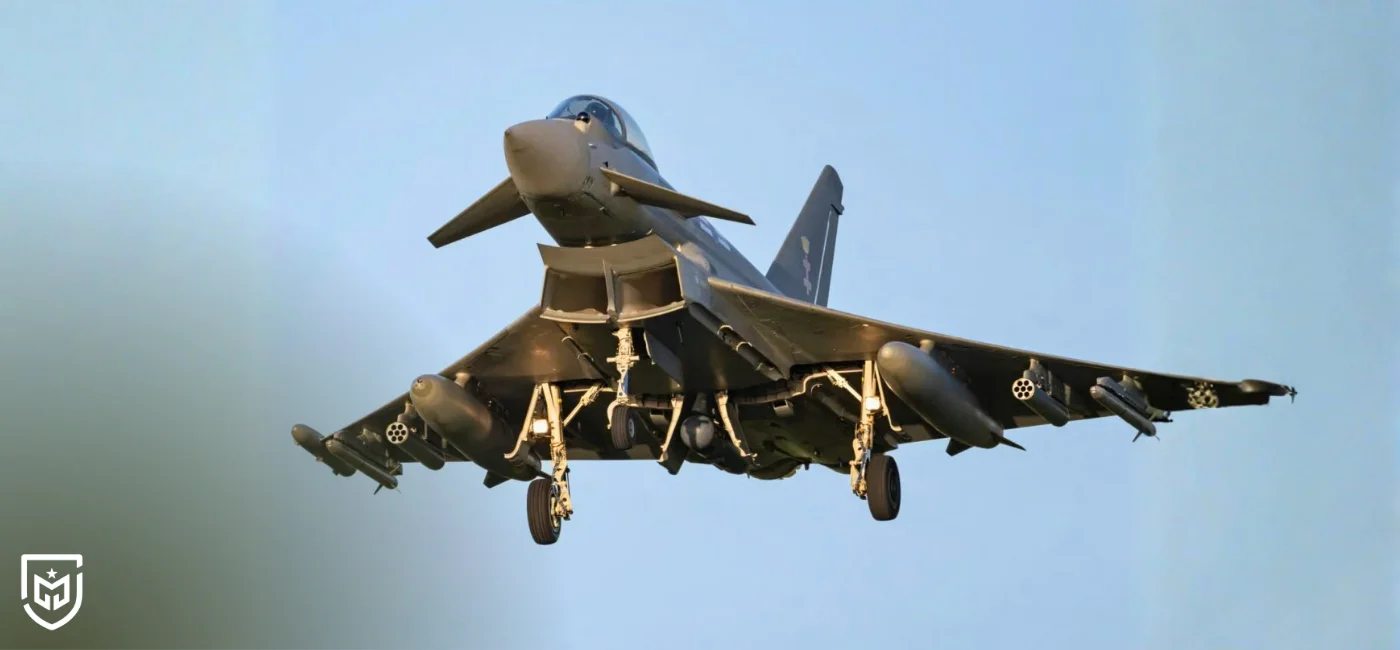
The United Kingdom has integrated the Advanced Precision Kill Weapon System, known as APKWS, into Eurofighter Typhoon fighter jets to counter the growing threat of unmanned aerial vehicles in the Middle East. The system has entered operational use with Royal Air Force Typhoon aircraft and is designed to provide a lower-cost alternative to expensive air-to-air missiles when engaging small and medium-sized UAVs.
According to the UK Ministry of Defence, APKWS guided rockets are now being used by RAF Typhoon aircraft to help protect British citizens, regional partners and UK interests. The capability is currently operational on Typhoon jets assigned to the 9th Squadron. Its deployment reflects the growing need for affordable and sustainable air defence solutions against drone threats.
The APKWS integration was completed in a short period through cooperation between the UK Ministry of Defence, BAE Systems and QinetiQ. One of the most notable aspects of the program was the speed of implementation, with the system moving from testing to operational use in less than two months. A successful live-fire test against ground targets was conducted in March, followed by air target engagement tests carried out by pilots from the 41st Test and Evaluation Squadron in April.
UK Defence Readiness and Industry Minister Luke Pollard described the rapid entry of the system into service as an important achievement. He stated that the new capability will allow the RAF to shoot down more drones at lower cost. Pollard also emphasized that the Typhoon fleet remains a key element of both UK air defence and NATO’s wider air defence architecture.
APKWS uses laser guidance technology to convert standard 70 mm unguided rockets into precision-guided, low-cost munitions. This approach offers a more sustainable engagement model against mass UAV attacks. Using traditional air-to-air missiles against small and inexpensive drones creates a high cost burden, while APKWS provides a more economical way to neutralize the same types of threats.
Images shared by the UK Ministry of Defence showed Typhoon aircraft stationed at RAF Akrotiri in Southern Cyprus carrying a mixed weapons load. The aircraft were seen with MBDA Meteor and AIM-132 ASRAAM air-to-air missiles, as well as APKWS-guided 70 mm rocket pods. This configuration allows the Typhoon to respond to both high-end aerial threats and lower-cost UAV targets with different munition options.
QinetiQ CEO Steve Wadey said the company supported the integration process with engineering expertise and live-fire testing. BAE Systems Air Sector Managing Director Simon Barnes stated that the APKWS integration demonstrates the versatility of the Typhoon platform. These assessments show that existing fighter aircraft can be rapidly adapted to new threat environments through targeted modernization.
The UK has also reported that RAF assets operating in the region have conducted more than 2,500 flight hours. In addition, Sky Sabre systems in Saudi Arabia, Lightweight Multirole Missile systems in Bahrain, and Rapid Sentry and ORCUS systems in Kuwait are being maintained at a high level of readiness. This shows that London is strengthening its air defence and counter-UAV posture in the Middle East through a layered structure.
The APKWS integration follows the UK’s recent decision to acquire Skyhammer interceptor missiles against Shahed-type loitering munitions and a £650 million investment program for the modernization of the RAF Typhoon fleet. These developments underline that drone warfare has become a central threat area for modern air forces and that countries are increasingly seeking solutions that are affordable, quickly integrated and sustainable.
The integration of APKWS into the Eurofighter Typhoon highlights the rising importance of cost-effective UAV hunter capabilities in modern air warfare. By combining low-cost rockets with precision guidance, fighter aircraft gain a new engagement option against dense drone threats. This step may also signal a broader shift among NATO countries toward more flexible munition architectures for countering UAV threats.


The cookies used on our website are used to provide you with a better user experience and to improve our website. You can manage your cookie preferences from the options below.
 Süheyla Yıldız
Post Comment
Comments
No comments yet.
Related News
Skyfall II Exercise: U.S. Army Demonstrates UAV Defense Capabilities in Germany
STM's Swarm UAV System Demonstrates Operational Success at Ateş Serbest-2026
TUSAŞ Kamikaze UAV Systems Achieve Success in Exercise Ateş Serbest-2026
Fire Free-2026 Exercise Successfully Completed
Spain Plans to Purchase 15 Additional Hürjet Advanced Trainers
Baykar platforms demonstrated capabilities at Ateş Serbest-2026 exercise
Turkey and Spain to Develop Joint Version of Hürjet Aircraft
Unmanned Naval and Aerial Vehicles Demonstrated Integrated Command Control Coordination