



Satellite and Space News
Global Developments


BREAKING NEWS
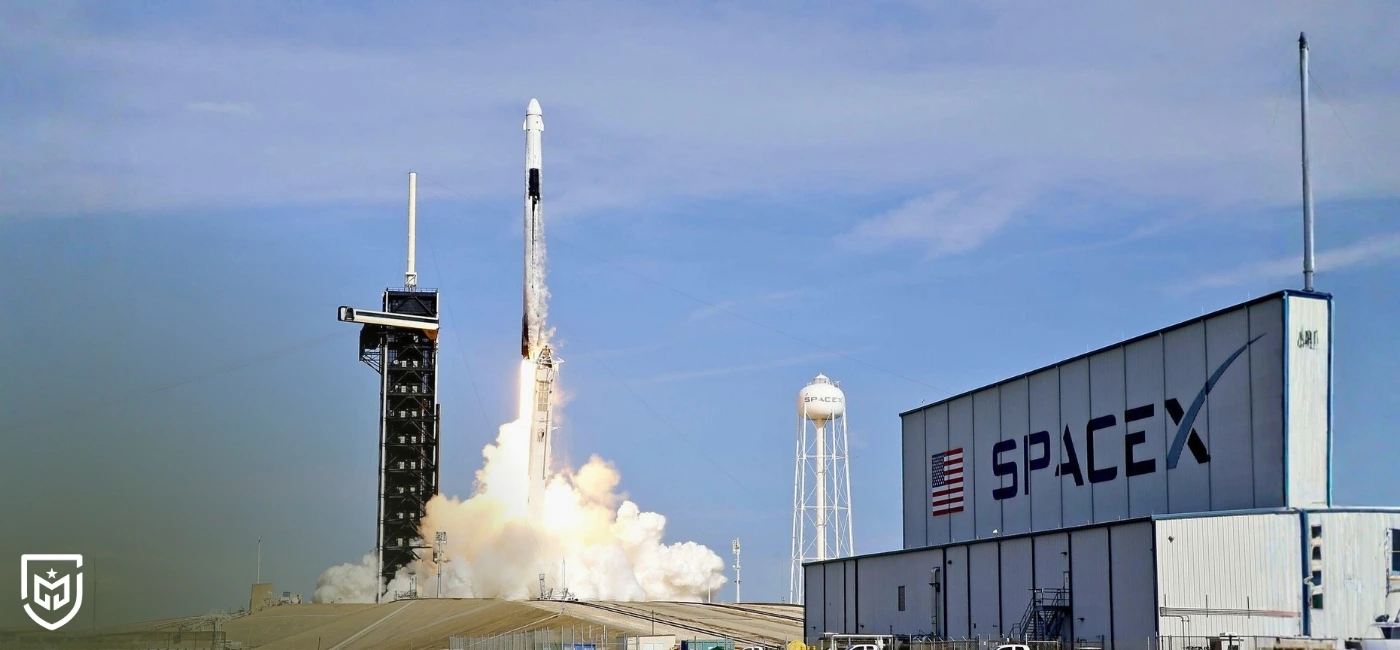
The United States continues to accelerate its efforts to strengthen space-based defense capabilities. In this context, the US Space Command, through its Space Systems Command (SSC), announced that it has awarded a major launch services contract to SpaceX for next-generation missile warning and tracking satellites. Valued at approximately $739 million, the agreement falls under the Pentagon’s National Security Space Launch program and aims to reduce mission costs by leveraging commercial rocket launch services.
The satellites to be deployed will operate in Low Earth Orbit (LEO) and are designed to significantly enhance the detection and tracking of ballistic and hypersonic missile threats. Equipped with advanced infrared sensors, these space assets will provide earlier warning and more precise tracking data, enabling faster decision-making and improved integration with existing missile defense systems. SSC officials emphasize that the program will play a critical role in modernizing the United States’ layered missile defense architecture.
The contract covers three distinct launch mission groups. Under the SDA-2 mission, two launches are planned to deploy a total of 18 “Tracking Layer” satellites manufactured by L3Harris, along with eight F2-class spacecraft developed by Millennium Space Systems. These satellites will form part of a broader constellation dedicated to continuous global missile tracking.
The SDA-3 mission includes two additional launches to place 18 tracking satellites produced by Lockheed Martin into orbit. These spacecraft are expected to further expand coverage and resilience, ensuring uninterrupted monitoring of potential missile launches across multiple regions.
The third mission, designated NTO-5, will be conducted on behalf of the National Reconnaissance Office (NRO) and involves a classified payload. While specific details have not been disclosed, the launches are scheduled to take place between early 2027 and mid-2028. According to SSC, SDA-2 launches are expected to begin in late 2026, followed by SDA-3 missions in mid-2027.
Defense analysts note that this program highlights the growing reliance of the US military on commercial space providers. SpaceX’s rapid launch cadence and reusable rocket technology are seen as key enablers for deploying large constellations efficiently and cost-effectively, setting a precedent for future national security space initiatives.


The cookies used on our website are used to provide you with a better user experience and to improve our website. You can manage your cookie preferences from the options below.
 Süheyla Yıldız
Post Comment
Comments
No comments yet.
Related News
Altınay Defense Group Transitions to New Management Structure
BAE Systems and Lockheed Martin Unveil Blizzard Multi-Mission Unmanned Aircraft
Anduril's Ohio Facility Produces First YFQ-44A Fury Unmanned Combat Aircraft
BAE Systems Raises Outlook as Global Defense Demand Continues to Surge
South Korea's envoy highlights KAAN fighter jets as cornerstone of defense partnership with Türkiye
Swedish-Developed Lunar Neutrals Telescope Delivered to TÜBİTAK SPACE for Moon Mission-1
ASELSAN's Electro-Optical System Integrated into South Africa's Mwari Aircraft
TAI Chief: Turkey Shaping NATO's Future Security Architecture