






Electronic Systems
Global Developments


BREAKING NEWS
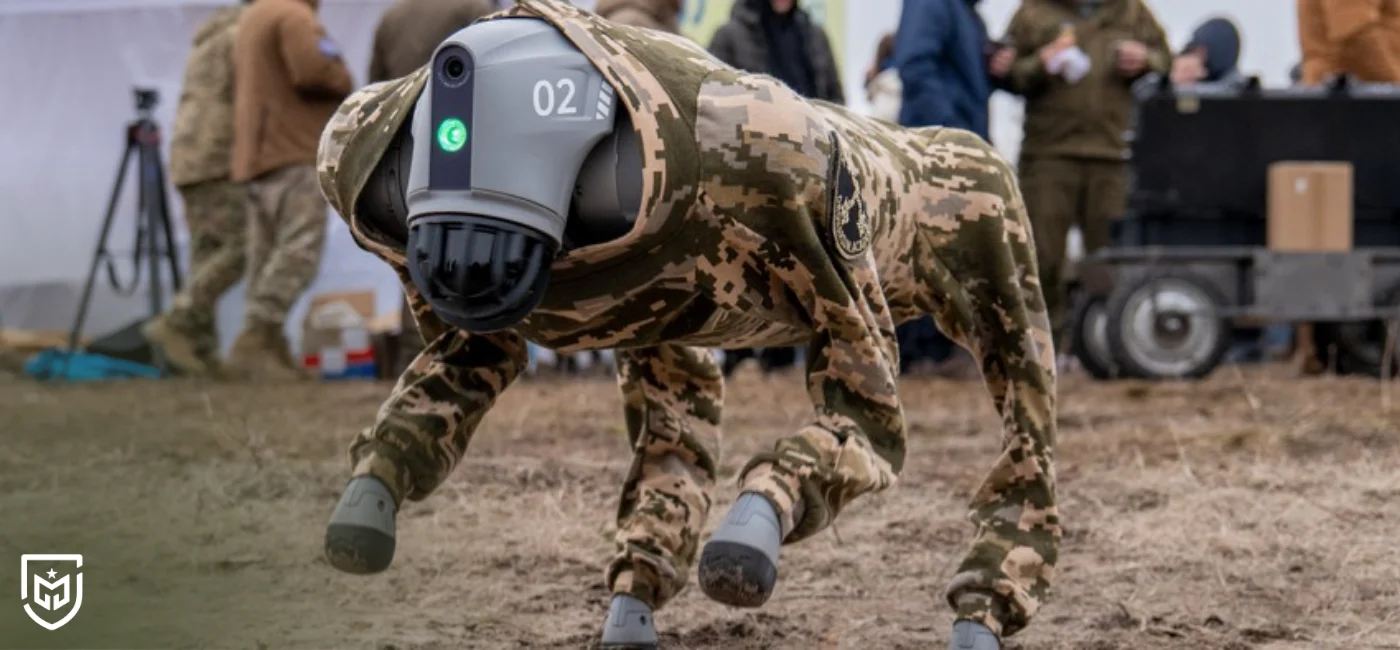
The U.S. Department of Defense is accelerating efforts to develop smarter, more independent and self-organizing unmanned systems for future battlefields. According to Defense One, one of the Pentagon’s main goals is to allow a limited number of human operators to supervise far larger numbers of robots and drones at the same time. In this context, new DARPA-led projects are focusing on higher levels of autonomy, distributed decision-making and the ability of robotic systems to carry out complex missions together.
Two DARPA efforts highlighted in the report are central to this future autonomous warfare vision. The “Materials for Physical Compute in Untethered Robotics” initiative aims to make robots smarter without requiring constant connection to vulnerable data centers or consuming excessive battery power through continuous data transmission. Another program, “Decentralized Artificial Intelligence through Controlled Emergence,” known as DICE, focuses on enabling robots to communicate directly with one another, form dynamic teams according to mission needs and coordinate complex tasks without relying entirely on centralized control.
The Pentagon’s budget planning for this field also shows the scale of its ambitions. The Defense Autonomous Working Group reportedly has a current budget of $226 million, while a new 2027 spending proposal could raise this figure to as much as $54 billion. This reflects how the United States views autonomous systems and drone warfare not merely as a technological upgrade, but as a core element of future military organization and combat power.
However, the challenge facing the Pentagon is not simply buying more drones. The report also includes assessments from retired U.S. Army General and former CIA Director David Petraeus and researcher Isaac Flanagan. They note that during past U.S. operations in the Middle East, the main limiting factor for drone use was not the number of platforms, but the trained personnel and organizational structure required to operate them. A Predator-type continuous surveillance orbit required around 150 personnel, showing that training, maintenance, doctrine and acquisition processes are just as important as the platforms themselves.
For this reason, the new DARPA projects aim not only to build improved versions of existing drones, but also to rethink the structure of machine intelligence. The Untethered Robotics initiative focuses on making autonomous systems less dependent on external connections, faster in response and more efficient in terms of energy use. Rather than viewing robots only as mechanical systems made up of metal bodies, motors, cables and sensors, the program explores new approaches to machine intelligence based on materials, components, core-level design, chemistry and physics.
The DICE program, meanwhile, aims to allow robots to coordinate with one another in a peer-to-peer structure without depending on a single central command node. This approach could enable large numbers of air, land or naval robots to form mission-based teams according to changing battlefield conditions. Instead of one human operator directly controlling each platform, future command models may involve operators supervising robotic groups at a higher mission-management level.
The Pentagon’s work on robotic warfare is not limited to DARPA. The Defense Innovation Unit, the Pentagon’s innovation arm, is also running a competition focused on controlling drones through simple natural language commands. This would allow an operator to give instructions to a drone in a more intuitive way, similar to issuing orders to a soldier or interacting with an AI assistant, rather than using complex control interfaces. Such a capability could reduce operator workload in scenarios where multiple unmanned systems are deployed simultaneously.
The report also emphasizes that technology is moving faster than doctrine. Developing, acquiring and fielding autonomous systems is only one part of the challenge. The U.S. military must also determine which missions these systems will perform, what command structures will control them, how personnel will be trained, and what maintenance models will support them in the field. The recent announcement by U.S. Southern Command of an “Autonomous Warfare Command” points to growing institutional efforts to deploy autonomous systems more effectively.
The Pentagon’s autonomous warfare vision represents a broad transformation that goes far beyond producing more drones. Artificial intelligence, decentralized robotic coordination, natural language commands, energy efficiency, reduced operator workload and new military doctrines are all key parts of this shift. As modern conflicts such as the Russia-Ukraine War demonstrate the battlefield impact of unmanned systems, the United States is preparing for future combat environments with smarter, more resilient and self-organizing robotic platforms.


The cookies used on our website are used to provide you with a better user experience and to improve our website. You can manage your cookie preferences from the options below.
 Süheyla Yıldız
Post Comment
Comments
No comments yet.
Related News
SSB Sector Meeting: Focus on Supply Chain and Production Capabilities
Turkish defense industry signed 15 billion dollars in new contracts in 2026
SSB Hosts Second Supply Chain Strengthening Summit
Skyfall II Exercise: U.S. Army Demonstrates UAV Defense Capabilities in Germany
IDA Turkey 2026 Defense and Aviation Industrial Cooperation Days Launched
SSB Chief: Transparent Licensing Will Strengthen Defense Cooperation
STM's Swarm UAV System Demonstrates Operational Success at Ateş Serbest-2026
ÇAKIR Cruise Missile Supply Contract Signed