




Missiles and Rockets
Global Developments


BREAKING NEWS
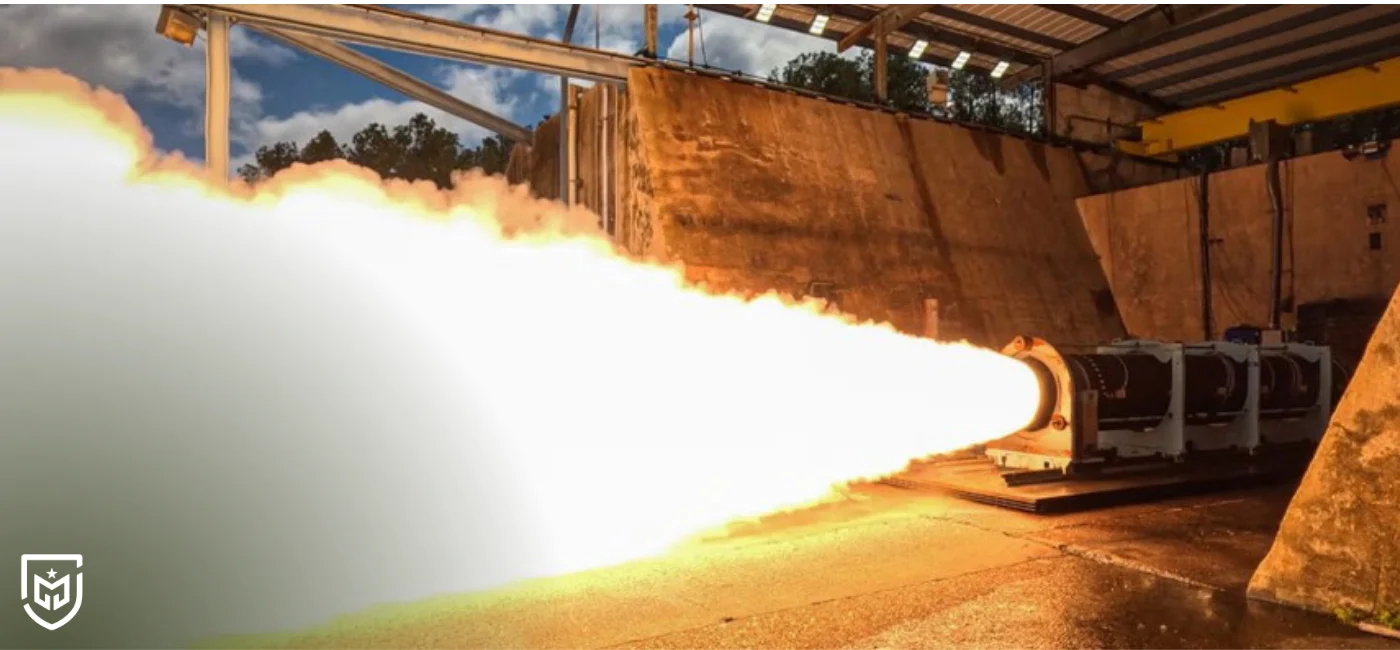
The U.S. Department of Defense has completed a $1 billion investment in the missile production unit of L3Harris Technologies. According to Defense One, the investment was made ahead of the planned initial public offering of the company’s Missile Solutions unit. The move is seen as an important part of Washington’s effort to increase U.S. capacity in solid rocket motors, munitions supply and missile production.
The investment was structured as convertible preferred securities. If L3Harris’ Missile Solutions unit becomes an independent publicly traded company after the planned IPO, the Pentagon’s investment will convert into common stock. The Defense Department will also receive warrants allowing it to purchase additional shares in the new company. L3Harris said it expects to retain about an 80 percent ownership stake in the future company.
The Missile Solutions unit includes a major part of the defense portfolio of Aerojet Rocketdyne, which L3Harris acquired in 2023. Aerojet Rocketdyne was one of the two key U.S. suppliers of rocket propulsion systems for missile and space launch programs. The other major supplier was Orbital ATK, which was acquired by Northrop Grumman in 2018. For this reason, L3Harris’ missile unit is considered a critical part of the U.S. defense industrial supply chain.
The Pentagon’s direct investment also reflects growing pressure on the defense industry caused by rising demand for solid rocket motors. Wars in Ukraine and the Middle East have rapidly consumed ammunition stocks and increased the need for the United States and its allies to expand missile, rocket and munitions production capacity. Solid rocket motors are critical components for a wide range of systems, from air defense missiles and tactical munitions to long-range precision strike weapons and space launch vehicles.
L3Harris executives said the funds from the Pentagon investment, together with proceeds from the planned IPO, will largely be used to expand and modernize the company’s rocket production facilities. The company aims to increase capacity at sites in Camden, Arkansas; Huntsville, Alabama; and Orange, Virginia. These facilities are among the important centers of the U.S. missile and munitions production infrastructure.
The investment is also part of a broader U.S. government trend toward taking direct equity positions in companies involved in defense and strategic technologies. According to the report, the Pentagon’s investment in L3Harris Missile Solutions followed similar equity investments in rare earth suppliers and chipmaker Intel. The Trump administration has reportedly made direct investments in 10 companies so far. This approach shows that Washington is trying to strengthen critical defense supply chains not only through contracts, but also through capital support.
For the United States, one of the most important outcomes of this move is its connection to defense industrial base resilience. Recent high-intensity conflict scenarios, long-term ammunition consumption and heavy demand for air defense systems have shown that traditional production capacity may not be sufficient. The investment in L3Harris’ missile unit aims to build more flexible, faster and more scalable capacity, especially in rocket motor production, which has become a key bottleneck.
If the Missile Solutions unit becomes a separate publicly traded company, it could create a major new player focused on missile and rocket motor production within the U.S. defense industry. L3Harris’ expected majority ownership would allow the company to maintain strategic control, while the Pentagon’s capital support and convertible investment structure show the government’s increasing willingness to directly secure production capacity in critical defense sectors.
The Pentagon’s $1 billion investment is therefore a critical development not only for L3Harris, but also for the broader U.S. missile and munitions supply chain. Given rising global tensions, prolonged conflicts and growing ammunition demands from allied countries, strengthening solid rocket motor production has become a priority in U.S. defense planning. The investment is viewed as a strategic step to increase American defense production capacity and improve readiness for future crises.


The cookies used on our website are used to provide you with a better user experience and to improve our website. You can manage your cookie preferences from the options below.
 Süheyla Yıldız
Post Comment
Comments
No comments yet.
Related News
SSB Sector Meeting: Focus on Supply Chain and Production Capabilities
Turkish defense industry signed 15 billion dollars in new contracts in 2026
SSB Hosts Second Supply Chain Strengthening Summit
SSB Chief: Transparent Licensing Will Strengthen Defense Cooperation
ÇAKIR Cruise Missile Supply Contract Signed
Drone Shield Showcased at Marksman Competition
Fire Free-2026 Exercise Successfully Completed
Görgün: Turkish-German defense partnership to be revitalized with new vision