




Land Forces News
Global Developments


BREAKING NEWS
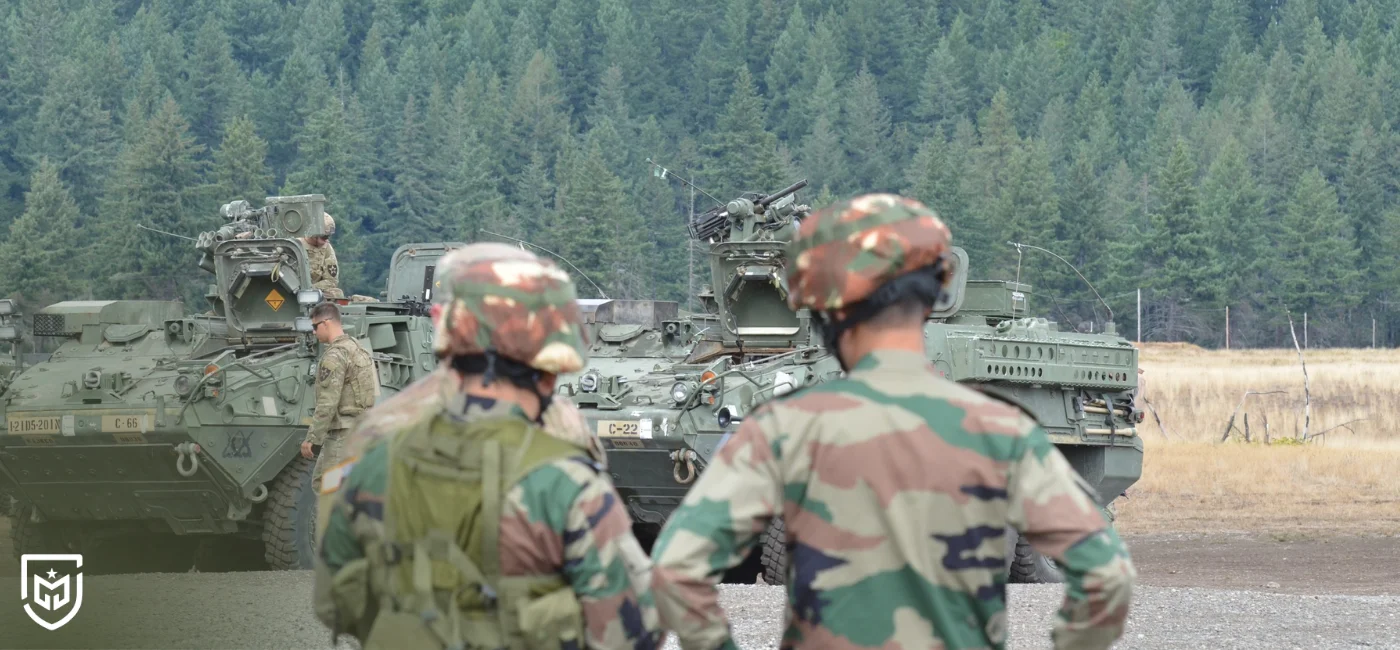
India has launched a new armored vehicle procurement program to strengthen its counterinsurgency forces operating in the country’s northeast and sensitive border regions. According to The Defense Post, New Delhi plans to acquire 159 bulletproof armored personnel carriers to support Rashtriya Rifles units under the Indian Army. The procurement aims to improve troop protection and mobility, particularly in mountainous and difficult terrain.
Rashtriya Rifles was established in the 1990s to improve security in mountainous regions such as Jammu, Kashmir and Ladakh. These areas are strategically important for India because of their proximity to the borders with China and Pakistan. The new armored vehicle procurement is intended not only to meet troop transport requirements, but also to support safer movement during counterinsurgency, internal security and operations near border areas.
According to the request for information issued by the Indian Army, around 60 platforms are expected to be delivered each year after the contract is signed. The production and related industrial activities are expected to align with the Indian government’s “Make in India” and “Atmanirbhar Bharat” initiatives. This means the program is important not only for military capability development, but also for strengthening the domestic defense industry and reducing dependence on foreign suppliers.
The planned vehicles are expected to have a 4x4 configuration. India’s requirements call for a balanced combination of mobility and protection. The vehicles must also be able to carry limited payloads, including weapons, ammunition and communication equipment. These requirements indicate that the platforms will be used not only as troop carriers, but also as tactical vehicles capable of supporting units during missions.
Technical expectations include a speed of 80 to 100 kilometers per hour on roads and 50 to 75 kilometers per hour in off-road conditions. The vehicles are also expected to provide a range of 300 kilometers in rough terrain and 350 kilometers on flat terrain. These figures show that the armored platforms are intended for long-distance patrols, rapid movement and sustained operations in challenging regions.
Another important requirement is the ability to operate at altitudes of up to 5,000 meters. The platforms must also function in temperatures ranging from minus 10 to 40 degrees Celsius and in snow-covered areas. These conditions show that the vehicles are being planned for use in extremely demanding environments, including the Himalayan foothills and high-altitude border regions.
In addition to protection, limited firepower is also part of the program. New Delhi wants the armored vehicles to provide “limited firing capability” through firing ports and roof-mounted machine guns. This would allow troops inside the vehicle to remain protected while engaging threats outside. Such a capability is especially important for counterinsurgency missions, ambush response, road security and convoy protection.
India’s plan to acquire 159 armored personnel carriers is an important land platform investment aimed at meeting internal security and border-area requirements. By combining mobility in difficult terrain, troop protection, limited fire support and domestic production goals, the program represents more than a vehicle purchase. It is also a strategic step toward strengthening India’s defense industrial capacity and operational readiness.


The cookies used on our website are used to provide you with a better user experience and to improve our website. You can manage your cookie preferences from the options below.
 Süheyla Yıldız
Post Comment
Comments
No comments yet.
Related News
SSB Sector Meeting: Focus on Supply Chain and Production Capabilities
Turkish defense industry signed 15 billion dollars in new contracts in 2026
SSB Hosts Second Supply Chain Strengthening Summit
SSB Chief: Transparent Licensing Will Strengthen Defense Cooperation
Görgün: Turkish-German defense partnership to be revitalized with new vision
Spain Plans to Purchase 15 Additional Hürjet Advanced Trainers
Turkey and Spain to Develop Joint Version of Hürjet Aircraft
Romanian Corvette Conducts Black Sea Exercises