





Air Forces News
Electronic Systems


BREAKING NEWS
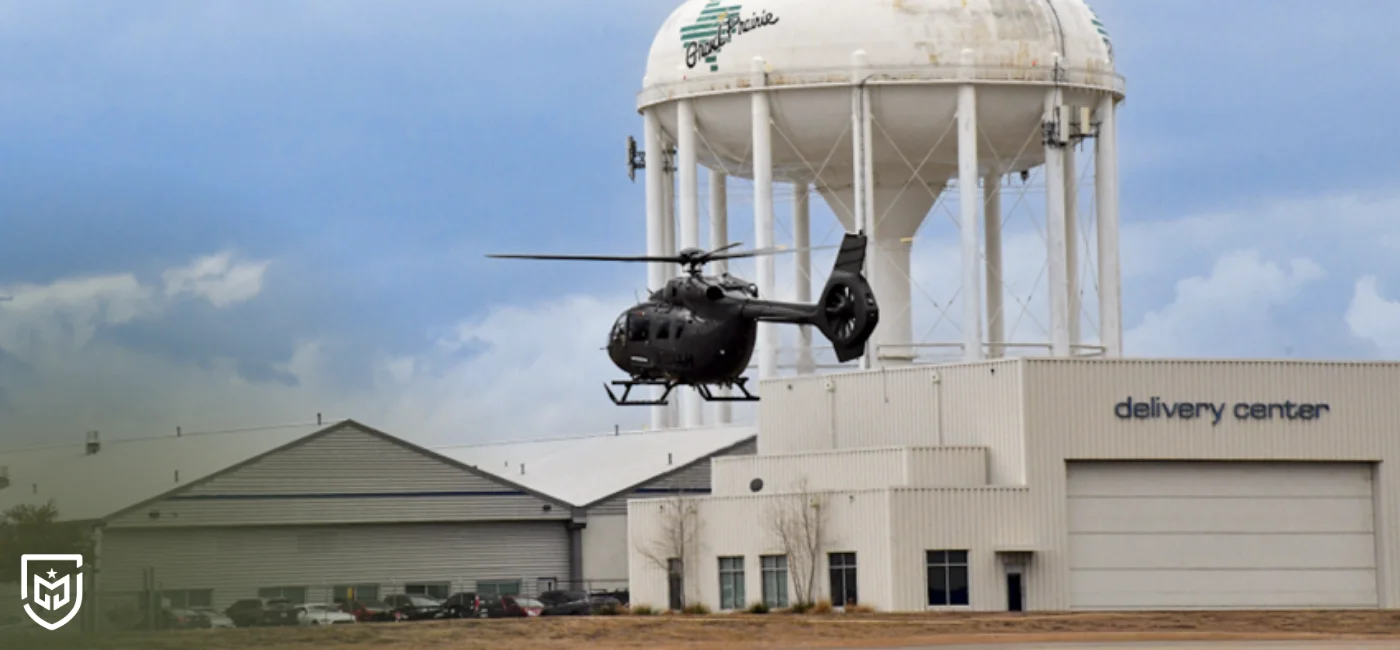
Airbus has completed a new phase of testing in its effort to develop an autonomous helicopter for U.S. Marine Corps logistics missions. According to Defense One, the company conducted autonomous flight and sensing tests with an H145 helicopter as part of its MQ-72C Lakota Connector concept. While the platform is primarily being developed to support distributed battlefield logistics, its design could also allow future adaptation for armed or multi-role missions.
Airbus is developing the MQ-72C Lakota for the Marine Corps’ Aerial Logistics Connector competition. The program aims to reduce the need for crewed aircraft in dangerous logistics missions by using unmanned platforms to deliver supplies to dispersed units. In modern combat environments, where supply routes can be vulnerable to enemy fires and surveillance, autonomous helicopters may offer an important way to sustain forward forces while reducing risk to personnel.
Company officials say the Lakota Connector may not be limited to logistics missions. Airbus points to the platform’s versatile design, modular open systems architecture and autonomous mission capabilities as features that could support future mission expansion. In this context, the aircraft could potentially carry launched effects, unmanned systems or other payloads. This could open the way for armed or semi-armed mission profiles in the future.
The latest Airbus tests were carried out at the company’s Grand Prairie, Texas facility. During the flight, the H145 scanned a landing zone, detected surrounding obstacles and demonstrated the ability to identify an alternate landing area when needed. Airbus officials said the system was able to detect objects ranging from SUV-sized items to smaller pieces of field equipment. This sensing capability is critical for autonomous helicopters expected to operate safely in real-world terrain.
Rob Geckle, CEO of Airbus U.S. Space and Defense, said the tests were important for demonstrating the Lakota Connector’s ability to support Marine Corps aerial logistics missions. According to Geckle, sensing systems are among the most important elements determining whether unmanned missions can succeed in the field. An autonomous helicopter capable of identifying safe landing zones under uncertain and dynamic conditions could provide a major advantage in distributed operations.
Several defense technology companies also supported the testing effort. Shield AI provided its Hivemind autonomy software, while L3Harris Technologies supplied the modular digital backbone. Parry Labs contributed edge computing and ground control stations. Shield AI officials emphasized that Hivemind can provide scalable autonomy for both rotary-wing and fixed-wing aircraft without requiring a special redesign.
In the next phase, Airbus aims to improve the sensing system so it can detect smaller and more operationally realistic objects. The company plans to conduct additional internal autonomy and integration flight tests throughout the year. These trials will help determine whether the Lakota Connector can perform reliably not only in controlled test conditions, but also in scenarios closer to real operational environments.
The Aerial Logistics Connector program is part of the U.S. Defense Department’s broader effort to support dispersed forces in great-power competition and high-intensity conflict scenarios. The Marine Corps’ plans to operate small units across wide and fragmented areas, especially in regions such as the Pacific, increase the need for autonomous aerial logistics platforms. Such systems could reduce the need for crewed helicopters to enter dangerous areas while maintaining supply continuity for forward units.
Airbus’ Lakota Connector effort shows that autonomous helicopters may eventually support missions beyond logistics. In the future, such platforms could be adapted for reconnaissance, targeting, electronic warfare or launched-effects missions. Although an armed variant has not yet become a formal program, the aircraft’s architecture is being developed with mission flexibility in mind. For this reason, the MQ-72C Lakota Connector stands out not only as a potential answer to the Marine Corps’ autonomous logistics needs, but also as a platform that could evolve into broader operational roles.


The cookies used on our website are used to provide you with a better user experience and to improve our website. You can manage your cookie preferences from the options below.
 Süheyla Yıldız
Post Comment
Comments
No comments yet.
Related News
Skyfall II Exercise: U.S. Army Demonstrates UAV Defense Capabilities in Germany
IDA Turkey 2026 Defense and Aviation Industrial Cooperation Days Launched
SSB Chief: Transparent Licensing Will Strengthen Defense Cooperation
STM's Swarm UAV System Demonstrates Operational Success at Ateş Serbest-2026
TUSAŞ Kamikaze UAV Systems Achieve Success in Exercise Ateş Serbest-2026
ÇAKIR Cruise Missile Supply Contract Signed
Drone Shield Showcased at Marksman Competition
Fire Free-2026 Exercise Successfully Completed