


Electronic Systems
Global Developments


BREAKING NEWS
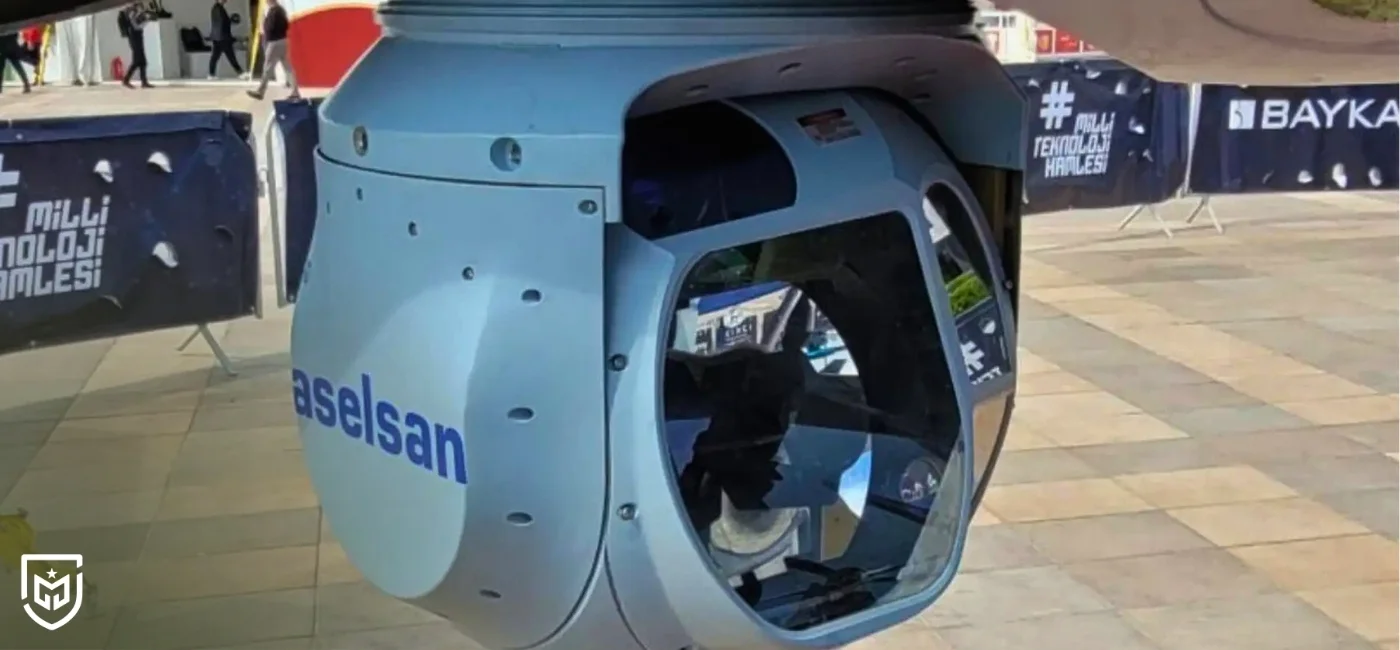
In its recently published assessment, ASELSAN drew attention to the strategic importance of electro-optical (EO) systems in the modern battlespace, emphasizing that these technologies have evolved far beyond being simple imaging sensors. According to the company, EO systems that combine visible spectrum capabilities with short-wave infrared (SWIR), mid-wave infrared (MWIR), long-wave infrared (LWIR), and laser-based sensing technologies now serve as critical assets in reconnaissance, surveillance, target detection, target verification, tracking, and self-protection missions. Thanks to this multi-band structure, military platforms can achieve a more reliable, comprehensive, and resilient situational picture under different environmental and operational conditions.
One of the key points highlighted by ASELSAN is the passive sensing capability of EO systems. Unlike active systems such as radar, which emit electromagnetic signals, EO solutions rely on the thermal and spectral signatures of targets, allowing platforms to carry out missions without revealing their position. This provides a major advantage, particularly in electronic warfare environments, under intense jamming, and in missions requiring low observability. ASELSAN also noted that EO architectures supported by sensor fusion act as force multipliers not only at the tactical level, but also at operational and strategic levels. Transforming data from multiple platforms into a common operational picture accelerates command-and-control and decision-making processes while enabling faster and more accurate responses to threats.
The development of indigenous and national electro-optical technologies was another major theme in ASELSAN’s assessment. The company aims to reduce Türkiye’s foreign dependence through the development of gimballed EO systems, EO self-protection systems, and platform-integrated EO solutions. The domestic development of laser designation systems, precision stabilization technologies, infrared detectors, and advanced image-processing software offers significant advantages not only in operational independence, but also in maintenance, modernization, and configuration management. In addition, the export potential of locally developed EO technologies contributes to the growth of the defense industry ecosystem and strengthens Türkiye’s competitive standing in international markets.
ASELSAN stated that electro-optical systems are used across a wide range of platforms, from air defense systems to UAVs and UCAVs, from fighter aircraft to rotary-wing platforms. System families such as ASELFLIR, ASELPOD, KARAT IRST, TOYGUN EOTS, IRIS, and YILDIRIM are described as offering critical capabilities in target detection, missile warning, laser designation, automatic target tracking, and optical countermeasure missions. The company also pointed to its AI-based “AINEO” vision, which aims to transform EO systems into intelligent structures capable not only of collecting data, but also of interpreting, classifying, and supporting decision-making. Combined with sensor fusion and distributed EO sensor networks, this approach is seen as one of the key enablers of decision superiority in future multi-domain operations.


The cookies used on our website are used to provide you with a better user experience and to improve our website. You can manage your cookie preferences from the options below.
 Süheyla Yıldız
Post Comment
Comments
No comments yet.
Related News
SSB Sector Meeting: Focus on Supply Chain and Production Capabilities
Turkish defense industry signed 15 billion dollars in new contracts in 2026
SSB Hosts Second Supply Chain Strengthening Summit
Skyfall II Exercise: U.S. Army Demonstrates UAV Defense Capabilities in Germany
IDA Turkey 2026 Defense and Aviation Industrial Cooperation Days Launched
SSB Chief: Transparent Licensing Will Strengthen Defense Cooperation
STM's Swarm UAV System Demonstrates Operational Success at Ateş Serbest-2026
ÇAKIR Cruise Missile Supply Contract Signed