



Air Forces News
Electronic Systems


BREAKING NEWS
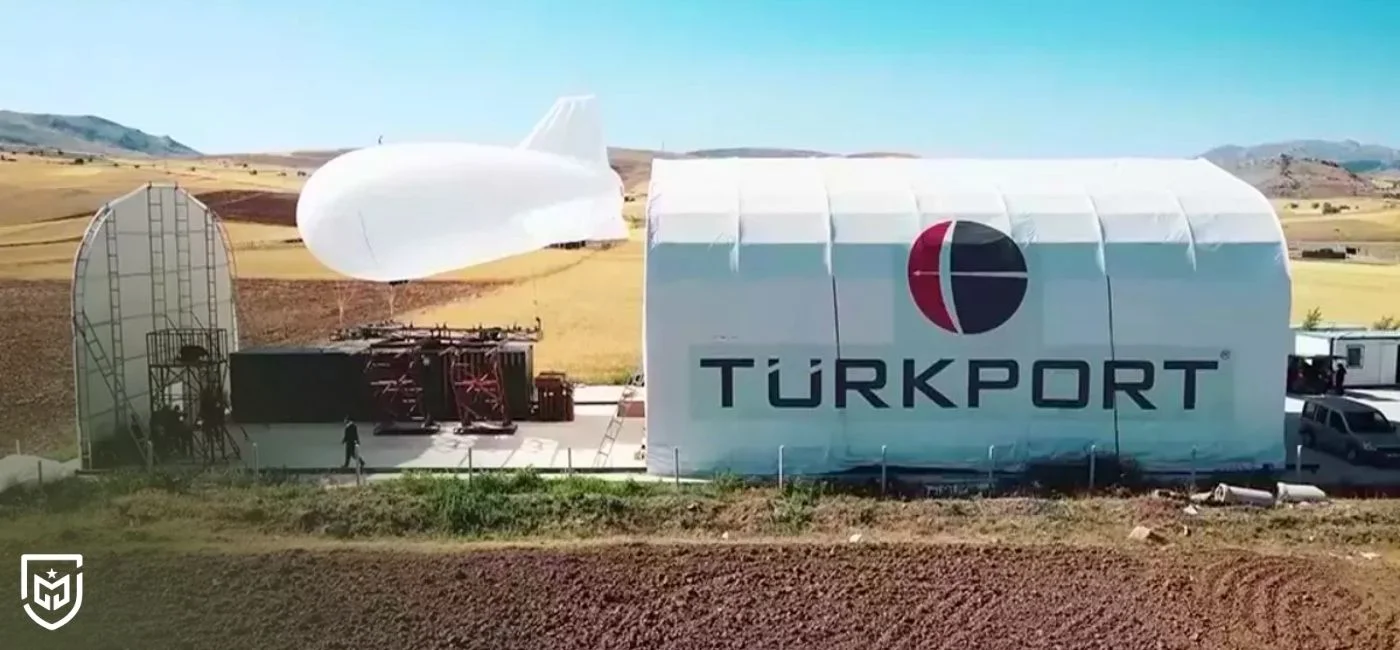
Türkiye is set to showcase its indigenous GÖKÇERİ aerostat at the 17th International Defence Industry Fair (IDEF 2025) in Istanbul from 22–27 July. Operating tethered between roughly 120 and 1000 meters, the system raises the horizon line for wide-area surveillance and services—delivering persistent coverage for as long as 7–10 days, well beyond the 3–4 day endurance typical of many counterparts. As a multi-mission platform, GÖKÇERİ can support ISR and critical-facility security, act as a mobile post-disaster base station to rapidly restore communications, host sensors or weapons for threat detection and engagement, provide electronic attack/suppression, enable signals intelligence and direction finding, and serve as a low-altitude radar node for early warning against drone swarms and cruise missiles.
Developed by Turkish defense firm TÜRKPORT after eight years of R&D, GÖKÇERİ emphasizes deep localization of subsystems to reduce foreign dependency and improve performance. A patented, helium-tight envelope—the first of its kind in Türkiye—combines lighter mass with lower gas permeability, directly extending time on station. Complementing this is a domestically engineered helium compressor that vacuums and recovers gas into cylinders after missions, replacing a category typically filled by imports. The team also designed in-house software, embedded electronics, sensors, and control units that govern flight, platform health, and payload operations.
Mobility and rapid setup are core features. The aerostat can be prepped for flight in about four hours and redeployed to a new location within a similar window after recovery—allowing commanders to reposition persistent coverage as missions shift. The tether itself is both lighter and smarter: it integrates a fiber-optic core to carry payload data directly to the ground control station. By avoiding RF links for critical data, the design hardens the system against jamming and cyber intrusion attempts that target wireless pathways, bolstering resilience in contested electromagnetic environments.
Open sources suggest more than 1,700 aerostats are active across 68 countries, with only a handful of manufacturers worldwide. Against this backdrop, GÖKÇERİ’s local content—envelope, tether and winch systems, compressor, and software—stands out. For Türkiye’s defense ecosystem, the platform promises a persistent “air mast” that strengthens surveillance grids, border and energy-infrastructure security, disaster communications, and early-warning networks. With high indigenous share and expeditionary mobility, GÖKÇERİ is poised to address domestic needs and pursue export opportunities once it takes the stage at IDEF 2025.


The cookies used on our website are used to provide you with a better user experience and to improve our website. You can manage your cookie preferences from the options below.
 Rabia Kılıç
Post Comment
Comments
No comments yet.
Related News
KAAN Fighter Jet's New Prototype Begins Taxi Tests
KAAN Fighter Jet Completes Pre-Flight Taxi Test Successfully
BAE Systems and Lockheed Martin Unveil Blizzard Multi-Mission Unmanned Aircraft
Anduril's Ohio Facility Produces First YFQ-44A Fury Unmanned Combat Aircraft
South Korea's envoy highlights KAAN fighter jets as cornerstone of defense partnership with Türkiye
ASELSAN's Electro-Optical System Integrated into South Africa's Mwari Aircraft
TAI Chief: Turkey Shaping NATO's Future Security Architecture
Anduril Thunder: Autonomous Attack Helicopter with Level 5 Autonomy Capabilities