




Air Forces News
Electronic Systems


BREAKING NEWS
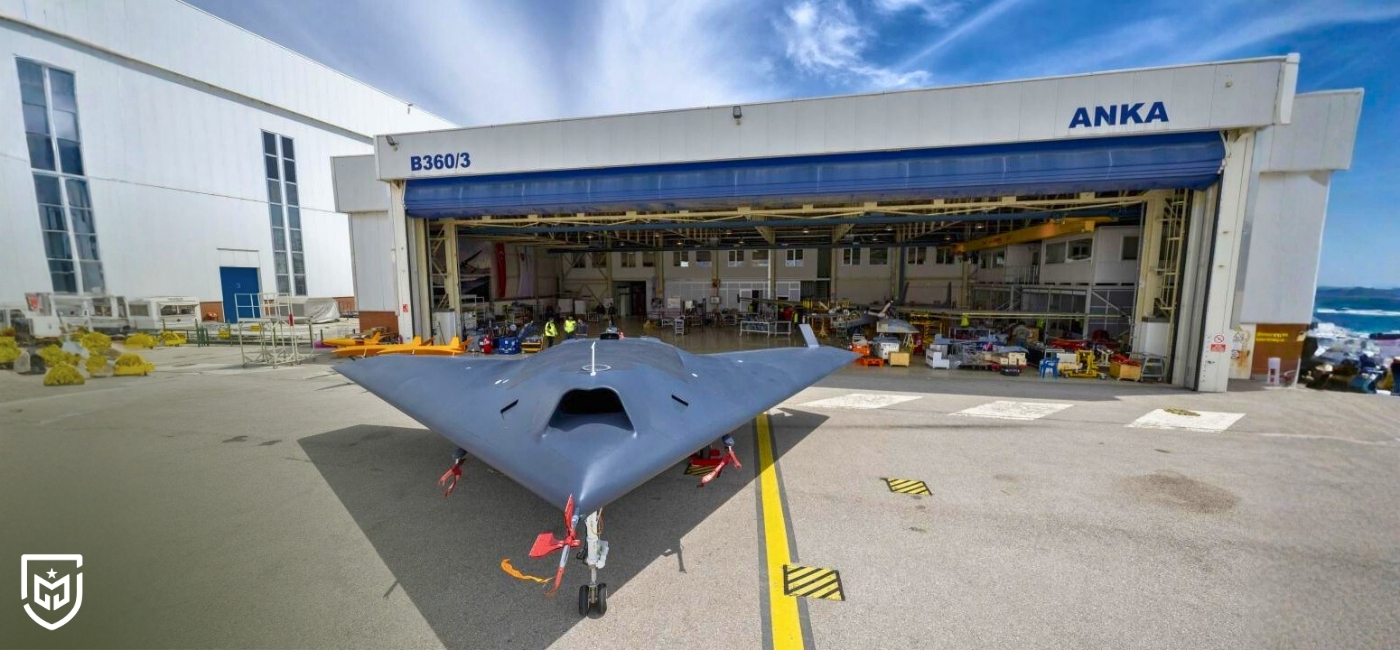
Türkiye’s defense industry continues to make major strides in advanced sensor technologies through ASELSAN. One of the most prominent examples of this progress is the MURAD AESA Nose Radar Family, developed entirely with national and indigenous resources. Following successful tests on platforms such as the F-16 Özgür, Bayraktar AKINCI and Bayraktar KIZILELMA, the next platform in line for integration is the ANKA-III. Integration activities are progressing at full pace and are expected to significantly enhance ANKA-III’s operational effectiveness.
AESA (Active Electronically Scanned Array) radar technology operates through thousands of transmit/receive modules combined on a single antenna surface. By applying different phase shifts to each module, the radar beam can be electronically steered without any mechanical movement. This allows the radar to change its scanning direction within milliseconds, conduct simultaneous searches in multiple sectors, and track different types of targets at the same time. Compared to mechanically scanned radars, AESA systems provide far greater flexibility, speed and reliability.
MURAD AESA radars stand out with their high resistance to electronic warfare, low probability of interception and ability to detect small, low-observable targets from long distances. Thanks to their flexible beam scheduling infrastructure and data processing capability exceeding 500 gigabits per second, these radars can perform radar, communication, data link and electronic warfare missions in a time-shared manner. In addition, the lack of mechanically moving parts reduces failure rates and maintenance costs, while ensuring uninterrupted operation even in case of individual module failures.
Developed from chip level by ASELSAN engineers, the MURAD AESA Nose Radar Family is designed with a modular and platform-adaptable architecture. The MURAD 100-A variant offers simultaneous air-to-air and air-to-ground engagement capabilities and combines air-to-air missions with beyond-visual-range (BVR) missile guidance. This capability has already proven to be a game changer in modern air combat scenarios.
In a landmark test conducted within the Turkish defense industry, an unmanned combat aerial vehicle successfully engaged and destroyed an aerial target with a BVR air-to-air missile for the first time in the world. During this test, Bayraktar KIZILELMA detected and tracked the target using the MURAD AESA radar, while mid-course guidance was provided through national systems. The engagement was completed using the GÖKDOĞAN BVR missile developed by TÜBİTAK SAGE, guided by ASELSAN’s RF seeker technology.
With the integration of the MURAD AESA radar, ANKA-III is expected to gain advanced air-to-air engagement capability, increased situational awareness and superior electronic warfare resilience. As future concepts such as software-defined radar architectures, digital beamforming and RF convergence mature, AESA radars will remain at the core of next-generation manned and unmanned air combat systems.


The cookies used on our website are used to provide you with a better user experience and to improve our website. You can manage your cookie preferences from the options below.
 Süheyla Yıldız
Post Comment
Comments
No comments yet.
Related News
Skyfall II Exercise: U.S. Army Demonstrates UAV Defense Capabilities in Germany
IDA Turkey 2026 Defense and Aviation Industrial Cooperation Days Launched
SSB Chief: Transparent Licensing Will Strengthen Defense Cooperation
STM's Swarm UAV System Demonstrates Operational Success at Ateş Serbest-2026
TUSAŞ Kamikaze UAV Systems Achieve Success in Exercise Ateş Serbest-2026
ÇAKIR Cruise Missile Supply Contract Signed
Drone Shield Showcased at Marksman Competition
Fire Free-2026 Exercise Successfully Completed