


Land Forces News
Global Developments


BREAKING NEWS
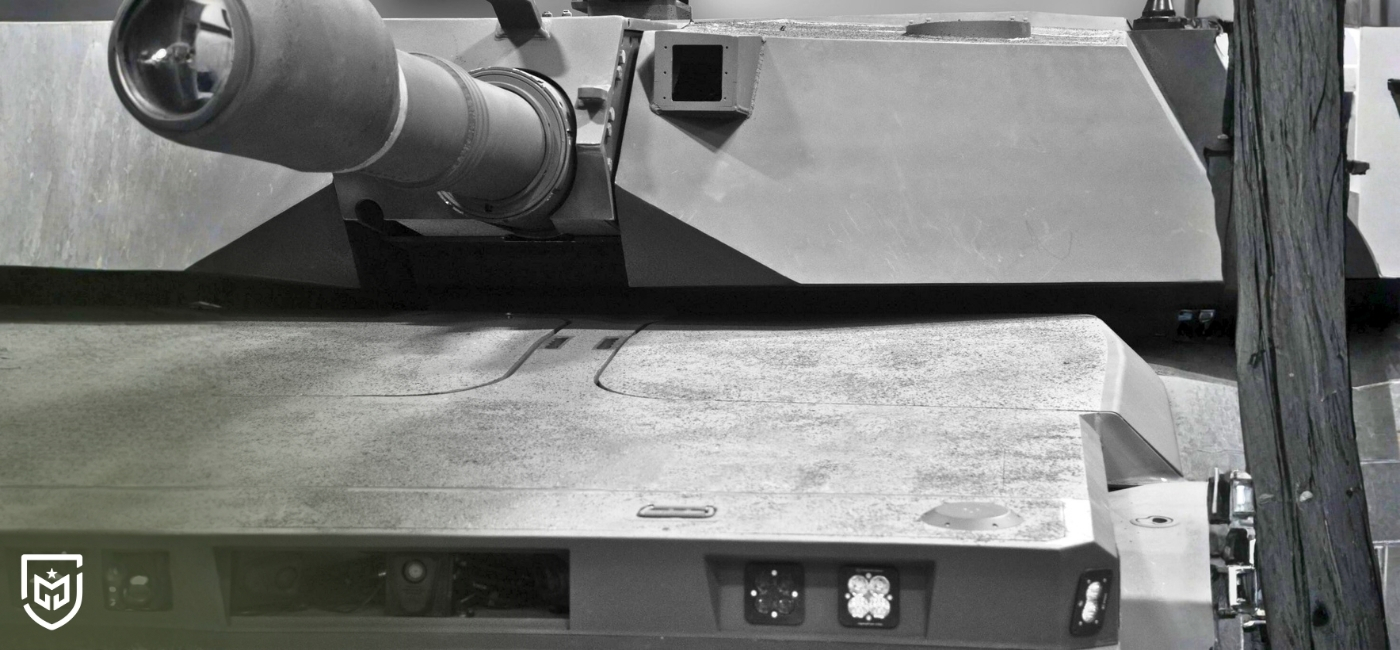
The United States Army officially introduced the first prototype of its next-generation main battle tank, the M1E3, on January 6, 2026. The prototype was revealed alongside official images ahead of the Detroit Auto Show, and the Army confirmed that initial testing activities are scheduled to begin in early 2026. The M1E3 represents a major milestone in the modernization of U.S. armored forces and is viewed as the most concrete step toward redefining the Army’s primary armored combat platform for future battlefields.
Developed under the “Speed to Delivery” initiative, the M1E3 program prioritizes rapid response to operational needs, direct incorporation of battlefield lessons learned, and early integration of emerging technologies. Unlike previous Abrams upgrades that focused on incremental improvements, M1E3 is built around a fundamentally reimagined vehicle architecture intended to address the demands of high-intensity and multi-domain warfare.
Images released by the Army reveal notable changes to both the hull and turret design. While certain turret elements retain visual continuity with earlier M1A1 and M1A2 Abrams variants, the chassis appears to have undergone a comprehensive redesign. Newly mounted sensor modules around the vehicle suggest the testing of advanced situational awareness and detection systems, reinforcing the platform’s suitability for network-centric warfare and enhanced battlefield integration.
There are also indications of potential changes to the internal layout. Observations from the driver’s compartment suggest that fuel tank placement may have been altered or removed, pointing toward a reconfigured crew arrangement. This could open the door to more modern and ergonomic crew concepts, such as side-by-side seating. However, the Army has not yet officially confirmed these internal design changes.
Strategically, the M1E3 program focuses on reducing overall weight, increasing mobility, integrating next-generation electronic systems, and significantly enhancing protection. Special emphasis is placed on countering modern threats, including top-attack munitions, electronic warfare systems, and advanced anti-armor weapons. Although the current prototype reflects an early engineering phase with simplified surfaces and temporary components, it clearly demonstrates the U.S. Army’s vision for future armored warfare.


The cookies used on our website are used to provide you with a better user experience and to improve our website. You can manage your cookie preferences from the options below.
 Süheyla Yıldız
Post Comment
Comments
No comments yet.
Related News
SSB Sector Meeting: Focus on Supply Chain and Production Capabilities
Turkish defense industry signed 15 billion dollars in new contracts in 2026
SSB Hosts Second Supply Chain Strengthening Summit
SSB Chief: Transparent Licensing Will Strengthen Defense Cooperation
Görgün: Turkish-German defense partnership to be revitalized with new vision
Spain Plans to Purchase 15 Additional Hürjet Advanced Trainers
Turkey and Spain to Develop Joint Version of Hürjet Aircraft
Romanian Corvette Conducts Black Sea Exercises