



Air Forces News
Electronic Systems


BREAKING NEWS
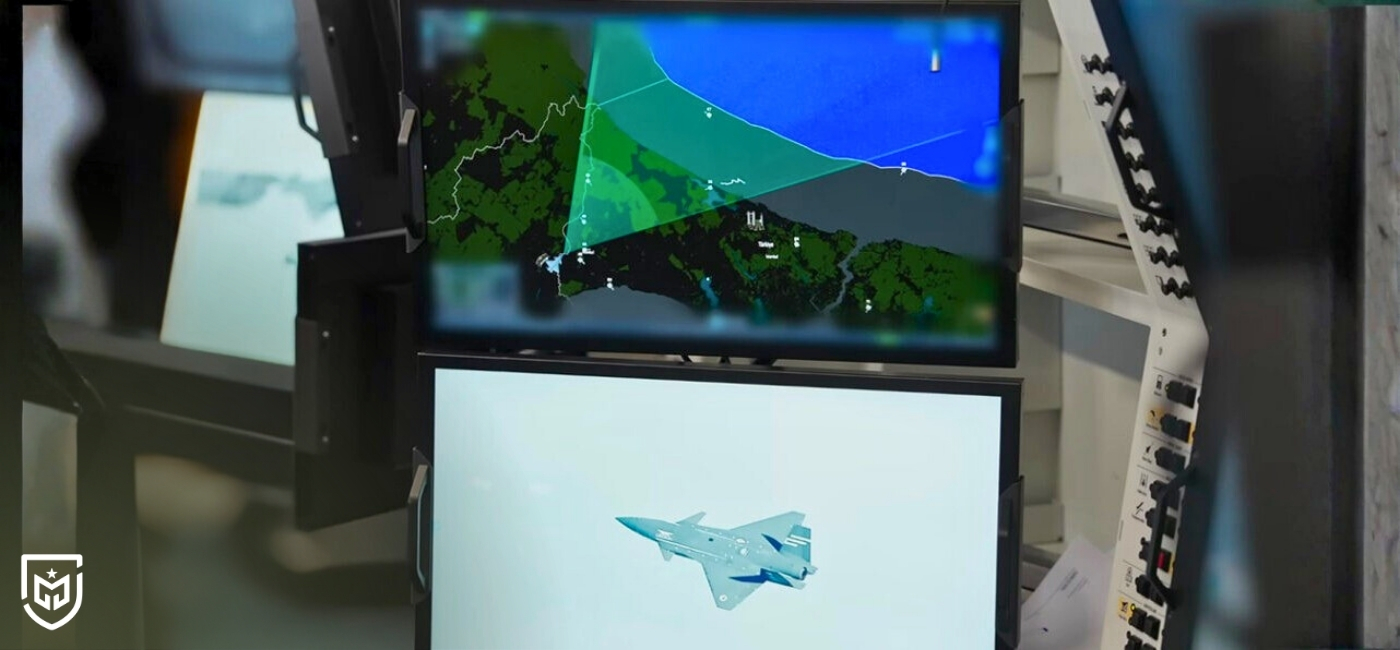
One of Türkiye’s leading defense industry organizations, ASELSAN, has shared a comprehensive article on its official X account titled “AESA Radar Capabilities in the Modern Battlefield and ASELSAN Solutions.” The publication provides a detailed technical and operational overview of Active Electronically Scanned Array (AESA) radar systems and underlines their decisive impact on contemporary air combat environments.
AESA radars operate by integrating hundreds or even thousands of transmit/receive modules onto a single antenna surface. Each module functions as an independent miniature antenna capable of transmitting and receiving signals. By applying different phase shifts to these modules, the radar beam can be steered electronically without any physical movement of the antenna. This allows the radar to rapidly change its direction within milliseconds, enabling simultaneous search, tracking, and engagement operations across multiple regions of space.
In today’s highly dynamic air combat environment, where low-observable and highly maneuverable targets are increasingly common, AESA radars provide critical advantages. Their ability to detect small targets at long ranges, perform highly accurate tracking, and resist electronic warfare threats significantly enhances weapon engagement success. Thanks to flexible beam scheduling and data processing capacities exceeding hundreds of gigabits per second, AESA radars can also perform communication, data link, and electronic warfare missions alongside traditional radar functions.
ASELSAN’s domestically developed MURAD AESA Nose Radar family, designed from chip level by Turkish engineers, represents the country’s most advanced radar solutions in this field. Among them, the MURAD 100-A AESA Nose Radar offers simultaneous air-to-air and air-to-ground engagement capabilities, combined with Beyond Visual Range (BVR) missile guidance. This multifunctional architecture provides next-generation fighter aircraft and unmanned aerial platforms with a decisive operational edge.
The MURAD 100-A radar has already demonstrated its capabilities through successful flight tests on platforms such as the F-16 Özgür, Akıncı UCAV, and Bayraktar KIZILELMA. Integration efforts are also ongoing for future platforms, including ANKA-III. As unmanned systems gain a more prominent role on the battlefield, AESA-equipped platforms are becoming indispensable assets for achieving and sustaining air superiority.
AESA radar technology has also proven its effectiveness in real operational scenarios. For the first time globally, an unmanned combat aircraft successfully engaged and destroyed an aerial target using a beyond-visual-range air-to-air missile. During this historic engagement, the target was detected, tracked, and guided in the mid-course phase by the MURAD AESA Nose Radar, while the GÖKDOĞAN, developed by TÜBİTAK SAGE, was guided to a direct hit using ASELSAN’s RF seeker radar technology. This achievement clearly demonstrates how national AESA radar solutions significantly enhance platform survivability and combat effectiveness.


The cookies used on our website are used to provide you with a better user experience and to improve our website. You can manage your cookie preferences from the options below.
 Süheyla Yıldız
Post Comment
Comments
No comments yet.
Related News
Turkish defense firms ban foreign electric vehicles from campuses
Thales Introduces HexaForce AI-Powered Command and Control System to Gulf Region
ÇEPNI Tactical UAV Family Enters Operational Service
ASELSAN's Drone-Hunting System Completes Successful Demonstration
Romania Signs Contract for Airbus H225M Helicopter Procurement
ASELSAN's GÖKALP drone defense system completes successful demonstration
SSB Chief Görgün Warns Against Open Source Intelligence Risks
SSB Chief: Localization in Defense Projects Starts from Design Phase