


Land Forces News
Electronic Systems


BREAKING NEWS
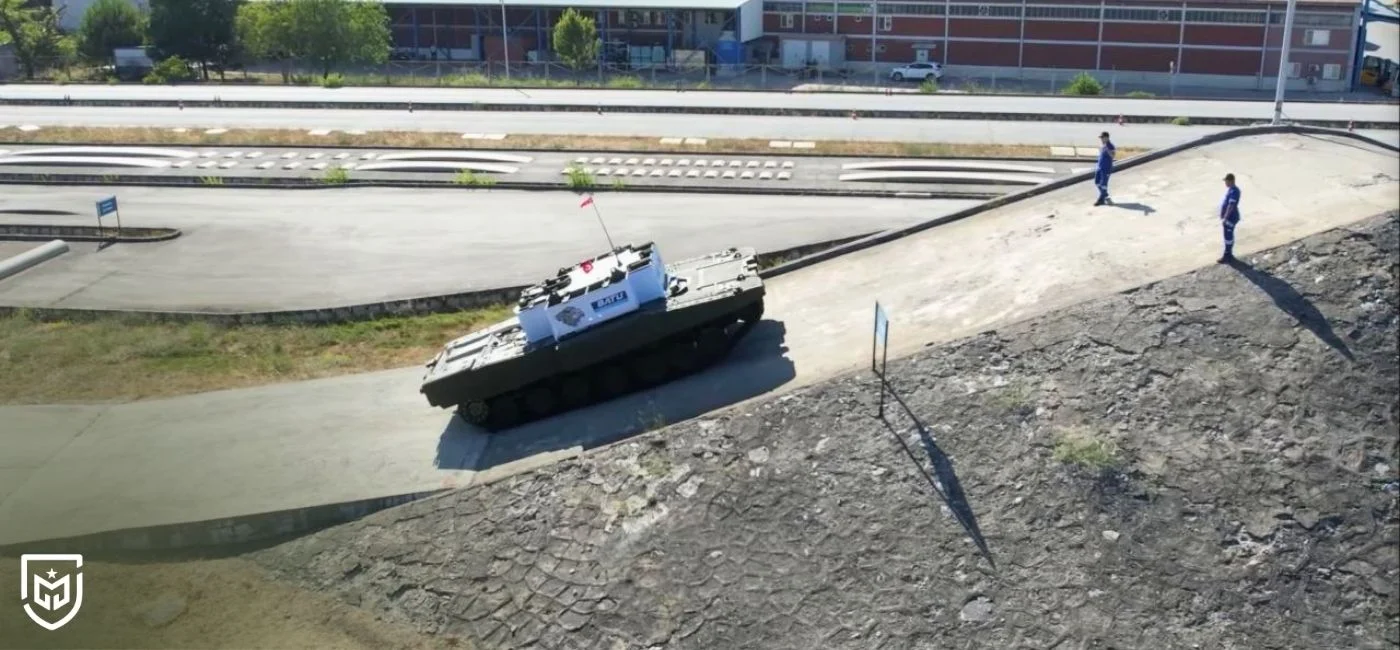
Türkiye’s ALTAY Main Battle Tank is entering a new phase of modernization as efforts to integrate the domestically developed BATU Power Group continue at full speed. While the first 85 units of ALTAY are being produced using powerpacks supplied by South Korea, the long-term goal is for the tank to operate entirely with a national engine and transmission system. The BATU project, developed by BMC Power, stands as one of the most significant milestones in Türkiye’s drive toward full independence in heavy armored vehicle technologies.
The opening of the BMC Ankara Tank and Next-Generation Armored Vehicle Production Facility marked a major step in Türkiye’s engine development capabilities. Turkish engineers and technicians have already demonstrated strong performance with the 400 hp TUNA engine—now in active use on VURAN and KİRPİ II vehicles—as well as ongoing development of 600, 1000, and 1500 hp power systems. These successes form the technological foundation for integrating BATU into the ALTAY platform.
Although the South Korean power group is expected to meet ALTAY’s production needs until 2028, project leaders emphasize that the BATU Power Group is planned to reach full maturity by late 2026. BMC Chairman Fuat Tosyalı highlighted this timeline during the ALTAY delivery ceremony, reaffirming the objective of preparing BATU-powered ALTAY tanks for fielding within the same period.
To meet this goal, both motor and transmission development activities have intensified. Testing is being conducted simultaneously at the Motor and Transmission Test Center in Arifiye as well as directly on the ALTAY platform. BATU-integrated ALTAY tanks are undergoing mobility tests, including endurance drives, climbing trials, and performance evaluations under varying environmental conditions such as heat, cold, and full-load operation. These tests aim to validate engine robustness, power delivery, cooling efficiency, and mechanical durability—critical factors for modern armored warfare.
Laboratory testing also continues with vibration, durability, thermal, and power cycle assessments, while transmission development advances in parallel. Ensuring seamless interaction between the engine and transmission is essential for achieving maximum torque output, reliability, and mobility on the battlefield.
With the successful integration of BATU, Türkiye will join the small group of nations capable of designing and producing both the engine and transmission of a main battle tank domestically. This achievement is expected to elevate Türkiye’s strategic autonomy and strengthen its long-term defense manufacturing capabilities.


The cookies used on our website are used to provide you with a better user experience and to improve our website. You can manage your cookie preferences from the options below.
 Rabia Kılıç
Post Comment
Comments
No comments yet.
Related News
Skyfall II Exercise: U.S. Army Demonstrates UAV Defense Capabilities in Germany
IDA Turkey 2026 Defense and Aviation Industrial Cooperation Days Launched
SSB Chief: Transparent Licensing Will Strengthen Defense Cooperation
STM's Swarm UAV System Demonstrates Operational Success at Ateş Serbest-2026
ÇAKIR Cruise Missile Supply Contract Signed
Drone Shield Showcased at Marksman Competition
Fire Free-2026 Exercise Successfully Completed
Görgün: Turkish-German defense partnership to be revitalized with new vision