


Land Forces News


BREAKING NEWS
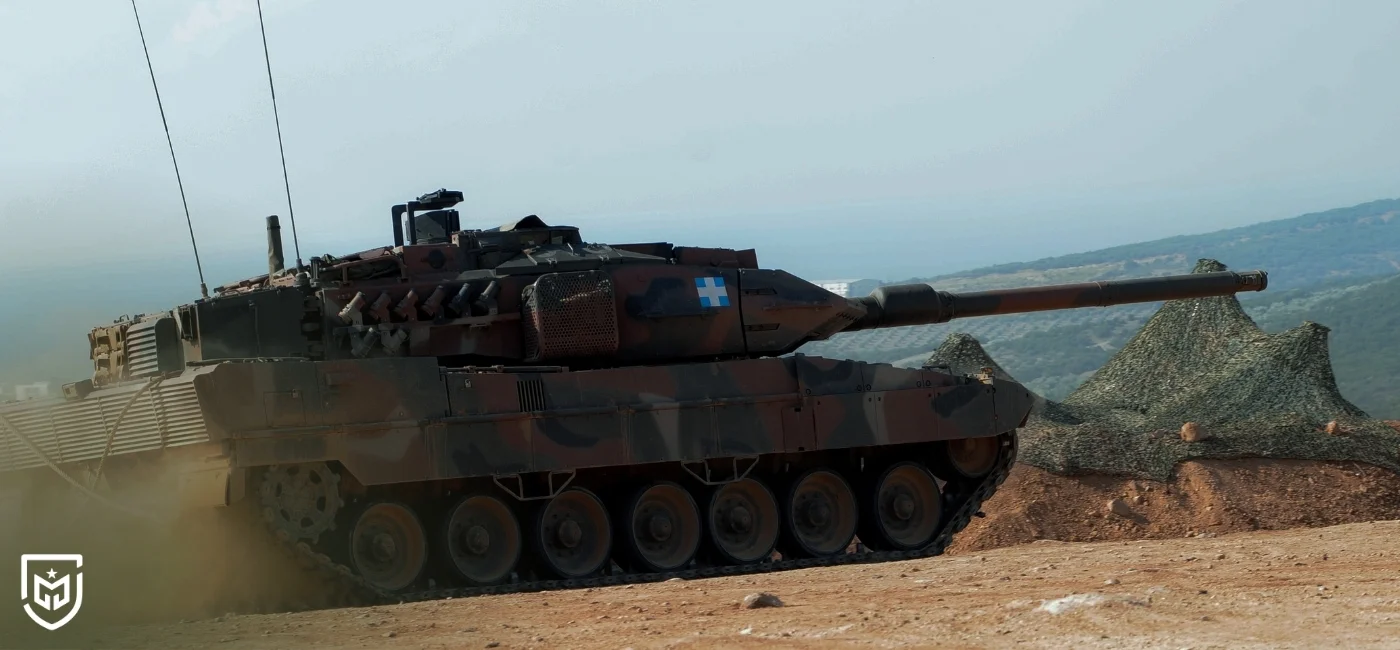
The Hellenic Army has officially initiated a comprehensive modernization program covering approximately 170 units of the Leopard 2A4 main battle tank. Originally inducted into service in 2005, these platforms have reportedly fallen short of meeting the evolving requirements of modern warfare. Greek General Staff sources emphasize that the need for an upgrade has been under discussion for years, as the current configuration lacks sufficient capability in fire control systems, sensor performance, and survivability compared to contemporary battlefield standards.
A central pillar of the modernization effort is the complete overhaul of the fire control systems. Officials note that the existing systems lag behind not only the more advanced Leopard 2A6 HEL variant in Greek service, but even the 1993-upgraded Leopard 1A5 models. The integration of next-generation fire control technology is expected to significantly improve target acquisition, tracking accuracy, and engagement capability under both day and night conditions. This enhancement aims to restore the Leopard 2A4’s operational relevance in high-intensity conflict scenarios.
Beyond firepower improvements, survivability upgrades form another critical aspect of the program. Lessons learned from the war in Ukraine have highlighted the increasing threats posed by anti-tank guided missiles, loitering munitions, and unmanned aerial vehicles. As a result, Greece plans to integrate active protection systems (APS) into the tanks. Additionally, passive armor reinforcements and the wider application of slat (cage) armor are under consideration to counter evolving anti-armor threats. These measures are designed to substantially increase battlefield survivability against asymmetric and conventional threats alike.
The modernization work is expected to be carried out domestically by the Greek defense company METKA. This decision aligns with Greece’s broader strategy of strengthening its domestic defense industrial base and enhancing technological self-reliance. Defense officials underline that executing the program within national borders will contribute to knowledge transfer, long-term maintenance capabilities, and sustainable logistical support.
Strategically, the upgrade carries particular importance for the Evros region along the Turkish border, where Leopard 2A4 tanks constitute a core component of armored formations. Enhancing these platforms is therefore expected to directly impact operational readiness and deterrence posture in the area. Greece currently operates more than 850 German-origin tanks, including Leopard 1 and Leopard 2 variants, and nearly 1,200 tanks overall when including U.S.-made M48 series platforms—making it one of Europe’s largest armored forces.


The cookies used on our website are used to provide you with a better user experience and to improve our website. You can manage your cookie preferences from the options below.
 Süheyla Yıldız
Post Comment
Comments
No comments yet.
Related News
Germany denies claims of MGCS tank project withdrawal
Greece reaches agreement with US for Stryker armored vehicles
Katmerciler Delivers Next-Generation Hızır 4x4 Armored Vehicles
PARS Scout 8x8 Plays Critical Role in CBRN Operations
Teknofest Southeast: Turkish Defense Platforms and KAAN Fighter Jet on Display in Şanlıurfa
Otokar Begins COBRA II Production at Romania Facility
OTOKAR Begins COBRA II Production in Romania
Canada expands armored vehicle fleet with 1.4 billion dollar contract