BREAKING NEWS
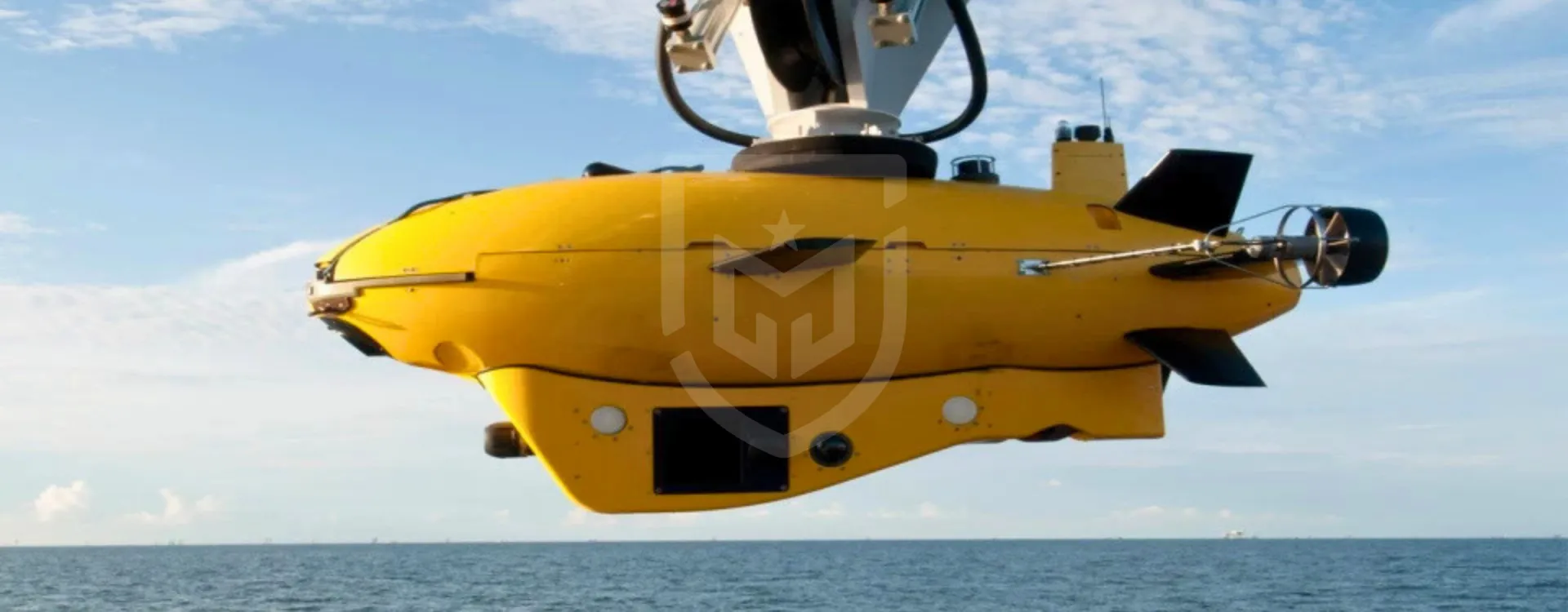
An Unmanned Underwater Vehicle (UUV) is a robotic platform that operates beneath the sea without a human onboard, performing surveying, mapping, inspection, reconnaissance, and intervention. Under the UUV umbrella sit two primary classes: AUV (Autonomous Underwater Vehicle) and ROV (Remotely Operated Vehicle). AUVs follow pre-planned routes autonomously with no tether, while ROVs are tethered to a surface vessel and controlled in real time by an operator. This distinction directly shapes mission duration, maneuver precision, depth capability, and data transfer.
Today, UUVs are core tools in oceanography, seafloor mapping, pipeline and platform inspection, harbor security, mine detection, search and rescue, and ecosystem monitoring. For wide-area surveys and long-range data collection, AUVs shine; for precise manipulation, sampling, or maintenance, ROVs take the lead.
How do they communicate and navigate underwater? Because GPS doesn’t work underwater, UUVs rely on IMU, DVL, depth sensors, and compass for state estimation, while acoustic modems provide low-bandwidth, long-range data links. With multi-station setups, triangulation improves positioning, allowing vehicles to hold course even in low visibility and strong currents.
Key advantages
Safety: Executes risky tasks at greater depths and durations than human divers.
Efficiency: Covers wide areas in a single mission, collecting high-resolution data.
Cost: Reduces vessel time, cutting operational costs.
Scalability: Enables swarm missions, coordinating multiple vehicles for complex tasks.
AUV vs. ROV at a glance
AUV: Untethered, energy-efficient, long range, broad-area surveys; limited real-time intervention.
ROV: Tethered, real-time control, high-precision manipulation; constrained radius, higher crew/logistics needs.
Why it matters now
In energy and infrastructure, UUVs support routine subsea asset inspections; in security, they enhance situational awareness; in science, they enable long-term climate and ecosystem studies. Advances in AI-driven mission planning, onboard anomaly detection, and multi-vehicle coordination are extending endurance and unlocking harder, deeper, and more data-intensive missions.
Bottom line: A UUV is the underwater eyes, brain, and hands of modern ocean operations. The best platform depends on objective, depth, range, data needs, and intervention requirements—with AUVs excelling at autonomous surveys and ROVs owning real-time, high-precision tasks.


The cookies used on our website are used to provide you with a better user experience and to improve our website. You can manage your cookie preferences from the options below.



 Levent Kılıçalan