Electro-Optics and Sensors


BREAKING NEWS
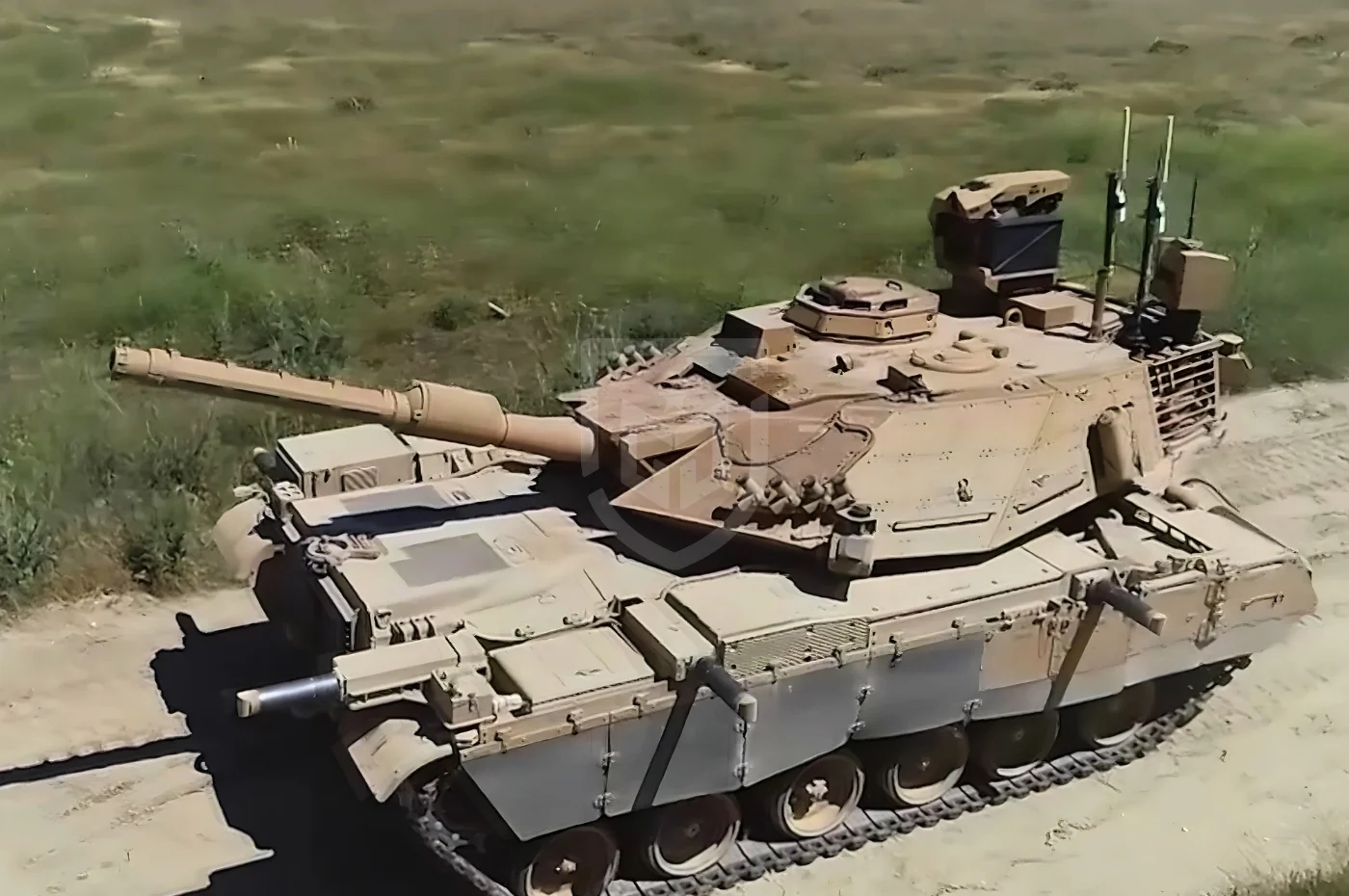
AKKOR was developed to address one of the most critical threats in contemporary warfare: anti-tank guided missiles (ATGMs), rocket-propelled grenades (RPGs), and advanced tandem-warhead munitions. Modern passive armor alone is insufficient against top-attack and high-penetration threats. AKKOR adopts a proactive defense principle by neutralizing threats before they strike the vehicle.
Operational Purpose and Role
The primary mission of AKKOR is to serve as the last line of defense for main battle tanks and heavy armored platforms. The system is designed to counter:
AKKOR significantly increases survivability in asymmetric warfare, urban combat, and close-range engagements.
Doctrine and Concept of Use
AKKOR is part of a layered defense doctrine:
Upon detection, the system classifies the threat and calculates its trajectory and time-to-impact. If applicable, soft-kill measures attempt to disrupt guidance. If the threat persists, hard-kill countermeasures are deployed to physically destroy the incoming munition at an optimal safe distance.
This engagement cycle occurs autonomously within milliseconds.
System Architecture
AKKOR consists of four main layers:
Sensor Layer
The radar provides full 360° azimuth coverage and calculates threat speed, direction, and intercept geometry. Specific radar band information is not publicly disclosed.
Processing & Decision Layer
This layer performs threat classification, prioritization, and engagement solution generation.
Effector Layer – Hard-Kill
The munition detonates at a calculated intercept point to neutralize the incoming threat via controlled fragmentation.
Effector Layer – Soft-Kill
These systems disrupt infrared and laser-guided threats by obscuring or deceiving their guidance systems.
Survivability Approach
AKKOR is designed to:
Controlled fragmentation principles are publicly referenced, though detailed specifications remain undisclosed.
Reaction Time and Engagement
Precise reaction time and intercept distance values are not publicly disclosed. However, the manufacturer states that AKKOR is capable of responding to very close-range asymmetric threats and engaging multiple simultaneous targets.
Integration and Ecosystem
AKKOR is fully integrated with ASELSAN’s fire control, battle management, and sensor systems. It is optimized for integration with the Altay MBT and is compatible with modern armored vehicle electronic architectures.
Advantages Against Modern Threats
Limitations
Detailed Technical Information
Dimensions and Weight
Total system weight and modular distribution are not publicly disclosed. Values may vary depending on the host platform.
Power Supply
Powered by the vehicle’s onboard electrical system. Exact consumption values are not publicly disclosed.
Performance
Exact intercept distance and reaction time are not publicly disclosed.
Sensors
Radar band type is not publicly disclosed.
Target Detection and Tracking
The system calculates incoming threat trajectory and impact point. It can track multiple simultaneous threats; maximum tracking capacity is not publicly disclosed.
Engagement and Guidance
The hard-kill munition detonates at a calculated intercept point to destroy the incoming projectile. Soft-kill munitions generate multispectral screening to counter IR and laser guidance.
Command and Control
Fully compatible with ASELSAN armored vehicle electronic architecture.
Electronic Warfare Resilience
The radar and sensor architecture are designed to be resistant to electronic interference. Detailed ECCM capabilities are not publicly disclosed.
Deployment and Mobility
Vehicle-mounted modular system. Fully mobile and integrated into armored platforms.
Personnel
Operates autonomously with no additional crew requirement beyond standard vehicle crew.
Frequently Asked Questions
What does AKKOR do?
What is AKKOR’s engagement range?
Which threats can AKKOR counter?
How many threats can it engage simultaneously?
Is AKKOR mobile?
What are AKKOR’s international equivalents?
Comparable systems include:
AKKOR’s key differentiator is its integrated hard-kill and soft-kill architecture in a unified system.
Sources




The cookies used on our website are used to provide you with a better user experience and to improve our website. You can manage your cookie preferences from the options below.