



Air Forces News
Missiles and Rockets


BREAKING NEWS

One of the most significant yet under-highlighted developments in Türkiye’s defense agenda recently was the successful in-air ignition test of the Ramjet engine developed by DeltaV Space Technologies. This breakthrough represents far more than a technical achievement; it signals Türkiye’s entrance into a new era of high-speed propulsion technologies. Defense analyst Ahmet Alemdar emphasizes that only a handful of countries worldwide possess Ramjet capabilities—and Türkiye is now joining this exclusive group.
Unlike turbofan and turbojet propulsion systems, Ramjet engines burn incoming air directly with fuel, without the need for additional mechanical components. This enables continuous thrust, allowing the platform to maintain high speeds over long distances without experiencing performance degradation. However, the complexity of managing high-pressure airflow inside the combustion chamber and maintaining structural integrity at such extreme conditions makes Ramjet technology one of the most challenging propulsion fields. Alemdar notes that Türkiye achieving this stage with an indigenous system represents a major strategic step.
The operational impact of Ramjet propulsion is especially evident in air-to-air missile systems. While conventional missiles begin to lose speed and energy after a certain point in flight, Ramjet-powered missiles maintain high velocity and maneuverability until the final seconds of engagement. This dramatically expands the so-called “no-escape zone,” reducing a target aircraft’s ability to evade incoming missiles—an advantage that can decisively shift air combat dynamics.
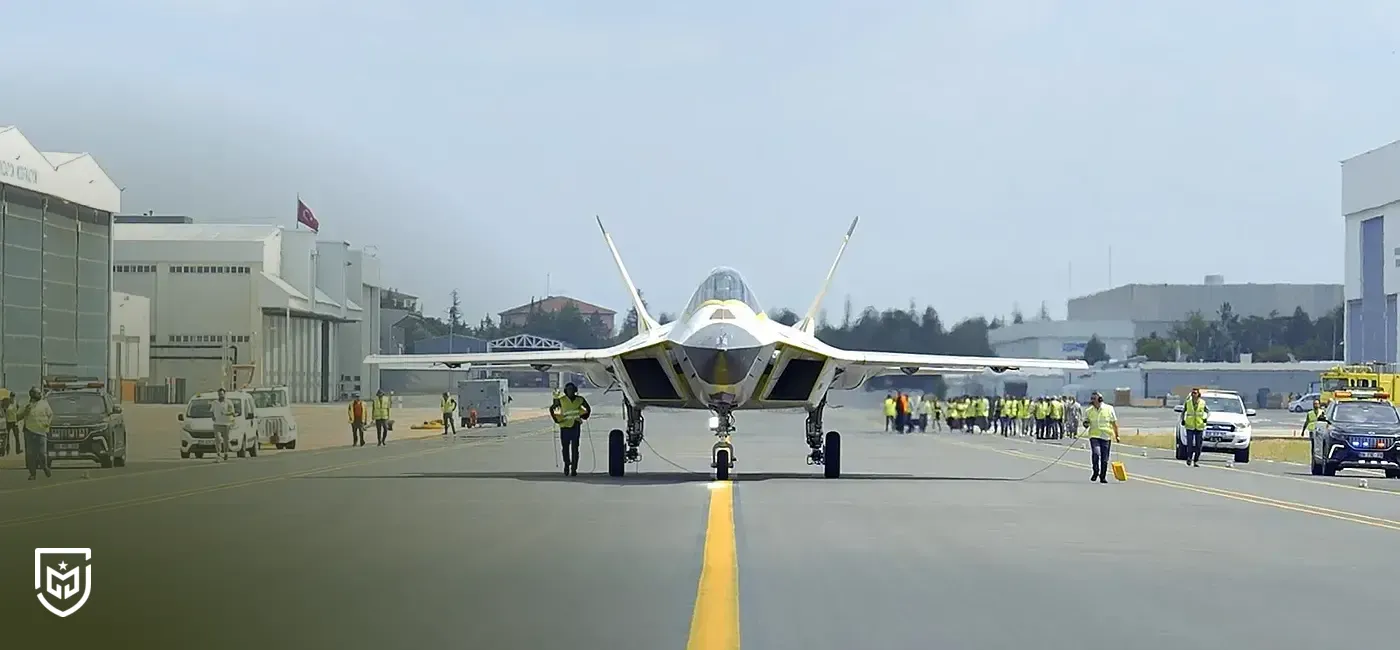
Türkiye is already working on multiple indigenous solutions leveraging this technology. The Ramjet-powered GÖKHAN and GÖKBORA air-to-air missiles are expected to be deployed within the internal weapon bays of both the KAAN fighter jet and the KIZILELMA unmanned combat aircraft. Combined with the domestically developed MURAD AESA radar, these systems will form the backbone of Türkiye’s future air superiority doctrine. Moreover, the experience gained from Ramjet development is seen as a crucial first step toward scramjet (scRamjet) propulsion, which is essential for achieving hypersonic missile capability—a domain where traditional air defense systems have shown significant vulnerabilities in recent conflicts.
As neighboring countries explore Ramjet-powered missile acquisitions in an attempt to shift regional balances, Türkiye is taking a more advanced position by developing its own systems. Experts underline that the expertise accumulated through the Ramjet program will play a key role in Türkiye’s pursuit of next-generation hypersonic technologies, potentially opening the door to strategic capabilities that only a few nations currently possess.


The cookies used on our website are used to provide you with a better user experience and to improve our website. You can manage your cookie preferences from the options below.
 Rabia Kılıç
Post Comment
Comments
No comments yet.
Related News
KAAN Fighter Jet's New Prototype Begins Taxi Tests
KAAN Fighter Jet Completes Pre-Flight Taxi Test Successfully
BAE Systems and Lockheed Martin Unveil Blizzard Multi-Mission Unmanned Aircraft
Anduril's Ohio Facility Produces First YFQ-44A Fury Unmanned Combat Aircraft
South Korea's envoy highlights KAAN fighter jets as cornerstone of defense partnership with Türkiye
TAI Chief: Turkey Shaping NATO's Future Security Architecture
Anduril Thunder: Autonomous Attack Helicopter with Level 5 Autonomy Capabilities
Bayraktar AKINCI Successfully Strikes Target with TOLUN-P in Electronic Warfare Environment