


Land Forces News
Global Developments


BREAKING NEWS
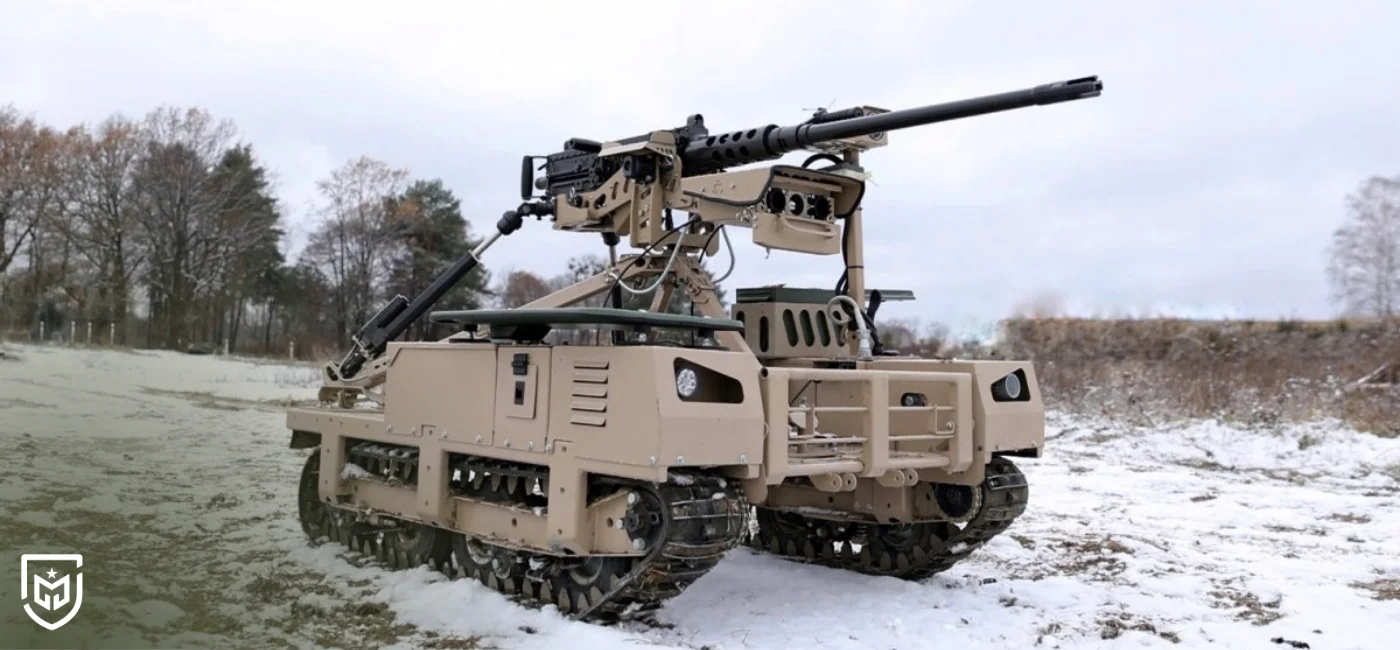
The Russia-Ukraine War continues to reshape the role of unmanned systems in land warfare. According to Defense One, Ukraine has been working for more than a year to use aerial and ground robots in assault operations instead of human soldiers. This approach has also attracted NATO’s attention, as the alliance studies how ground and aerial robots could be used in offensive missions.
One of the most striking developments mentioned in the report was an incident highlighted by Ukrainian President Volodymyr Zelensky. The incident, reportedly recorded in July 2025, involved Russian soldiers surrendering during an operation carried out by Ukrainian robotic systems. According to an earlier statement from Ukraine’s 3rd Assault Brigade, the operation used FPV drones together with explosive-carrying unmanned ground vehicles.
After Russian positions were hit, surviving soldiers reportedly surrendered and were moved to Ukrainian lines. The operation was notable because it was said to have been conducted without the direct use of Ukrainian infantry and without Ukrainian casualties. This shows the increasing battlefield relevance of hybrid robotic assault concepts, where unmanned ground vehicles and aerial drones operate together to pressure enemy positions.
Ukraine’s recent use of unmanned ground vehicles appears to go beyond logistics, casualty evacuation or support missions. These systems are increasingly being tested for direct assault, trench-clearing support and battlefield pressure roles. By combining FPV drones with ground robots, Ukrainian units are exploring ways to reduce the exposure of soldiers while maintaining offensive tempo against fortified positions.
However, robotic ground combat still faces major technical challenges. FPV drones can perform limited autonomous flight, loitering and reconnection after short communication disruptions. Unmanned ground vehicles, by contrast, often require more continuous operator attention. Ground autonomy is more difficult because vehicles must deal with uneven terrain, obstacles, trenches, mines, electronic warfare and unreliable communications.
Ukraine is also searching for alternative navigation methods against GPS jamming. Visual matching, terrain matching and AI-assisted long-range navigation are among the methods being explored. As electronic warfare becomes more intense on the battlefield, unmanned systems need to operate with higher levels of autonomy rather than relying only on remote control.
Russia also uses robotic and unmanned systems extensively, but the report suggests that much of this use focuses on one-way attack drones such as Shahed-type systems and loitering munitions like Lancet. While Russia largely uses unmanned platforms as strike munitions, Ukraine is moving toward more complex, multi-platform robotic systems capable of operating together in coordinated missions.
Ukraine’s broader objective is to move away from a model in which one operator controls only one drone. Instead, the aim is for a single operator to supervise a wider network of ground and aerial robots. In this model, the operator becomes less of a direct pilot and more of a technician or mission manager who prepares, positions and coordinates robotic systems.
NATO’s close interest in these developments shows that Ukraine’s battlefield experience is important not only for the current war but also for future defense planning. Unmanned ground vehicles, FPV drones, AI-assisted navigation and multi-robot coordination concepts offer new possibilities for reducing casualties, increasing assault speed and pressuring enemy defenses. At the same time, reliable communications, targeting accuracy, autonomous decision-making and resilience against electronic warfare remain the main challenges for robotic warfare.


The cookies used on our website are used to provide you with a better user experience and to improve our website. You can manage your cookie preferences from the options below.
 Süheyla Yıldız
Post Comment
Comments
No comments yet.
Related News
SSB Sector Meeting: Focus on Supply Chain and Production Capabilities
Turkish defense industry signed 15 billion dollars in new contracts in 2026
SSB Hosts Second Supply Chain Strengthening Summit
SSB Chief: Transparent Licensing Will Strengthen Defense Cooperation
Görgün: Turkish-German defense partnership to be revitalized with new vision
Spain Plans to Purchase 15 Additional Hürjet Advanced Trainers
Turkey and Spain to Develop Joint Version of Hürjet Aircraft
Romanian Corvette Conducts Black Sea Exercises