



Air Forces News
Global Developments


BREAKING NEWS
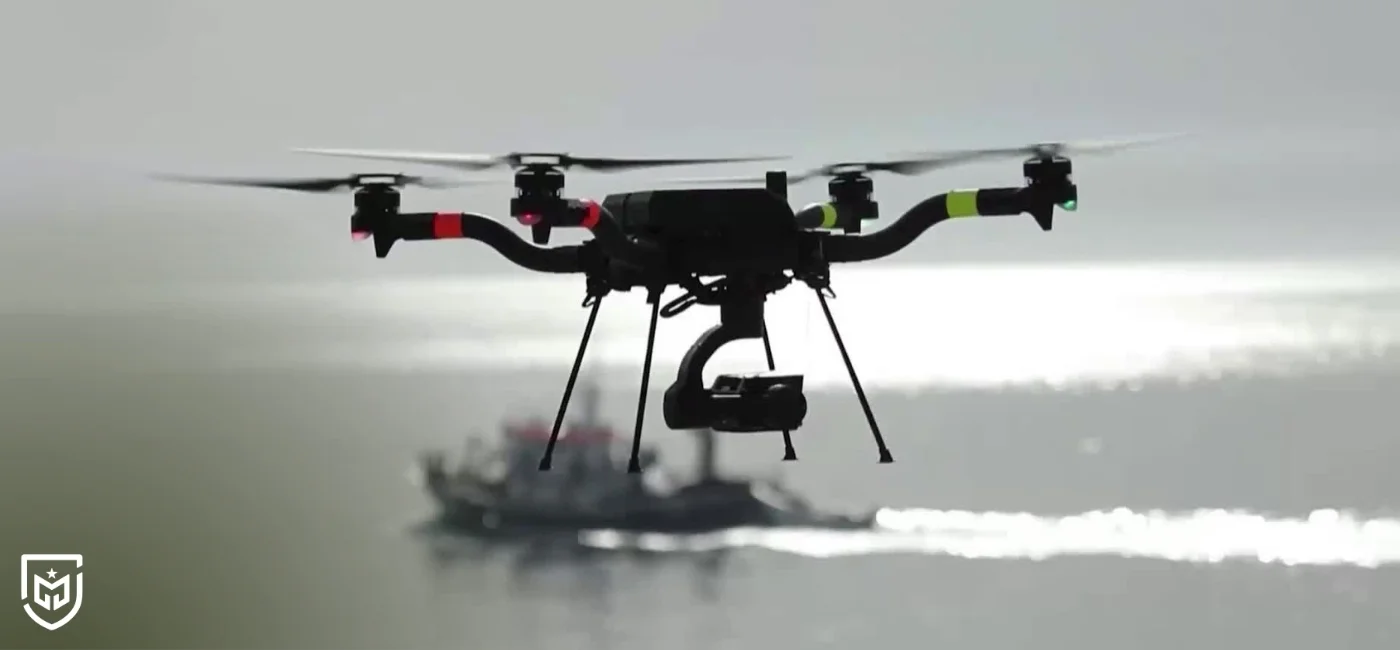
First-person-view (FPV) drones, which have gained major prominence in the war in Ukraine due to their low cost and high battlefield impact, are now drawing increasing attention from NATO’s northern flank. During the Cold Response 2026 exercise held in Norway, these systems were deployed and assessed in the demanding climate and terrain conditions of the Arctic region. The exercise stood out not only as a showcase of existing drone capabilities, but also as an important opportunity to examine whether such unmanned systems can operate effectively in polar environments.
According to information reported by Defence News, the exercise took place approximately 240 kilometers north of the Arctic Circle. In one scenario, Norwegian Armed Forces long-range reconnaissance personnel were positioned in a forested area, where a small gray FPV drone became one of the few visible indicators of their location in the snow-covered environment. The drone was identified as the U.S.-made Skydio X10D. The fact that the same platform has also been used by Ukrainian forces highlights how closely NATO members are studying lessons emerging from the war in Ukraine. Skydio’s $9.4 million contract with Norway’s Ministry of Defence, signed in July, further indicates that this capability is moving beyond experimentation and into operational inventory.
Norwegian military officials said that battlefield lessons from Ukraine are shaping the country’s thinking, particularly regarding FPV drones and unmanned systems used for intelligence, surveillance, and reconnaissance missions. However, they stressed that simply adopting these technologies is not enough; the systems must also be adapted to the unique realities of Arctic operations. Extreme cold, snow-covered terrain, limited visibility, and increased energy demands all directly affect drone performance. The data collected during Cold Response 2026 could therefore play an important role in shaping NATO’s future doctrine for unmanned systems in northern and polar regions.
One of the most significant technical problems encountered during the exercise was battery performance. Officers from the Norwegian Army Combat Lab stated that cold weather sharply reduced battery endurance, making sustained drone operations more difficult in the Arctic. At the same time, Norway tested not only advanced commercial and military-grade systems, but also a low-cost FPV drone assembled from relatively inexpensive components. This drone was reportedly designed for one-way attack missions and was tested to determine its operational range while carrying an explosive payload. This suggests that future Arctic operations may involve a hybrid approach in which both low-cost strike drones and more sophisticated reconnaissance systems are used together.
The United States Marine Corps, another participant in the exercise, also brought an experimental FPV drone developed by Johns Hopkins University. One of the most distinctive features of this system was its protective cage structure surrounding the airframe. The design was intended to reduce system losses during training, prevent complete destruction after collisions, and simplify field repairs when needed. U.S. Marines used the platform in “force-on-force” training scenarios, in which friendly troops confront opposing elements simulating a real adversary. Officials noted that these kinds of drills help improve attack-flight skills, contribute to the development of counter-drone tactics, and ultimately increase pilot survivability in contested environments.
Sergeant Major Patrick Harrington, Director of the Unmanned Systems Center of Excellence for the 2nd Marine Division, said that one of the greatest challenges of FPV drone use in Arctic conditions is energy management. Harrington also emphasized that the exercise enabled extensive information exchange among allied nations. NATO members discussed how they employ FPV drones, which systems they prefer, and what methods they use to operate them. In this sense, Cold Response 2026 emerged not merely as a military exercise, but as an important testing ground for how NATO may structure its future unmanned warfare capabilities in the Arctic.


The cookies used on our website are used to provide you with a better user experience and to improve our website. You can manage your cookie preferences from the options below.
 Süheyla Yıldız
Post Comment
Comments
No comments yet.
Related News
SSB Sector Meeting: Focus on Supply Chain and Production Capabilities
Turkish defense industry signed 15 billion dollars in new contracts in 2026
SSB Hosts Second Supply Chain Strengthening Summit
Skyfall II Exercise: U.S. Army Demonstrates UAV Defense Capabilities in Germany
SSB Chief: Transparent Licensing Will Strengthen Defense Cooperation
STM's Swarm UAV System Demonstrates Operational Success at Ateş Serbest-2026
TUSAŞ Kamikaze UAV Systems Achieve Success in Exercise Ateş Serbest-2026
Fire Free-2026 Exercise Successfully Completed