






Satellite and Space News


BREAKING NEWS
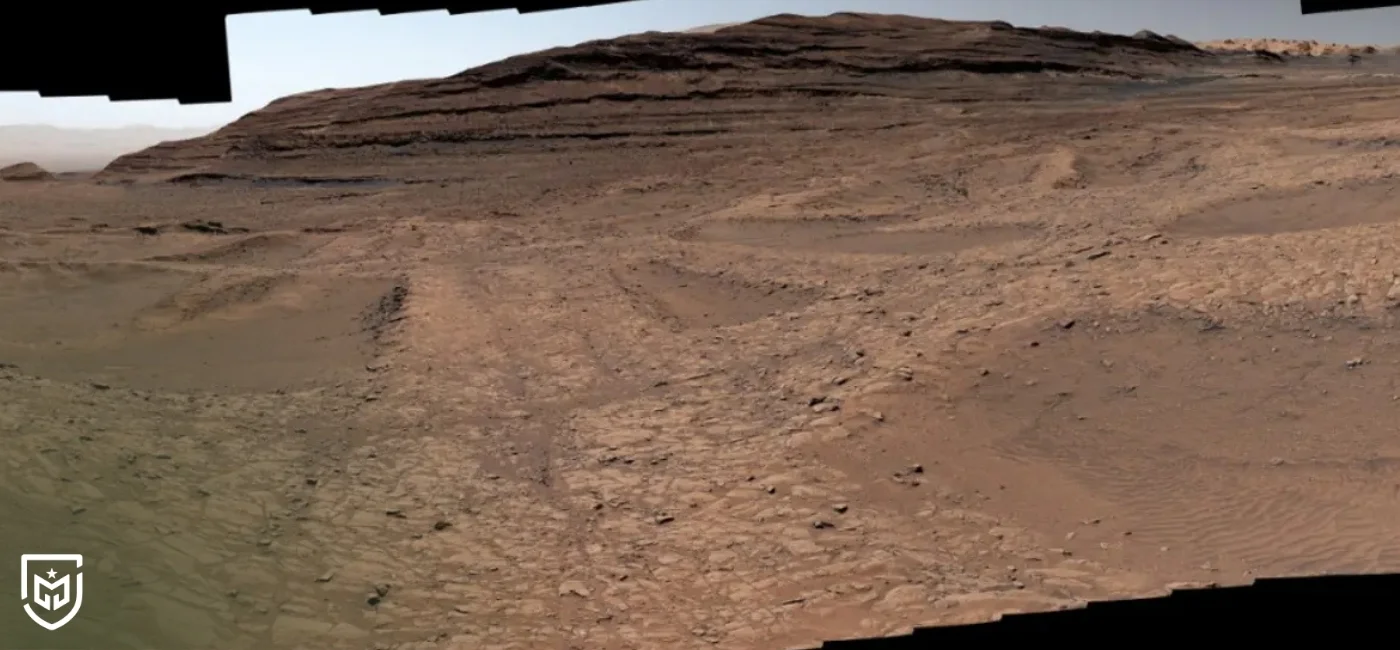
NASA’s Curiosity rover has been conducting in-depth investigations for nearly six months in a region of Mars covered with unusual geological formations known as “boxwork.” These structures, which resemble massive spiderweb patterns when viewed from orbit, are offering significant new insights into the Red Planet’s ancient water history. Scientists believe the findings could reshape current understanding of how long microbial life may have potentially survived on Mars billions of years ago.
The boxwork formations consist of low ridges approximately 1 to 2 meters high, separated by sandy troughs. Stretching for kilometers across the Martian surface, these intersecting ridges likely formed when groundwater flowed through large fractures in the bedrock, leaving behind mineral deposits. Over time, the mineral-rich sections hardened and became resistant to erosion, while surrounding weaker material was worn away by wind, forming the troughs seen today. Although smaller boxwork structures exist on Earth, typically in caves or arid sandy environments, the Martian examples are significantly larger and more complex.
Weighing about 899 kilograms and roughly the size of an SUV, Curiosity faced considerable engineering challenges navigating the rugged terrain. The rover had to carefully traverse ridges nearly as narrow as its own width while avoiding wheel slippage in sandy depressions. The exploration is taking place on the 5-kilometer-high Mount Sharp, where each geological layer represents a different chapter in Mars’ climatic evolution. As Curiosity ascends, researchers are finding increasing evidence that while Mars gradually became drier, intermittent wet periods may have returned, allowing water to briefly reappear on the surface.
In addition to confirming fracture-related mineral deposits, the rover discovered textured rock features called nodules—clear indicators of past groundwater activity. Interestingly, these nodules were not concentrated along central fractures as expected, but instead along ridge walls and nearby troughs. X-ray analyses revealed clay minerals within the ridges and carbonate minerals in the troughs, offering further clues about the chemical environment in which they formed. A recent sample was also analyzed using a specialized “wet chemistry” technique designed to detect carbon-based organic compounds—the building blocks of life.
Curiosity is expected to leave the boxwork region in March and continue exploring sulfate-rich layers higher on Mount Sharp. Scientists hope that further analysis will provide deeper understanding of Mars’ dramatic climate transition billions of years ago and assess whether conditions may once have supported life.


The cookies used on our website are used to provide you with a better user experience and to improve our website. You can manage your cookie preferences from the options below.
 Süheyla Yıldız
Post Comment
Comments
No comments yet.
Related News
Swedish-Developed Lunar Neutrals Telescope Delivered to TÜBİTAK SPACE for Moon Mission-1
Japan's RV-X reusable rocket completes first test flight
Turkey's indigenous atomic clock undergoing space testing
NATO Summit Defense Industry Forum Marks New Era in Ankara
Japan's H3-30S Rocket Successfully Deploys French Satellite to Orbit
Turkey updates artificial intelligence strategy based on defense industry success
Artificial Intelligence Uncovers 1,300 Cosmic Anomalies in NASA’s Vast Archive
Land News, Missile and Rocket Systems, Electronic Systems, Naval News, Satellite and Space News