


Air Forces News
Global Developments


BREAKING NEWS
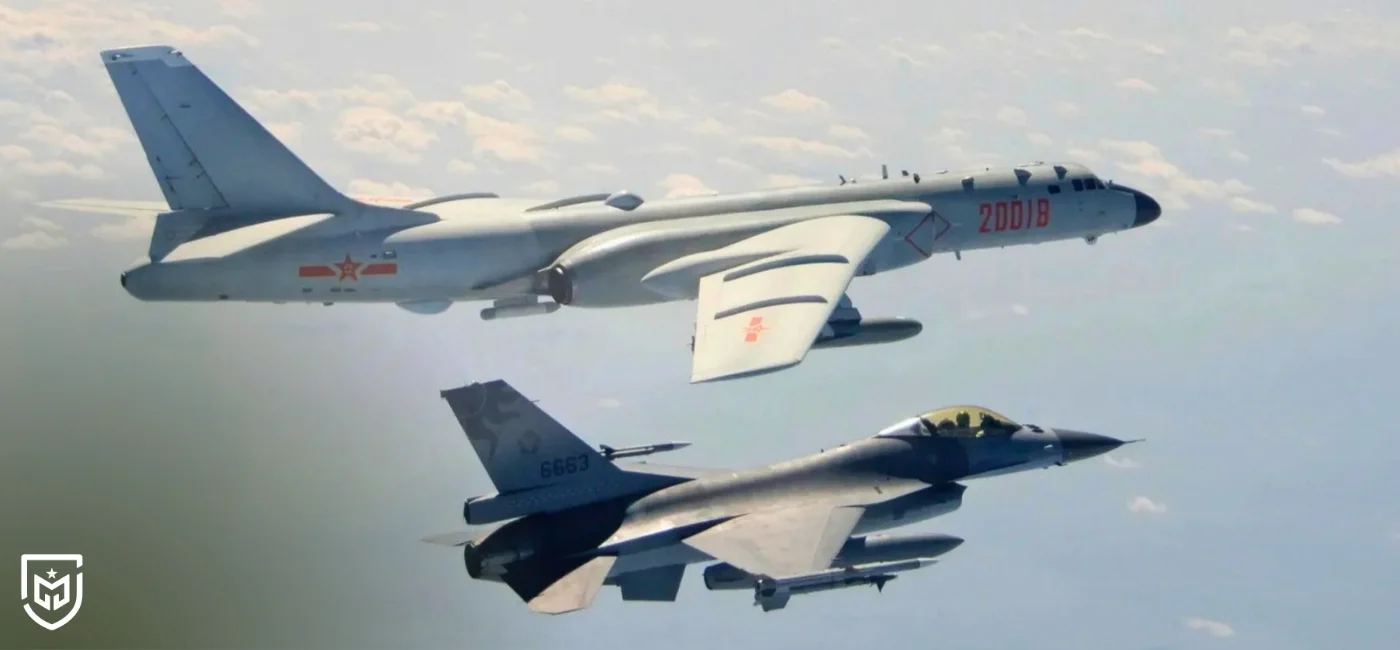
China’s reported deployment of unmanned attack platforms converted from older-generation fighter aircraft to air bases near the Taiwan Strait has drawn significant attention from defense observers monitoring the regional military balance. According to Reuters, citing the February edition of the Mitchell Institute for Aerospace Studies’ report titled China Airpower Tracker, these platforms were identified at five air bases in Fujian province and one in Guangdong province. Satellite imagery analysis indicated that the aircraft are consistent with the J-6 fighter jet, one of the oldest combat aircraft types previously operated by the Chinese air force.
The J-6, which first flew in the 1960s, appears to have been repurposed into an unmanned strike platform, highlighting China’s effort to integrate even legacy aircraft into modern operational concepts. J. Michael Dahm, a senior fellow at the Mitchell Institute and a former U.S. naval intelligence officer, stated that the People’s Liberation Army may have positioned more than 200 of these converted aircraft at bases close to the Taiwan Strait. Rather than functioning as conventional remotely piloted drones or autonomous UAVs, these systems are believed to be intended for one-way attack missions, operating in a role closer to that of cruise missiles.
Defense experts assess that the primary mission of these converted aircraft would be to saturate and weaken Taiwan’s air defense network during the opening phase of a potential military campaign. A large number of relatively low-cost expendable aerial platforms could force defenders to use expensive interceptor missiles, creating a serious cost imbalance. Such a tactic could place heavy pressure not only on Taiwan’s defenses but also on U.S. and allied assets in the region. By targeting radar sites, command-and-control nodes, and critical military infrastructure in the initial wave, these drone-converted fighters could help pave the way for follow-on strikes by more advanced Chinese aircraft and missile systems.
The report also underlines that these unmanned attack aircraft represent only one component of China’s broader and increasingly layered airpower structure. That wider force package reportedly includes stand-off missile-carrying bombers, modern fighter aircraft, ballistic and cruise missiles, as well as advanced drone swarms. Taiwanese security officials have also warned that the main objective of these platforms would be to exhaust Taiwan’s air defense capacity at the outset of a conflict. In response to the growing threat, Taiwan’s Ministry of National Defense has presented plans to parliament for the accelerated acquisition of next-generation counter-drone systems, signaling a renewed push to strengthen the island’s defensive posture against evolving aerial threats.


The cookies used on our website are used to provide you with a better user experience and to improve our website. You can manage your cookie preferences from the options below.
 Süheyla Yıldız
Post Comment
Comments
No comments yet.
Related News
Altınay Defense Group Transitions to New Management Structure
KAAN Fighter Jet's New Prototype Begins Taxi Tests
KAAN Fighter Jet Completes Pre-Flight Taxi Test Successfully
BAE Systems and Lockheed Martin Unveil Blizzard Multi-Mission Unmanned Aircraft
Anduril's Ohio Facility Produces First YFQ-44A Fury Unmanned Combat Aircraft
BAE Systems Raises Outlook as Global Defense Demand Continues to Surge
South Korea's envoy highlights KAAN fighter jets as cornerstone of defense partnership with Türkiye
ASELSAN's Electro-Optical System Integrated into South Africa's Mwari Aircraft