


Air Forces News
Global Developments


BREAKING NEWS
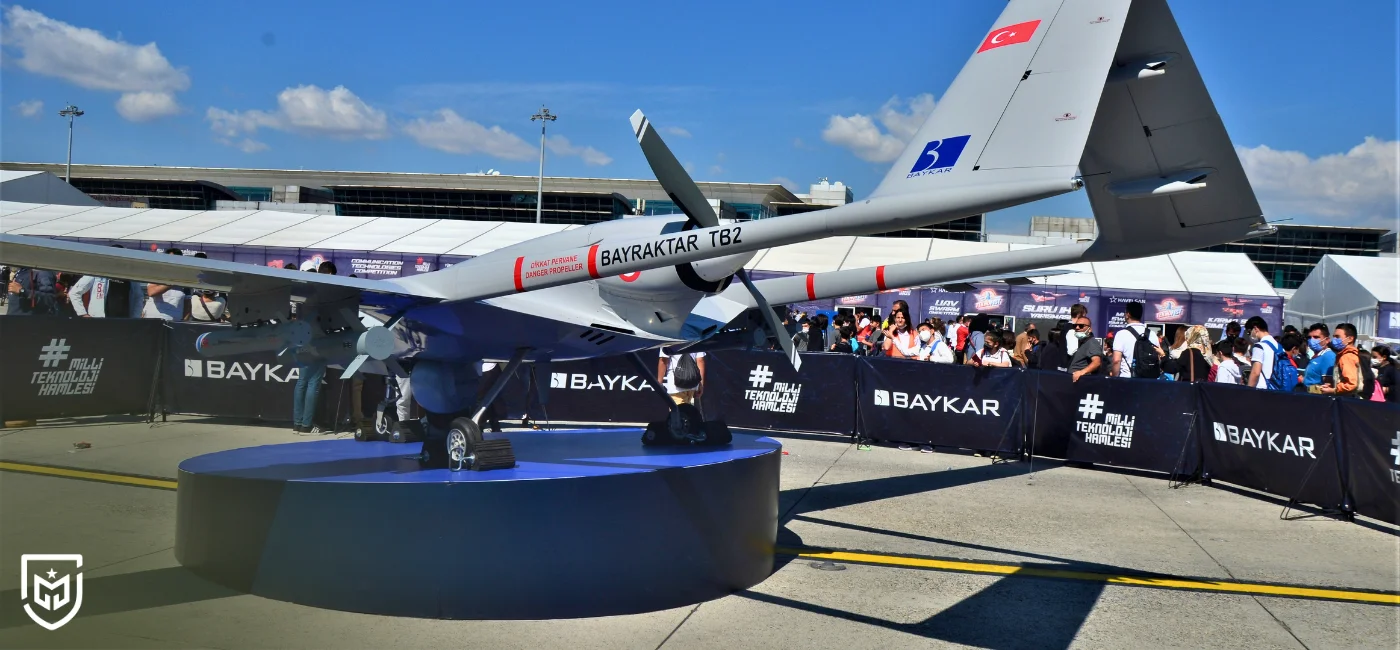
Japan is moving to expand the role of unmanned systems in its defense posture, with the Ground Self-Defense Force set to procure a new class of multi-purpose UAVs under the fiscal year 2026 budget enacted on April 7. Open-source reporting says the package covers five wide-area UAV systems with a total budget of ¥11.1 billion, roughly $69.7 million. Bayraktar TB2S and Israel’s Heron Mk II are widely described as the main contenders in the process.
Bayraktar TB2S is seen as a strong candidate largely because of its SATCOM-enabled beyond-line-of-sight operating capability, which fits Japan’s need to monitor large maritime areas and distant island chains. That mission profile is especially relevant for a country seeking persistent surveillance over broad sea spaces rather than relying only on short-range tactical UAV coverage. This final sentence is an inference drawn from the platform role described in reporting and Japan’s stated interest in wide-area UAV capability.
At the same time, Japan’s Ministry of Defense has not publicly declared a final selection. Jane’s reported in August 2025 that Heron Mk II testing had concluded in fiscal year 2024, while Bayraktar TB2 testing was expected to conclude within the then-current fiscal year. That means Bayraktar’s position is best described as that of a leading candidate rather than a confirmed winner.
Another important signal came from high-level defense contacts. Japan’s Ministry of Defense stated that Defense Minister Gen Nakatani visited Türkiye in August 2025 and toured defense-related facilities and companies, including Baykar. That visit was widely viewed as a notable indication of Japanese interest in Turkish defense technologies and UAV solutions.
Heron Mk II remains a serious rival in the competition, and available reporting suggests Japan’s decision will likely depend on a broader comparison that goes beyond price alone, including endurance, operational concept, industrial cooperation, and surveillance requirements. In that sense, the program reflects not just a procurement race, but a larger Japanese shift toward replacing or supplementing legacy manned roles with more flexible unmanned systems. This final point is an inference based on the budget move, the candidate field, and the test program.


The cookies used on our website are used to provide you with a better user experience and to improve our website. You can manage your cookie preferences from the options below.
 Süheyla Yıldız
Post Comment
Comments
No comments yet.
Related News
SSB Sector Meeting: Focus on Supply Chain and Production Capabilities
Turkish defense industry signed 15 billion dollars in new contracts in 2026
SSB Hosts Second Supply Chain Strengthening Summit
Skyfall II Exercise: U.S. Army Demonstrates UAV Defense Capabilities in Germany
SSB Chief: Transparent Licensing Will Strengthen Defense Cooperation
STM's Swarm UAV System Demonstrates Operational Success at Ateş Serbest-2026
TUSAŞ Kamikaze UAV Systems Achieve Success in Exercise Ateş Serbest-2026
Fire Free-2026 Exercise Successfully Completed