

Naval Forces News
Global Developments


BREAKING NEWS
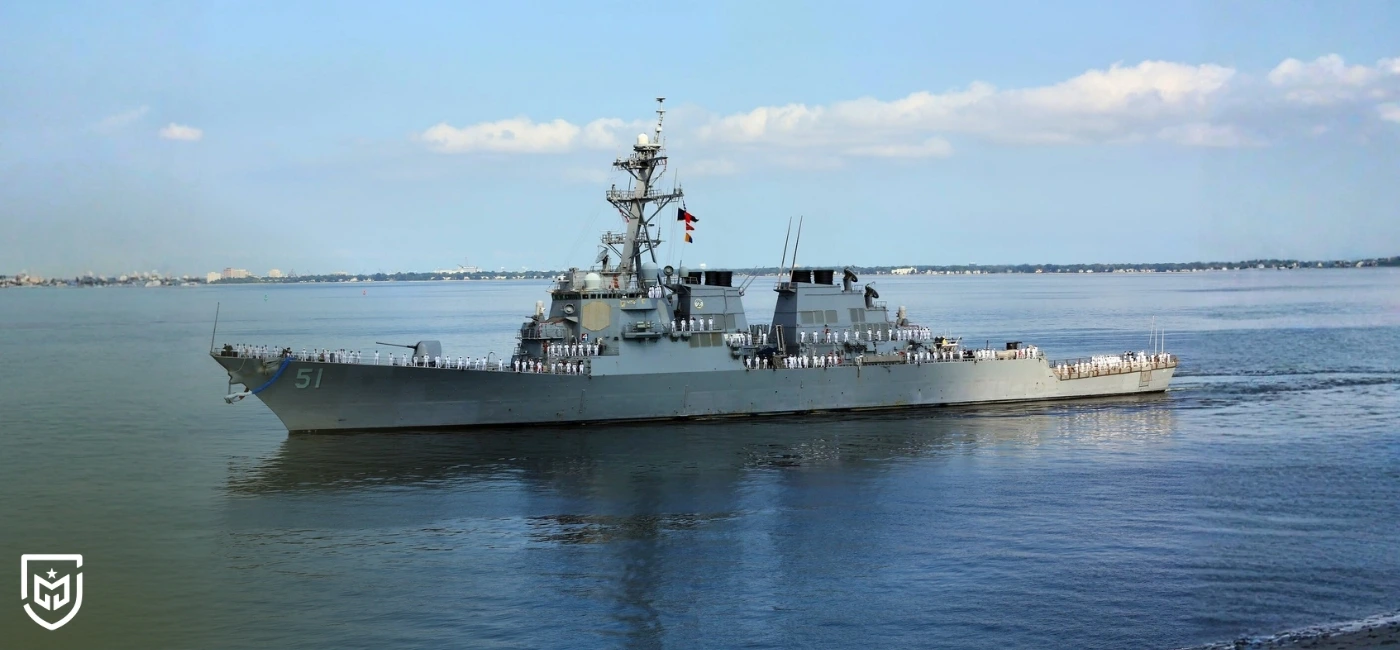
The U.S. Navy has officially taken delivery of the second destroyer built under the Flight III Arleigh Burke-class program, further strengthening its surface warfare capabilities amid increasing global maritime competition. The destroyer, USS Ted Stevens (DDG-128), was delivered by Ingalls Shipbuilding at its shipyard in Pascagoula, Mississippi. The delivery represents a major milestone in the U.S. Navy’s efforts to expand production of next-generation surface combatants.
U.S. Navy officials and shipyard leadership described the delivery as a significant advancement within the framework of the Navy’s Distributed Maritime Operations concept. Flight III destroyers are designed to operate effectively in highly contested and complex threat environments, providing enhanced air and missile defense capabilities while supporting distributed and resilient force structures. The induction of USS Ted Stevens into the fleet underscores the Navy’s long-term commitment to maintaining technological superiority at sea.
Ingalls Shipbuilding President Brian Blanchette highlighted the strong production momentum of the program following the delivery. He stated that the handover of USS Ted Stevens reflects the steady acceleration of Flight III destroyer construction while delivering advanced capabilities to the fleet. Blanchette emphasized that the ship is expected to serve as a highly effective asset in safeguarding U.S. maritime security for decades to come.
The Arleigh Burke-class destroyers are built around the Aegis Combat System, enabling them to conduct a wide range of missions including air defense, anti-submarine warfare, surface warfare, and ballistic missile defense. The class is among the longest-running destroyer production programs in U.S. naval history, with more than 80 ships delivered to date and additional vessels under construction or in planning.
The Flight III configuration introduces major upgrades compared to the earlier Flight IIA variant. To meet increased radar power demands and higher thermal loads, the ships are equipped with three Rolls-Royce MT30 gas turbine generators and an advanced zonal electrical distribution system. While the hull form remains largely similar to Flight IIA ships, internal layouts have been extensively reengineered to support enhanced mission systems, improved cooling capacity, and future capability growth.
Ingalls Shipbuilding is currently constructing four additional Flight III destroyers at its Pascagoula facility, including Jeremiah Denton (DDG-129), George M. Neal (DDG-131), Sam Nunn (DDG-133), and Thad Cochran (DDG-135). Meanwhile, John F. Lehman (DDG-137) and Telesforo Trinidad (DDG-139) are in early planning and material procurement phases. With its delivery complete, USS Ted Stevens is expected to be assigned to forward-deployed missions, operating as part of carrier strike groups and allied task forces as the U.S. Navy continues to pursue a more distributed and resilient naval force posture.


The cookies used on our website are used to provide you with a better user experience and to improve our website. You can manage your cookie preferences from the options below.
 Süheyla Yıldız
Post Comment
Comments
No comments yet.
Related News
Altınay Defense Group Transitions to New Management Structure
BAE Systems and Lockheed Martin Unveil Blizzard Multi-Mission Unmanned Aircraft
Anduril's Ohio Facility Produces First YFQ-44A Fury Unmanned Combat Aircraft
BAE Systems Raises Outlook as Global Defense Demand Continues to Surge
South Korea's envoy highlights KAAN fighter jets as cornerstone of defense partnership with Türkiye
ASELSAN's Electro-Optical System Integrated into South Africa's Mwari Aircraft
TAI Chief: Turkey Shaping NATO's Future Security Architecture
Anduril Thunder: Autonomous Attack Helicopter with Level 5 Autonomy Capabilities