




Air Forces News
Global Developments


BREAKING NEWS
The U.S. Marine Corps is evaluating the U.S. Army’s MV-75 Cheyenne II tiltrotor as part of its future attack and close air support requirements. According to Defense One, the service is considering whether a platform based on advanced tiltrotor technology could support or potentially replace some missions currently performed by its existing attack helicopter fleet.
The Marine Corps is preparing for a major aviation transition as it retires AV-8 Harrier aircraft and older F/A-18A-C variants. In the longer term, the service will also need a replacement for its UH-1 Venom utility helicopters and AH-1 Viper attack helicopters. Brigadier General Bob Finneran, the Marine Corps’ assistant deputy commandant for aviation, said at the Modern Day Marine conference in Washington that all options are being examined under the Future Attack Strike program, including a platform such as the MV-75.
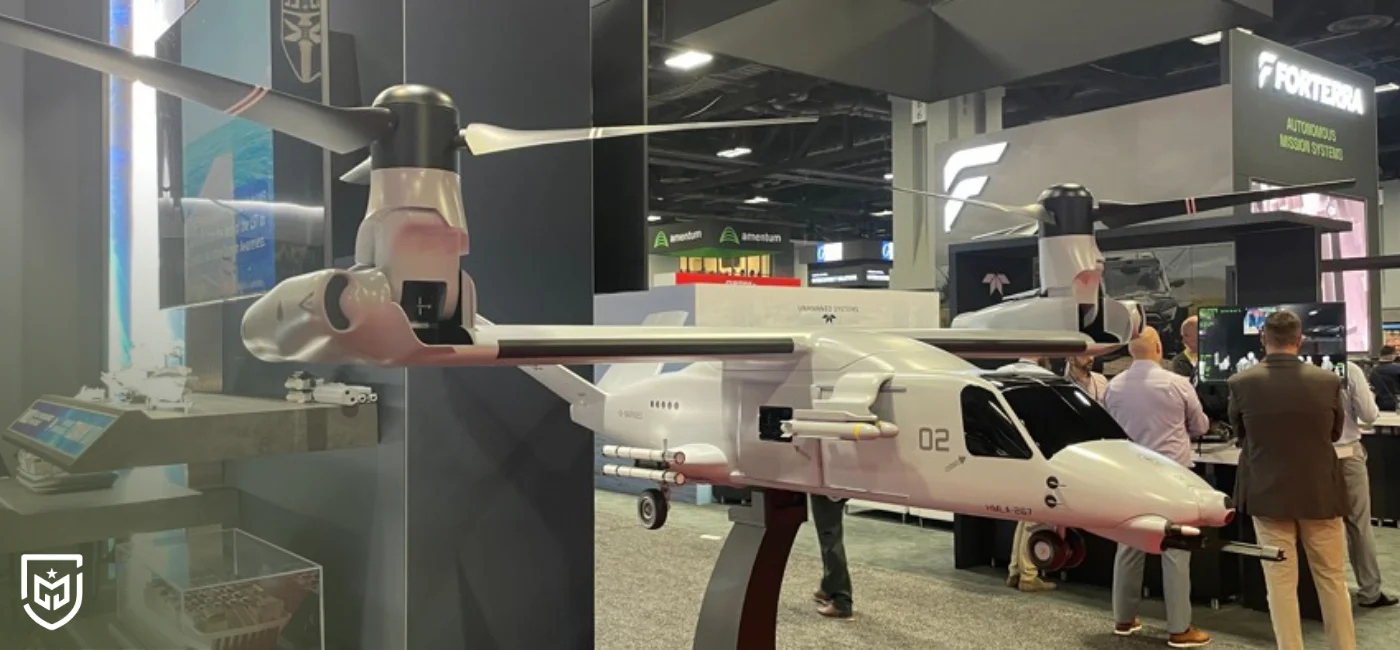
Bell-Textron also presented an armed concept of the MV-75 during the Modern Day Marine event. The model displayed at the conference was shown with missiles and painted in markings associated with Marine Light Attack Squadron 267, which currently operates Venom and Viper helicopters. This presentation highlighted the possibility that the MV-75 could be adapted not only for transport missions but also for close air support and attack roles.
The MV-75 Cheyenne II was selected by the U.S. Army under the Future Long-Range Assault Aircraft program. The Army plans to use the platform to take over some troop transport and long-range assault missions currently assigned to the UH-60 Black Hawk. Prototypes are expected to enter soldier testing in 2026, and the aircraft was formally introduced as “Cheyenne II” during the Army Aviation Warfighting Summit in Nashville in April 2026.
For the Marine Corps, the interest in the MV-75 is connected to its long experience with tiltrotor aircraft. The service has operated the V-22 Osprey for about two decades and is familiar with the speed, range and operational flexibility provided by tiltrotor architecture. An armed version of the MV-75 could theoretically provide close air support to ground forces, launch unmanned systems to counter threats from the air or ground, and carry out longer-range missions than traditional attack helicopters.
The Future Attack Strike program is not limited to finding a direct replacement for the Venom and Viper fleets. Colonel Richard Rusnok, who leads the Cunningham Group within Marine aviation, said that as the program advances, the service will also consider a next-generation assault support platform to eventually replace the V-22. The Osprey is expected to remain relevant into the 2050s, but the next platform may need to be similar in size while featuring improved propulsion, sensors and mission systems.
This evaluation reflects a broader transformation in Marine Corps aviation. The retirement of Harrier aircraft and legacy F/A-18 variants, the future replacement of Venom and Viper helicopters, and long-term planning for the post-Osprey era all point toward faster, longer-range and more versatile aircraft. The armed MV-75 concept stands out as one possible answer to these emerging requirements.
Adapting the MV-75 for attack missions could open a new role for tiltrotor technology in military aviation. Traditionally associated with troop transport, assault support and long-range mobility, tiltrotor aircraft could also be considered for armed escort, close air support and unmanned system deployment missions. Although the Marine Corps has not made a final decision, the fact that the MV-75 Cheyenne II is being discussed as an attack helicopter alternative shows that new aviation concepts are gaining momentum in the U.S. military.


The cookies used on our website are used to provide you with a better user experience and to improve our website. You can manage your cookie preferences from the options below.
 Süheyla Yıldız
Post Comment
Comments
No comments yet.
Related News
SSB Sector Meeting: Focus on Supply Chain and Production Capabilities
Turkish defense industry signed 15 billion dollars in new contracts in 2026
SSB Hosts Second Supply Chain Strengthening Summit
Skyfall II Exercise: U.S. Army Demonstrates UAV Defense Capabilities in Germany
SSB Chief: Transparent Licensing Will Strengthen Defense Cooperation
STM's Swarm UAV System Demonstrates Operational Success at Ateş Serbest-2026
TUSAŞ Kamikaze UAV Systems Achieve Success in Exercise Ateş Serbest-2026
Fire Free-2026 Exercise Successfully Completed