


Land Forces News
Global Developments


BREAKING NEWS
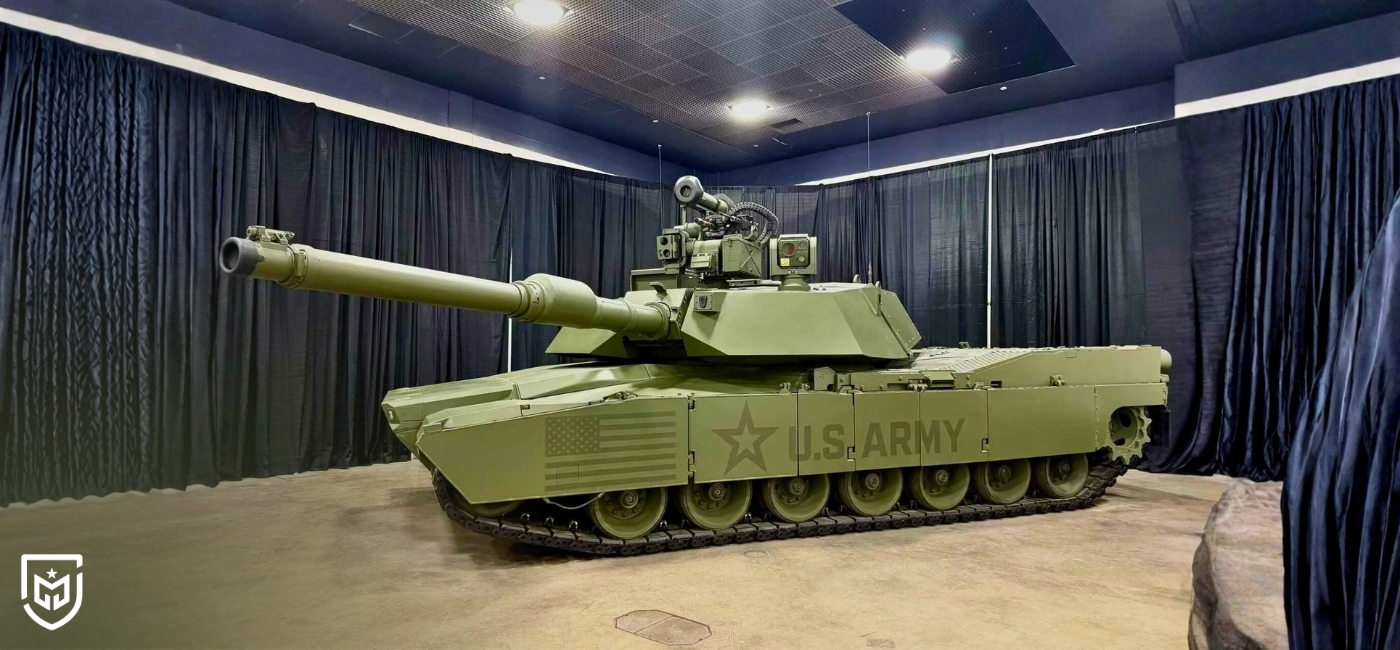
The United States Army has officially unveiled the M1E3 Abrams main battle tank prototype, marking a significant milestone in its long-term armored modernization strategy. The M1E3 is not intended for immediate service but instead serves as a technology demonstrator for the future M1A3 Abrams, which is expected to enter service after 2040. The program focuses on creating a lighter, digitally integrated, and more adaptable armored platform capable of countering emerging threats on future battlefields.
The prototype vehicle was constructed in Warren, Michigan, by Roush Defense, while overall program management and future full-scale production planning are being led by General Dynamics Land Systems. Central to the M1E3 concept is the adoption of open-architecture digital systems, allowing rapid upgrades, improved system interoperability, and long-term adaptability as new technologies and threats emerge.
One of the most notable design changes is the introduction of an unmanned turret combined with an automatic ammunition loading system. The 120 mm main gun is supported by an autoloader housed in the rear of the turret, enabling the crew size to be reduced from four to three personnel. All crew members are positioned side-by-side within the armored hull, benefiting from a network of integrated cameras, sensors, and digital displays that significantly enhance situational awareness.
In terms of armament, the prototype features the EOS R400 Mk2 remotely operated weapon station. The system was showcased with a 40 mm automatic grenade launcher, a 7.62 mm machine gun, and integration of the Javelin anti-tank guided missile. When paired with radar-based sensing systems, it provides capabilities for countering low-altitude aerial threats and detecting unmanned aerial vehicles. The commander’s primary sight is a stabilized electro-optical system produced by Leonardo.
The interior layout highlights an advanced level of digitalization, including an unconventional driver control solution. A commercially available gaming steering wheel from Fanatec was integrated into the prototype, a decision aimed at simplifying training processes and improving driver familiarity through intuitive controls.
Regarding mobility, the M1E3 prototype currently uses a traditional gas turbine engine; however, the US Army has stated that future production variants are expected to transition to diesel powerplants and next-generation transmission systems. The platform is also believed to incorporate an adjustable suspension system, allowing variable ground clearance. Combined with a targeted reduction in overall weight, these improvements are expected to enhance mobility, fuel efficiency, and logistical sustainability compared to earlier Abrams variants.
Officials have emphasized that the M1E3 is strictly a testbed platform. Four prototypes are planned to be produced and evaluated by operational units, with test results directly influencing the final configuration of the M1A3 Abrams. The overarching objective remains the development of a highly adaptable, digitally driven main battle tank designed to maintain battlefield dominance well into the mid-21st century.


The cookies used on our website are used to provide you with a better user experience and to improve our website. You can manage your cookie preferences from the options below.
 Süheyla Yıldız
Post Comment
Comments
No comments yet.
Related News
SSB Sector Meeting: Focus on Supply Chain and Production Capabilities
Turkish defense industry signed 15 billion dollars in new contracts in 2026
SSB Hosts Second Supply Chain Strengthening Summit
SSB Chief: Transparent Licensing Will Strengthen Defense Cooperation
Görgün: Turkish-German defense partnership to be revitalized with new vision
Spain Plans to Purchase 15 Additional Hürjet Advanced Trainers
Turkey and Spain to Develop Joint Version of Hürjet Aircraft
Romanian Corvette Conducts Black Sea Exercises