


Air Forces News
Global Developments


BREAKING NEWS
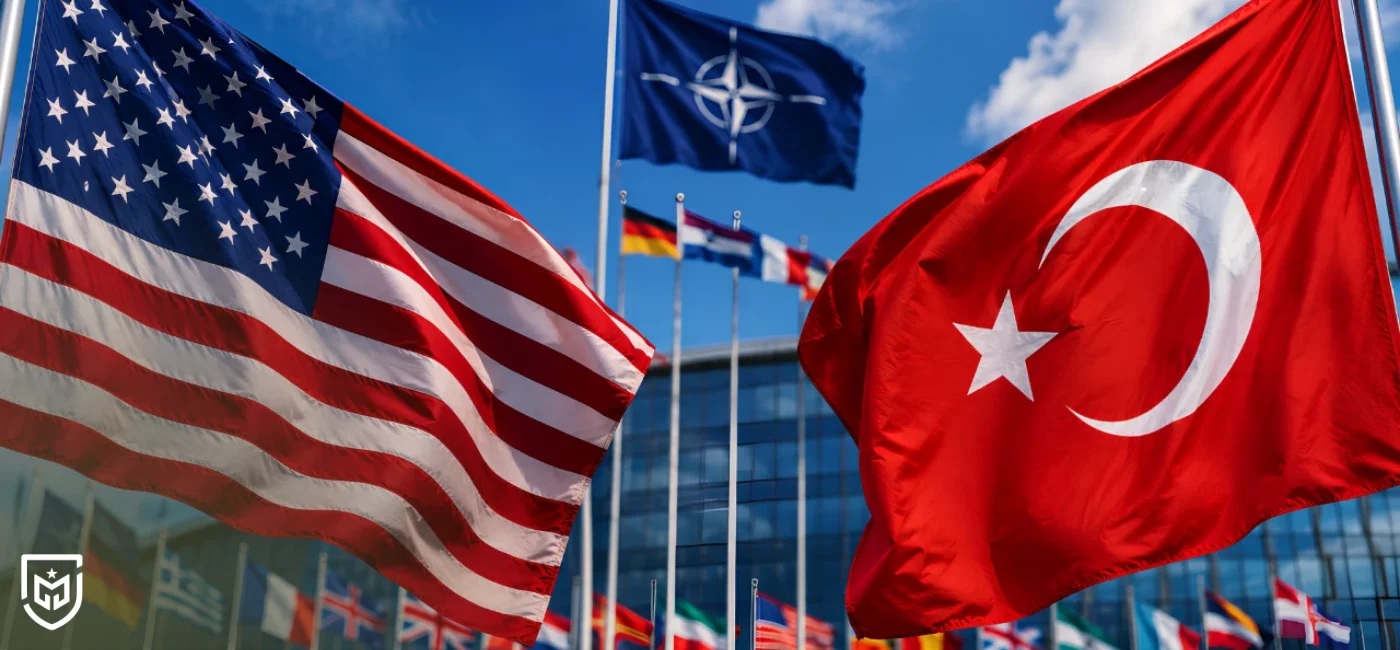
CAATSA sanctions, which have long been seen as a major obstacle in defense relations between Türkiye and the United States, have once again moved to the center of the agenda. During contacts held as part of the NATO Summit in Ankara, U.S. President Donald Trump’s statement that CAATSA sanctions on Türkiye would be lifted was considered a critical development for the defense industry. If the process becomes official, a new period could begin not only for the F-35 program, but also for many different defense projects.
Although CAATSA sanctions are mostly associated with the F-35 issue in public debate, their effects extend to a much wider field. According to expert assessments, the sanctions have made it more difficult for Türkiye to access certain U.S.-origin avionics systems, critical components and platform modernization solutions. It is also noted that some companies have acted more cautiously in processes involving Türkiye due to sanction risks, which has affected the pace of various projects.
The lifting of the sanctions could allow the Turkish defense industry to act more flexibly, especially in air platforms, mission systems, avionics subsystems, maintenance and sustainment processes, and modernization projects. This would not only mean the opening of new procurement channels. It could also accelerate the modernization of existing systems, shorten critical spare-part supply processes and enable faster progress in some projects in terms of both quality and quantity.
The F-35 issue remains one of the most visible aspects of the process. Türkiye continues to focus on its National Combat Aircraft KAAN project, while also evaluating F-16 modernization, Eurofighter procurement and other air power options. If a limited number of F-35 aircraft were included in Türkiye’s inventory, these jets could be used in NATO missions, international exercises and specific operational scenarios. In this way, Türkiye could benefit from a fifth-generation platform in allied missions while protecting KAAN’s unique capabilities in a more controlled manner.
A possible F-35 procurement could also indirectly contribute to Türkiye’s air defense architecture. The presence of a fifth-generation low-observable platform in Türkiye could create more realistic scenarios for testing indigenous radar systems, air defense assets, counter-missile capabilities and systems developed under the Çelik Kubbe approach. This could help Türkiye gain stronger analysis, detection and countermeasure development capabilities against actors in its region that operate similar platforms.
As a result, the lifting of CAATSA sanctions is a strategic issue for Türkiye that is not limited to the possibility of returning to the F-35 program. It has a broad impact area ranging from avionics systems and critical component supply to platform modernization and air defense testing. If the process moves forward with concrete steps, a faster, more flexible and more open period for NATO-based cooperation could begin for the Turkish defense industry.


The cookies used on our website are used to provide you with a better user experience and to improve our website. You can manage your cookie preferences from the options below.
 Süheyla Yıldız
Post Comment
Comments
No comments yet.
Related News
SSB Sector Meeting: Focus on Supply Chain and Production Capabilities
Turkish defense industry signed 15 billion dollars in new contracts in 2026
SSB Hosts Second Supply Chain Strengthening Summit
Skyfall II Exercise: U.S. Army Demonstrates UAV Defense Capabilities in Germany
SSB Chief: Transparent Licensing Will Strengthen Defense Cooperation
STM's Swarm UAV System Demonstrates Operational Success at Ateş Serbest-2026
TUSAŞ Kamikaze UAV Systems Achieve Success in Exercise Ateş Serbest-2026
Fire Free-2026 Exercise Successfully Completed