


Global Developments


BREAKING NEWS
The latest conflict in the Gulf has not only shaken the security balance in the Middle East, but has also begun to reshape defense procurement thinking across Africa. The attacks carried out by the United States and Israel against Iran, followed by Tehran’s response through strikes affecting Gulf countries, exposed a critical reality: even states that had spent enormous sums on Western defense umbrellas were not able to fully protect some of their most strategic assets. For African decision-makers, the lesson was clear. Technical superiority on paper is no longer enough on its own; what matters most is real battlefield performance.
Across Africa, rising border threats, terrorism concerns, internal instability, and regional insecurity have already pushed many governments to accelerate defense investments. In this environment, procurement officials are no longer looking only for sophisticated systems. They are prioritizing solutions that are combat-proven, cost effective, easier to sustain, and available for fast delivery. This is exactly where Türkiye has gained a strong advantage. In recent years, Turkish defense companies have built a serious presence with unmanned aerial systems, armored vehicles, surveillance technologies, communication networks, and command-and-control solutions.
According to sector assessments, Türkiye is no longer seen merely as an alternative supplier by many African countries, but increasingly as a first-choice partner. One of the main reasons is that Turkish defense systems have already demonstrated operational effectiveness in difficult theaters and demanding environments. From drones and smart munitions to armored platforms and electronic systems, Türkiye offers a broad portfolio that combines affordability, field credibility, and relatively rapid integration. For African buyers, this means not just a one-time purchase, but the possibility of a longer-term strategic defense relationship.
The aftermath of the Gulf conflict has accelerated this trend further. In countries facing immediate or growing security risks, urgent and high-volume procurement plans are reportedly moving onto the agenda. This creates major short-term opportunities for Turkish defense firms while also opening the door for a wider long-term geopolitical impact. Companies that enter the African market early, understand local operational needs, and provide proven systems are likely to secure stronger and more durable positions in the years ahead.
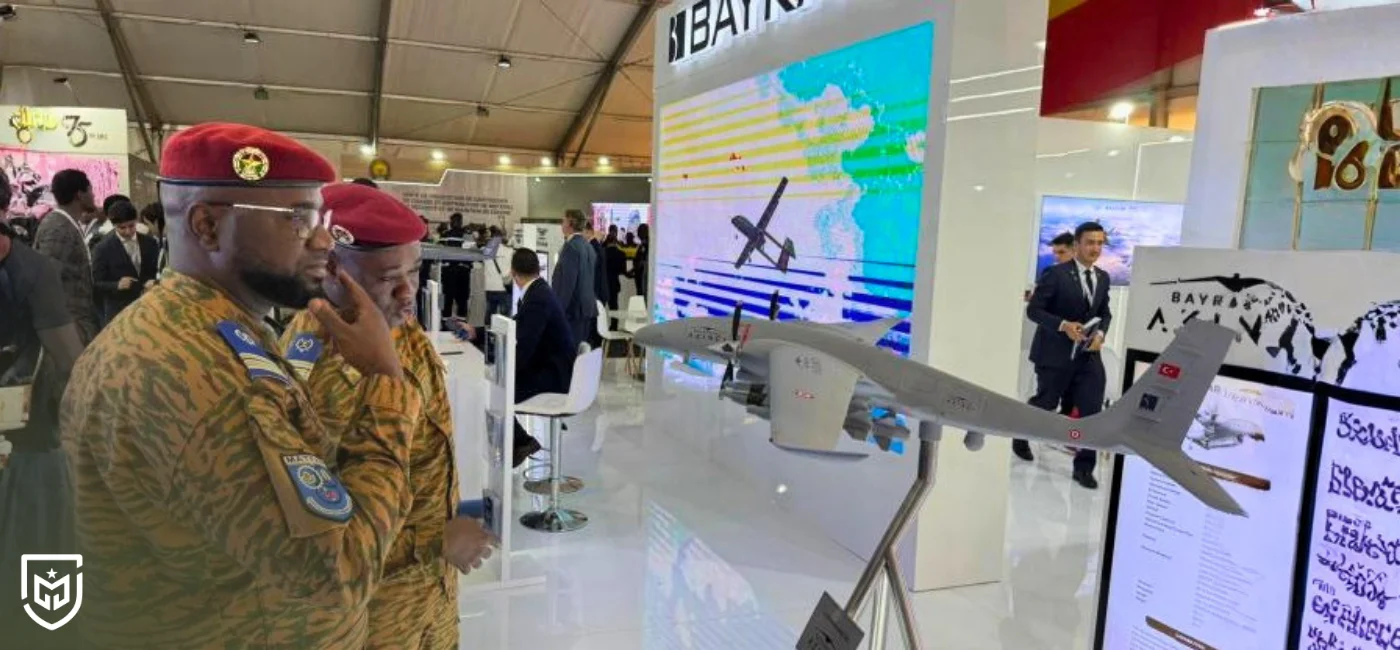
One of the most important showcases of this new phase will be BAMEX 2026, which is scheduled to take place on 9–13 November 2026. The event is expected to host more than 30 Turkish defense firms, building on the strong participation and attention drawn last year by companies such as BAYKAR, ASELSAN, ROKETSAN, and MKE. That scale of expected participation is itself a sign that Africa is becoming one of the most dynamic and strategically important markets for Turkish defense exports. All indicators suggest that the continent is entering a new procurement era, and in that era Türkiye is not simply one of the contenders, but one of the emerging central players.


The cookies used on our website are used to provide you with a better user experience and to improve our website. You can manage your cookie preferences from the options below.
 Süheyla Yıldız
Post Comment
Comments
No comments yet.
Related News
SSB Sector Meeting: Focus on Supply Chain and Production Capabilities
Turkish defense industry signed 15 billion dollars in new contracts in 2026
SSB Hosts Second Supply Chain Strengthening Summit
SSB Chief: Transparent Licensing Will Strengthen Defense Cooperation
Görgün: Turkish-German defense partnership to be revitalized with new vision
Spain Plans to Purchase 15 Additional Hürjet Advanced Trainers
Turkey and Spain to Develop Joint Version of Hürjet Aircraft
Romanian Corvette Conducts Black Sea Exercises