


Naval Forces News


BREAKING NEWS
Türkiye has added another major achievement to its recent progress in naval platforms. The country’s first mini submarine, designed, manufactured and certified with domestic and national capabilities, recently entered the water for the first time. The historic test footage, aired for the first time by TRT Haber, represents a significant milestone for Türkiye’s underwater technology ambitions and the future of the Blue Homeland.
At the center of this achievement is DATUM, a company founded in 2013 to design manned and unmanned mini submarines for military and commercial use. In 2018, DATUM strengthened its structure through a partnership with Istanbul Technical University. This cooperation brought together academic knowledge, engineering capability and industrial experience, paving the way for Türkiye’s first fully indigenous mini submarine platform.
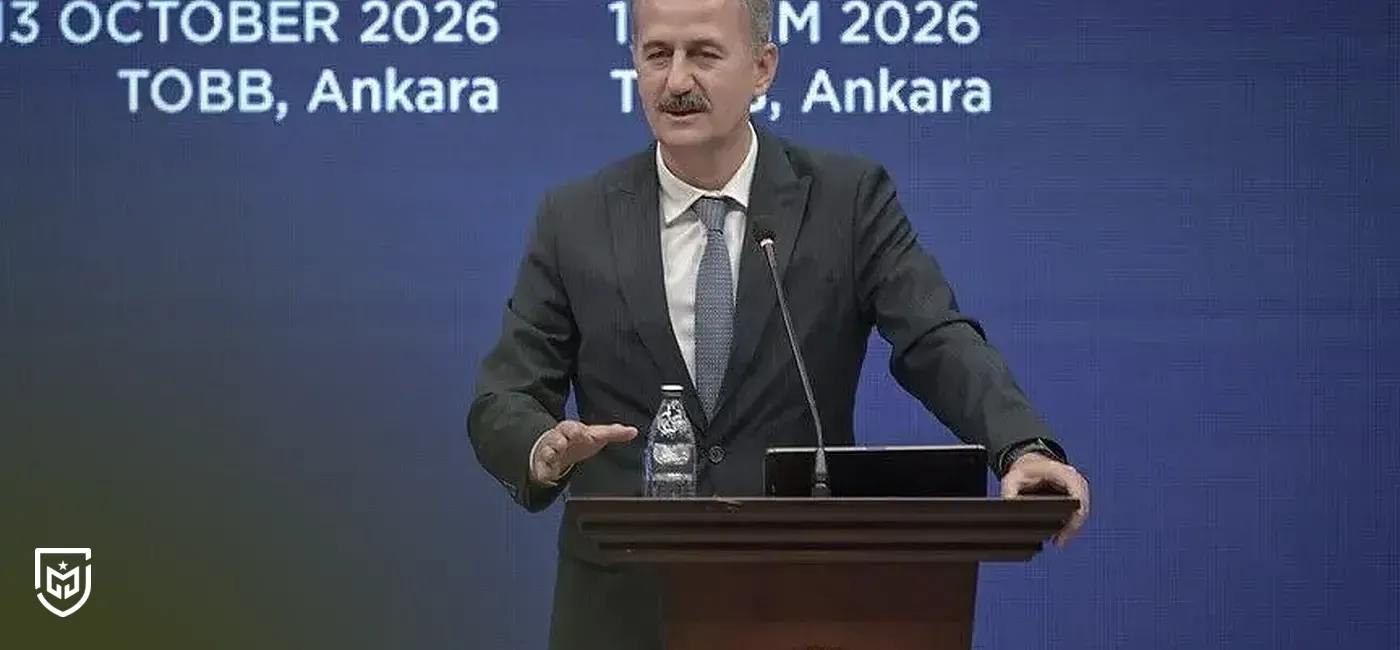
According to Münir Cansın Özden, a faculty member at Istanbul Technical University’s Faculty of Naval Architecture and Ocean Engineering, the test conducted on April 14 involved a 12-meter-long manned mini submarine with a displacement of 36 tons. However, during the first trial, the submarine was launched without personnel on board. The platform successfully carried out all commands given to it, proving the basic functions of the system and marking a critical step in Türkiye’s mini submarine development process.
Dr. Özden emphasized that developing a mini submarine is an extremely challenging field that requires advanced engineering, integration and certification capability. He noted that only around 10 countries in the world have managed to achieve such a capability. This places Türkiye among a limited group of countries capable of designing and producing mini submarines with national resources.
One of the most important advantages of DATUM’s mini submarine concept is its transportability. These platforms can be transferred to different operational areas by truck or cargo aircraft, providing significant flexibility. They can also be launched into the water with the help of a simple crane. This capability offers Ankara a powerful force projection tool, allowing mini submarines to be rapidly deployed to different regions when needed.
The mini submarines are being developed not only for observation or research roles but also for a wide range of critical missions. With the support of the Presidency of Defence Industries, work is underway on mini submarines capable of performing 12 different mission profiles. These missions include laying mines, neutralizing mines, launching torpedoes, conducting personnel rescue operations, transporting special forces and carrying out underwater operations against strategic infrastructure.
The platforms are also expected to be compatible with key national weapon systems developed by the Turkish defence industry. Dr. Özden stated that the mini submarines could be able to launch systems such as the AKYA torpedo and the ATMACA missile. They are also planned to deploy the MALAMAN naval mine, rescue personnel trapped in distressed submarines and transport SAT commandos to mission areas. These capabilities would give Türkiye a flexible and compact underwater asset for both defensive and offensive missions.
The national mini submarine project is seen as the beginning of a new era in Türkiye’s underwater operations. Compared to conventional submarines, mini submarines are smaller, more mobile and easier to adapt to different mission profiles. Their potential use in underwater security, special operations, search and rescue, mine warfare and critical infrastructure protection makes them valuable assets for both military and commercial applications.
The successful launch of Türkiye’s first indigenous mini submarine stands as a concrete example of the country’s technological independence vision in the Blue Homeland. By completing domestic design, production and certification processes, Türkiye has taken a strategic step toward strengthening its submarine technology base. This achievement is also expected to pave the way for more advanced manned and unmanned underwater platforms in the future.


The cookies used on our website are used to provide you with a better user experience and to improve our website. You can manage your cookie preferences from the options below.
 Süheyla Yıldız
Post Comment
Comments
No comments yet.
Related News
First Keel Laid for HİSAR-Class Patrol Vessel
Unmanned Naval and Aerial Vehicles Demonstrated Integrated Command Control Coordination
Romanian Corvette Conducts Black Sea Exercises
German F125 Frigates to Receive IRIS-T SLM Air Defense System Integration
Turkish Naval Defense Technologies Showcased at Nusret-2026 Exercise
Teknofest Southeast: Turkish Defense Platforms and KAAN Fighter Jet on Display in Şanlıurfa
TCG Karadeniz launched into service
Surveyor USV Demonstrates Operational Capability with JAGM Missile at RIMPAC