

Air Forces News
Global Developments


BREAKING NEWS
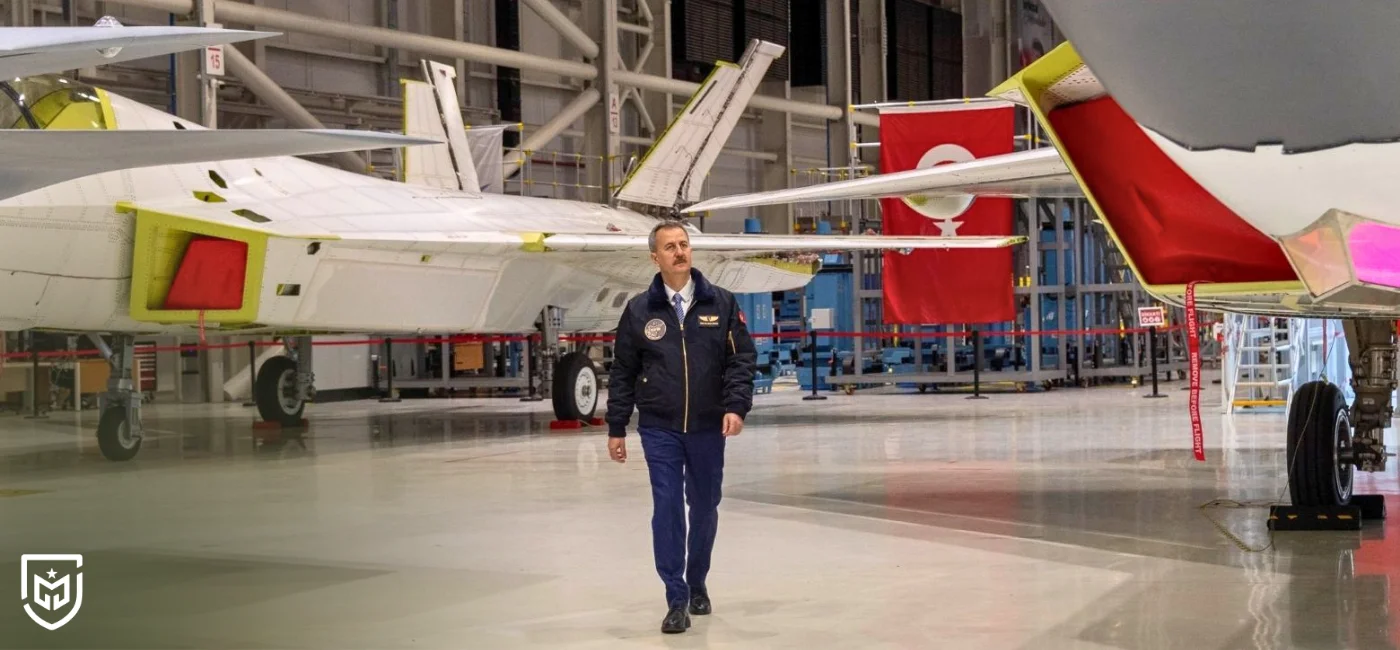
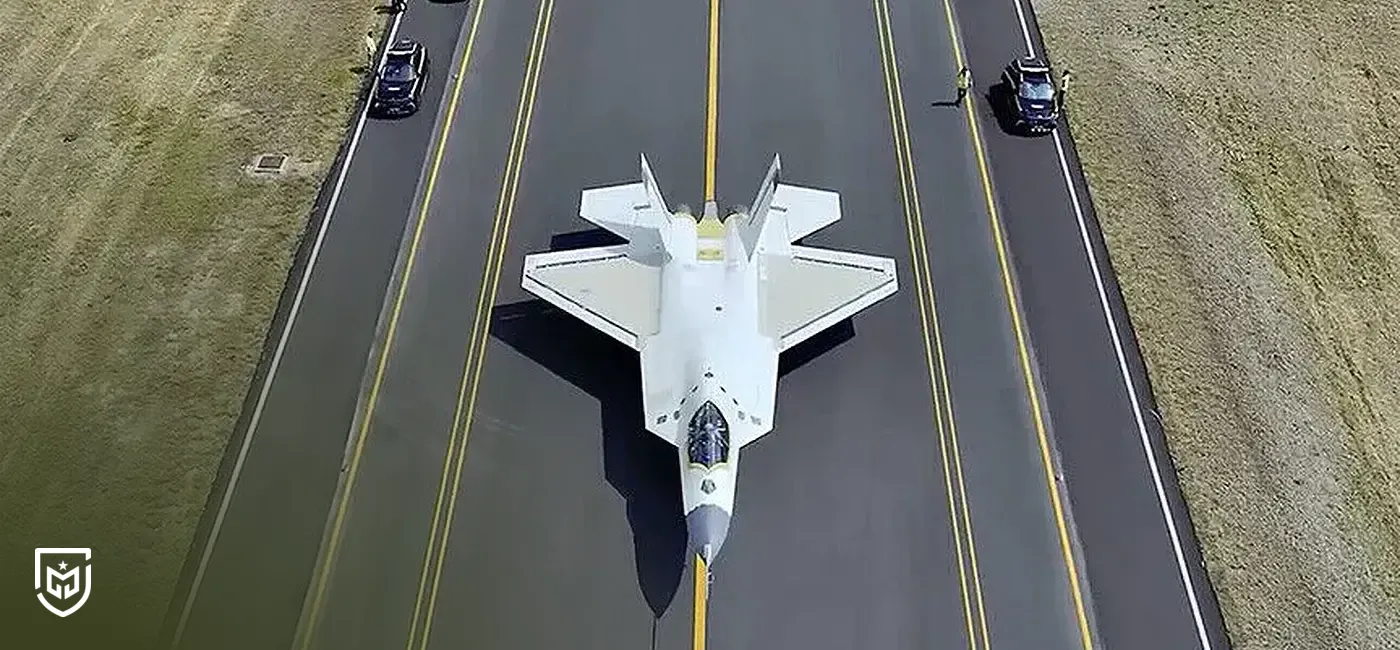
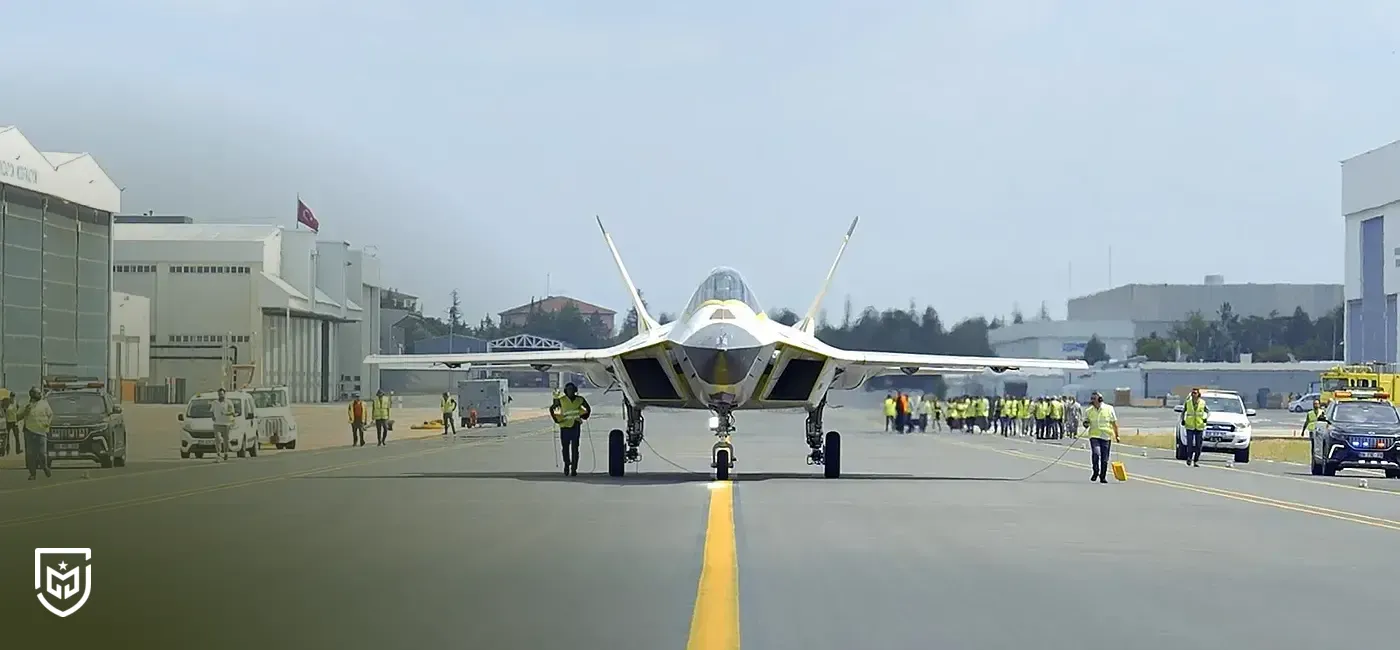
A major new phase has begun in Türkiye’s KAAN National Combat Aircraft program. The full-scale static test aircraft produced for the project has been rolled out of the hangar, signaling an important step in the platform’s structural validation process. While the public often focuses on flight demonstrations, the real engineering foundation of a combat aircraft is built through extensive ground testing. For a fifth-generation aircraft such as KAAN, full-scale static testing is one of the most critical barriers of safety before operational flight expansion.
In modern fighter development, full-scale static testing is not just about checking whether the airframe can endure pressure. It is a key milestone for design validation, model correlation, certification infrastructure, and flight safety. In the case of KAAN, the static test article has been produced as a structural counterpart of the flying configuration. The goal is to prove that the aircraft can withstand extreme aerodynamic and structural loads without breaking, deforming beyond tolerance, or losing functionality under demanding conditions.
The test process focuses on several major areas. These include validation of limit loads that the aircraft may encounter during real operations, proof of safety margin under ultimate load conditions at 1.5 times the design limit, and correlation between finite element models and the physical test results. The entire process is also essential for opening the aircraft’s flight envelope safely during future certification and development stages.
The scale of the test setup highlights the sophistication of the program. More than 200 high-capacity hydraulic actuators are used in a synchronized closed-loop control system to simulate real flight loads across the airframe. These loads are distributed through hundreds of specially designed load pads and articulated loading structures so that pressure is applied evenly to the aircraft surface. In addition to external loading, internal structural effects are also simulated, including fuel tank pressure and cockpit pressurization loads. This means KAAN is being tested not only from the outside, but also from within, to replicate real operational stress as closely as possible.
The aircraft is also equipped with an extensive measurement network during testing. Nearly 5,000 strain gauge channels, displacement sensors, load cells, and pressure sensors are used to monitor the aircraft’s response in real time. This allows engineers to observe stress flow, structural flexibility, local buckling behavior, and load transfer mechanisms as the test progresses. Such a large data set makes it possible to compare live measurements with design expectations and identify anomalies before they become major risks.
Risk management is another crucial part of the full-scale static test campaign. Because even a small synchronization error or unexpected local deformation could damage the prototype, loading is applied gradually and under constant engineering supervision. Automatic stop limits are defined in advance, and all values are monitored live on control screens. This method ensures that the structural behavior of the aircraft is verified safely and systematically.
When completed successfully, the full-scale static test campaign will stand as one of the most important structural validation achievements in Türkiye’s aviation history. The aircraft may remain motionless on the ground during the test, but in engineering terms it is performing one of its most difficult missions. In many ways, the confidence behind KAAN’s future flights will be built not in the sky first, but inside the test facility where thousands of structural data points are collected and verified.


The cookies used on our website are used to provide you with a better user experience and to improve our website. You can manage your cookie preferences from the options below.
 Süheyla Yıldız
Post Comment
Comments
No comments yet.
Related News
Altınay Defense Group Transitions to New Management Structure
KAAN Fighter Jet's New Prototype Begins Taxi Tests
KAAN Fighter Jet Completes Pre-Flight Taxi Test Successfully
BAE Systems and Lockheed Martin Unveil Blizzard Multi-Mission Unmanned Aircraft
Anduril's Ohio Facility Produces First YFQ-44A Fury Unmanned Combat Aircraft
BAE Systems Raises Outlook as Global Defense Demand Continues to Surge
South Korea's envoy highlights KAAN fighter jets as cornerstone of defense partnership with Türkiye
ASELSAN's Electro-Optical System Integrated into South Africa's Mwari Aircraft