


Satellite and Space News
Electronic Systems


BREAKING NEWS
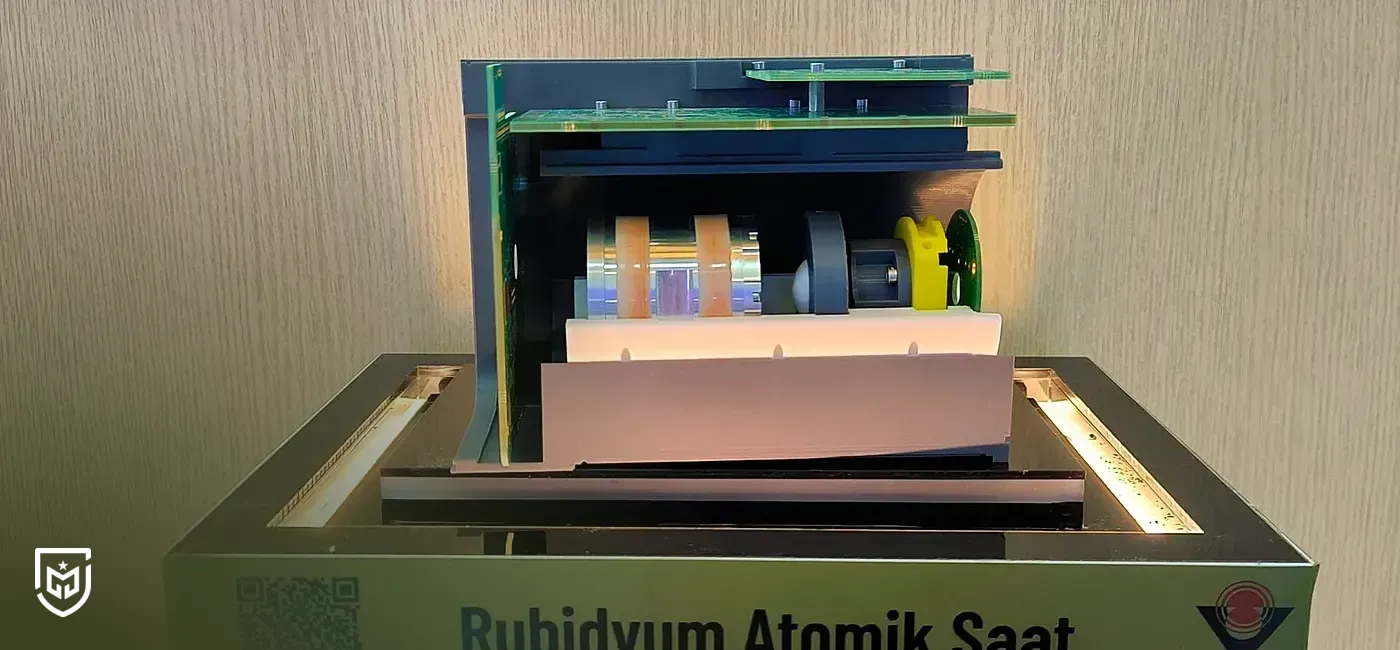
The Rubidium Atomic Frequency Standard (RAFS), developed by TÜBİTAK's National Metrology Institute (UME) as prime contractor in cooperation with TÜBİTAK Space and İTUNOVA, was launched to low Earth orbit (LEO) on July 7, 2026, as part of the SpaceX Transporter-17 mission under the leadership of the Turkish Space Agency (TUA). The device, carried as a payload within a CubeSat, successfully transmitted its initial signals, confirming the mission's success. This achievement represents a significant step in Turkey's development of indigenous capabilities in space-based timing and frequency technologies.
TÜBİTAK UME, Turkey's national center for metrology and time standardization, has been working since 2020 to adapt RAFS for the space environment. Atomic clocks measure time with extreme precision by referencing the constant oscillation frequencies (resonance) between energy levels of rubidium atoms. A single rubidium atom oscillates between different energy levels 6.834682610 billion times per second. This precision provides the time reference required for critical applications ranging from navigation systems to communication infrastructure. RAFS will operate for at least one year in low Earth orbit, with its performance measured under harsh space conditions including vacuum, radiation, and temperature fluctuations.
The Regional Positioning and Timing System (BKZS), one of Turkey's National Space Program's fundamental strategic objectives, lies at the center of developing independent positioning and time synchronization capabilities. Successful space-based testing of RAFS technology will accelerate the development of high-precision time references for integration into domestic satellite systems, communication infrastructure, and navigation applications. Time and frequency data collected will be monitored and analyzed through Turkish ground stations and integrated into future space missions. This technology directly contributes to the Turkish defense and space sector's goals of independence and localization.
Atomic clock technology in space applications represents one of the foundational pillars of global defense and communication systems. Worldwide, major positioning infrastructure such as the United States' GPS system, Europe's Galileo positioning network, and Russia's GLONASS system depend on high-precision atomic clocks. TÜBİTAK UME's initiation of the RAFS project indicates Turkey's efforts to build independent capacity in this critical technology domain. The project also supports compliance efforts with the new definition of the international time unit expected to take effect after 2026.
As part of the project scope, TÜBİTAK UME has also initiated the Strontium-Based Optical Atomic Clock Project during the same period. This advanced technology will provide higher precision than RAFS and will be used in next-generation space systems. A cooperation protocol signed between the Turkish Space Agency and TÜBİTAK UME on September 28, 2020, encompasses work to be carried out by the institute within its capabilities for the agency, including space qualification of the atomic clock. Successful operation of RAFS in the space environment will represent an important milestone in Turkey's path toward integrating national atomic clock technologies into satellite systems.


The cookies used on our website are used to provide you with a better user experience and to improve our website. You can manage your cookie preferences from the options below.
 Sinan Karadağ
Post Comment
Comments
No comments yet.
Related News
Skyfall II Exercise: U.S. Army Demonstrates UAV Defense Capabilities in Germany
IDA Turkey 2026 Defense and Aviation Industrial Cooperation Days Launched
SSB Chief: Transparent Licensing Will Strengthen Defense Cooperation
STM's Swarm UAV System Demonstrates Operational Success at Ateş Serbest-2026
ÇAKIR Cruise Missile Supply Contract Signed
Drone Shield Showcased at Marksman Competition
Fire Free-2026 Exercise Successfully Completed
Görgün: Turkish-German defense partnership to be revitalized with new vision