


Satellite and Space News
Global Developments


BREAKING NEWS
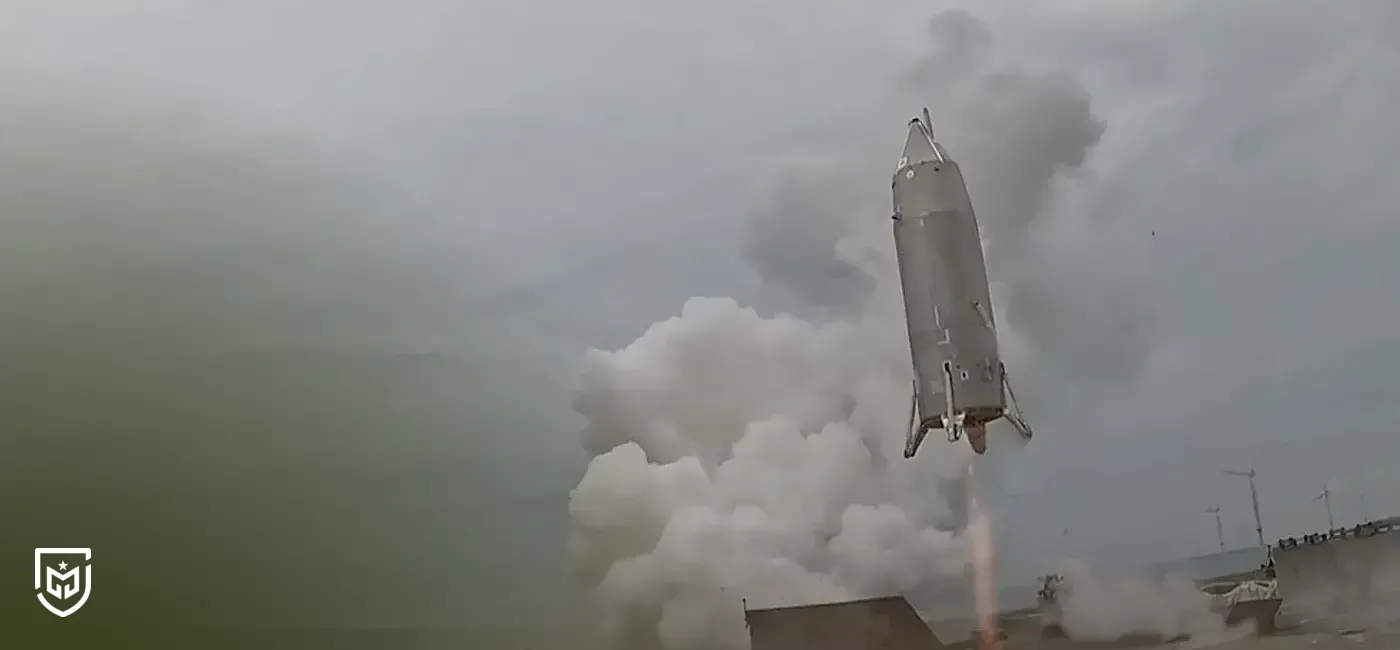
The experimental reusable rocket program managed by the Japan Aerospace Exploration Agency (JAXA) achieved a significant milestone on July 11 with its first test flight. The RV-X platform reached an altitude of 11 meters during a 40-second flight, completed 16 meters of horizontal displacement, and executed a controlled descent. JAXA's Reusable Rocket Project Manager Takashi Ito confirmed that the rocket performed as planned.
The RV-X platform was jointly developed by JAXA and Mitsubishi Heavy Industries. The system features a 1.8-meter diameter and 7.3-meter length, equipped with a single reinforced motor and four shock-absorbing landing legs. The motor successfully completed 165 combustion tests prior to the flight. Project Manager Ito stated that future test phases aim to reach approximately 100 meters altitude with RV-X. Additionally, JAXA is conducting collaborative research on reusable rocket technologies with France and Germany.
This test represents an important milestone in developing a lower-cost system to replace Japan's current expendable H3 rocket family. The Japanese government emphasizes that a commercially competitive and sustainable space transportation capability is critical for both the nation's future space program and national security.
The RV-X program provides technological infrastructure for the Callisto reusable launch vehicle program, jointly developed by JAXA, France's space agency (CNES), and Germany's aerospace center (DLR). Operational data obtained from the RV-X platform—designed to validate vertical landing, vehicle guidance, and flight control technologies—will be utilized in the design and operational processes of Callisto, which will conduct more complex flight and landing tests at higher altitudes using the same motor technology. The program aims to reduce launch costs and enhance operational efficiency through reusable launch systems.
Reusable rocket development efforts in Japan extend beyond government institutions. Honda R&D successfully conducted launch and landing tests of its independently developed experimental reusable rocket (6.3 meters length, 85 centimeters diameter, 900 kilograms dry weight, 1,312 kilograms launch weight) on June 17, 2025. During the test, the rocket maintained its planned flight profile, remained airborne for 56.6 seconds, and landed with a 37-centimeter deviation from the target landing point. Honda's rocket research remains in the research phase, with no decisions yet made regarding commercialization. The company continues fundamental research activities and aims to achieve suborbital launch capability by 2029.


The cookies used on our website are used to provide you with a better user experience and to improve our website. You can manage your cookie preferences from the options below.
 Tolga Demirel
Post Comment
Comments
No comments yet.
Related News
SSB Sector Meeting: Focus on Supply Chain and Production Capabilities
Turkish defense industry signed 15 billion dollars in new contracts in 2026
SSB Hosts Second Supply Chain Strengthening Summit
SSB Chief: Transparent Licensing Will Strengthen Defense Cooperation
Görgün: Turkish-German defense partnership to be revitalized with new vision
Spain Plans to Purchase 15 Additional Hürjet Advanced Trainers
Turkey and Spain to Develop Joint Version of Hürjet Aircraft
Romanian Corvette Conducts Black Sea Exercises