



Satellite and Space News


BREAKING NEWS
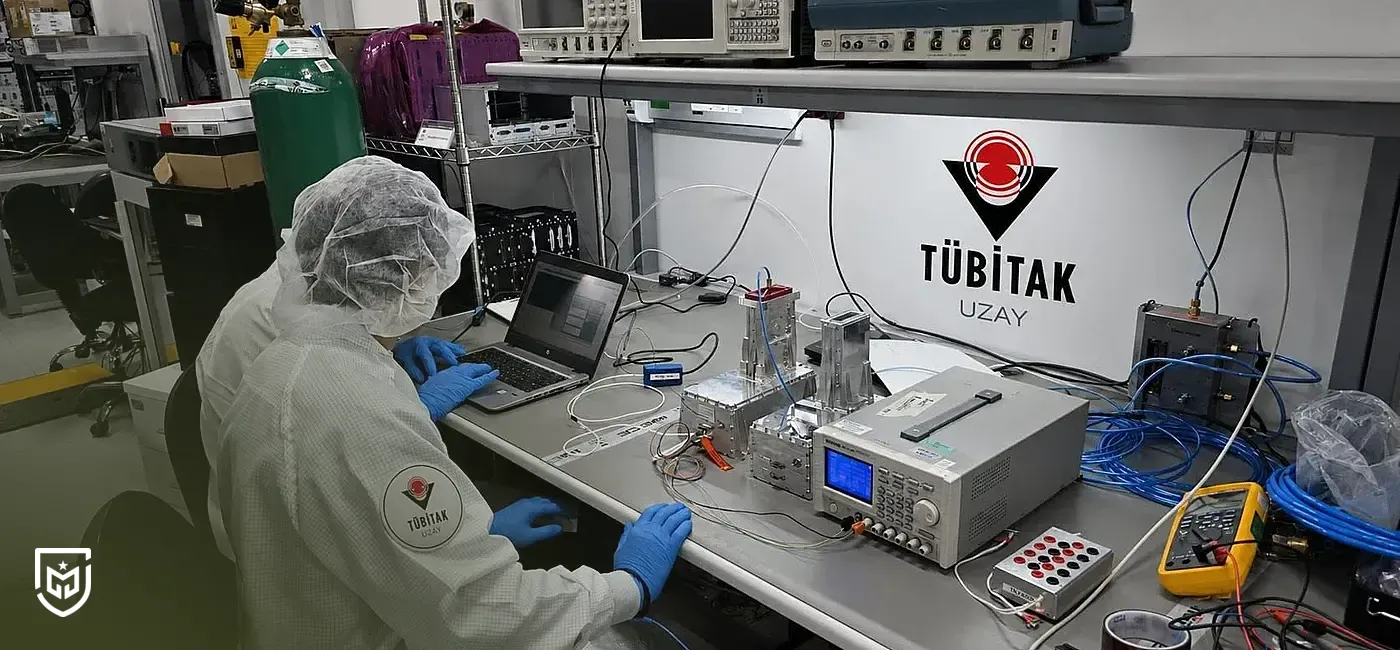
TÜBİTAK SPACE has received the flight model of the Lunar Neutrals Telescope (LNT) scientific payload, developed by Sweden's Institute of Space Physics (IRF) under Turkey's Moon Mission-1 (AYAP-1) program. The system, which arrived in Ankara from Kiruna in June 2026, successfully passed acceptance tests conducted by TÜBİTAK SPACE and IRF personnel. This delivery marks the transition of the project to the spacecraft integration and testing phase.
TÜBİTAK SPACE and the TÜBİTAK organization have accumulated significant expertise through participation in various international space technology collaborations. The institute has developed considerable capabilities in satellite design, payload integration, and spacecraft test systems. The AYAP-1 project holds strategic importance as Turkey's first spacecraft to reach lunar orbit. This mission enhances international recognition of the country's space research and technology development capacity.
The LNT system is an advanced measurement device designed as a neutral particle detector. Positioned in a circular orbit approximately 100 kilometers above the lunar surface, the system will measure the interaction of solar wind with the Moon's surface and mini-magnetospheres. The system comprises two models: the flight model will be integrated into the spacecraft, while the electrical model, delivered to TÜBİTAK SPACE in 2024, was used for developing and testing the interface between the mission computer and power system. The flight model is equipped with a special tube system that provides continuous pure nitrogen gas flow to protect sensitive detectors from moisture and contaminants.
The AYAP-1 spacecraft represents the first phase of Turkey's lunar research program, scheduled for launch in 2027. The mission will operate in lunar orbit for 3 months, potentially extending to 6 months if required, followed by a controlled landing. Measurements obtained with LNT will provide data on the role of solar wind in forming the Moon's thin atmosphere (exosphere), regional variations in surface chemical composition, and information about permanently shadowed regions at the lunar poles. These measurements will contribute new insights into the Moon's geological and atmospheric structure.
Turkey's lunar program strengthens the country's position within the international space research ecosystem. Similarly, global lunar exploration initiatives such as India's Chandrayaan program, China's Chang'e missions, and the United States' Artemis program play important roles in advancing space technology. TÜBİTAK SPACE's collaboration with international partners enhances technology transfer and scientific capacity in Turkey's space sector. Success of AYAP-1 will establish the foundation for future space projects, including satellite development, space station missions, and deep space exploration.


The cookies used on our website are used to provide you with a better user experience and to improve our website. You can manage your cookie preferences from the options below.
 Murat Yılmaz
Post Comment
Comments
No comments yet.
Related News
ROKETSAN Emphasizes International Cooperation at 77th Space Congress
HÜRSAT-1 Satellite Set for Launch in Mid-2027
TUSAŞ Unveils HÜRSAT: New Generation Earth Observation Satellite Family
ASELSAN's GÖKBAĞI constellation: 198-satellite project unveiled
TUSAŞ and ROKETSAN Sign HÜRSAT-2 Satellite Agreement
Japan's RV-X reusable rocket completes first test flight
Turkey's indigenous atomic clock undergoing space testing
NATO Summit Defense Industry Forum Marks New Era in Ankara