




Satellite and Space News
Global Developments


BREAKING NEWS
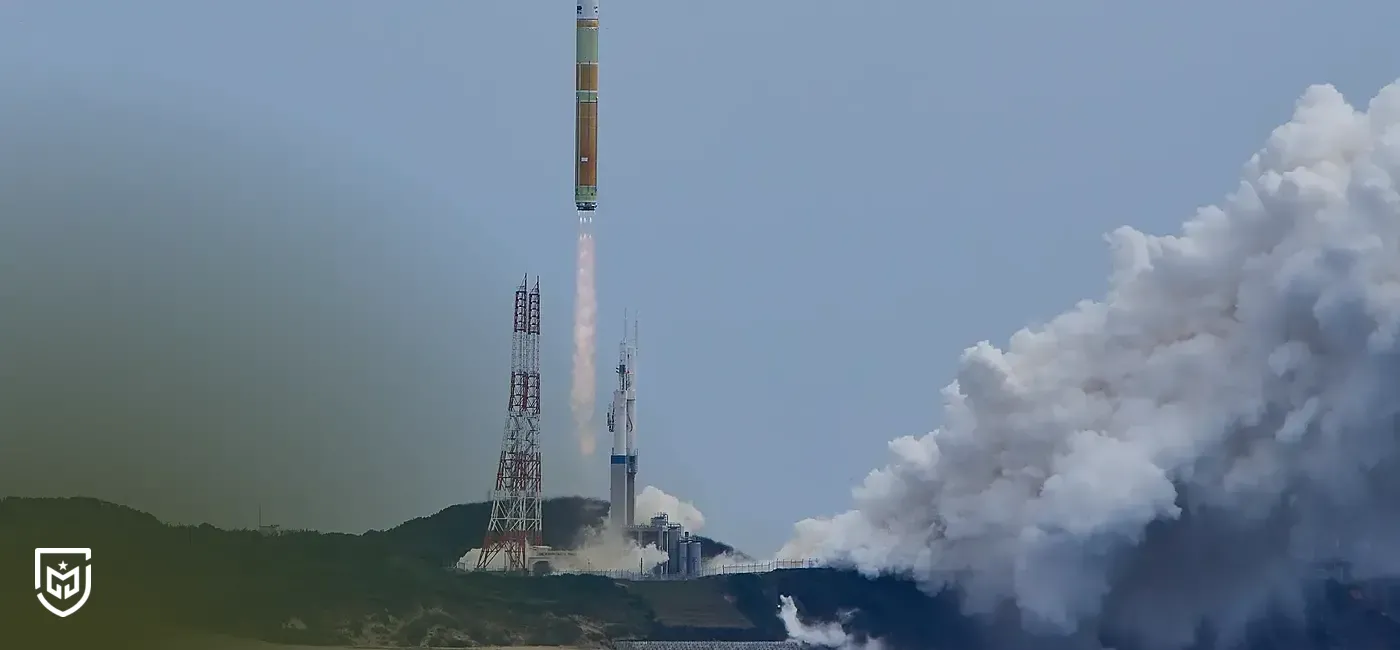
Japan's H3-30S launch vehicle successfully deployed six satellites to orbit on June 12, 2026, marking the rocket's first successful mission following technical issues encountered with the upper stage in December 2025. As part of the mission, the BRO-22 satellite developed by French company Unseenlabs was also launched, earning the distinction of being the first foreign commercial satellite deployed by the H3 rocket.
The H3 rocket program, operated by JAXA, represents a cornerstone of Japan's space access capabilities. The H3 rocket family was developed to provide cost-effective and highly reliable launch services. The H3-30S variant features three LE-9 engines in its first stage, unlike other configurations, and does not employ solid rocket boosters. This design approach aims to enhance the rocket's payload capacity and operational flexibility while reducing system complexity.
The BRO-22 satellite is designed to conduct maritime surveillance missions using radio frequency (RF) detection technology. As a first-generation member of Unseenlabs' satellite constellation, BRO-22 was built to operate independently from other constellation members. The satellite will detect RF signals emitted by maritime vessels, enabling ship identification, geolocation determination, and characterization capabilities. This technology can detect vessels that remain invisible to conventional tracking systems such as Automatic Identification System (AIS).
Space-based surveillance satellites are assuming an increasingly critical role in global maritime traffic monitoring and maritime security. The proliferation of RF sensor-equipped satellites developed by commercial entities marks a new era in maritime data collection. Companies like Unseenlabs provide solutions that contribute to the detection and tracking of undeclared, suspicious, or illegal maritime activities. The company plans to launch its first second-generation satellites in the coming months, with expectations that these new-generation satellites will further enhance RF signal detection capabilities.
The H3 rocket's successful launch represents a significant milestone for Japan's space sector. Critical missions including the second HTV-X cargo mission to the International Space Station (ISS) and the Martian Moons eXploration (MMX) mission, aimed at returning samples from Mars' moon Phobos, depended on resolving the H3 rocket's technical challenges. The launch service was organized by Space BD, Japan's space systems integrator, demonstrating that Japan has become a strategic partner for both France and Unseenlabs in the commercial space sector.


The cookies used on our website are used to provide you with a better user experience and to improve our website. You can manage your cookie preferences from the options below.
 Tolga Demirel
Post Comment
Comments
No comments yet.
Related News
Altınay Defense Group Transitions to New Management Structure
BAE Systems and Lockheed Martin Unveil Blizzard Multi-Mission Unmanned Aircraft
Anduril's Ohio Facility Produces First YFQ-44A Fury Unmanned Combat Aircraft
BAE Systems Raises Outlook as Global Defense Demand Continues to Surge
South Korea's envoy highlights KAAN fighter jets as cornerstone of defense partnership with Türkiye
Swedish-Developed Lunar Neutrals Telescope Delivered to TÜBİTAK SPACE for Moon Mission-1
ASELSAN's Electro-Optical System Integrated into South Africa's Mwari Aircraft
TAI Chief: Turkey Shaping NATO's Future Security Architecture