Land Forces News
Weapons and Ammunition
Global Developments

Boxer-Based RCH 155 Signals a New Era in UK–German Artillery Cooperation
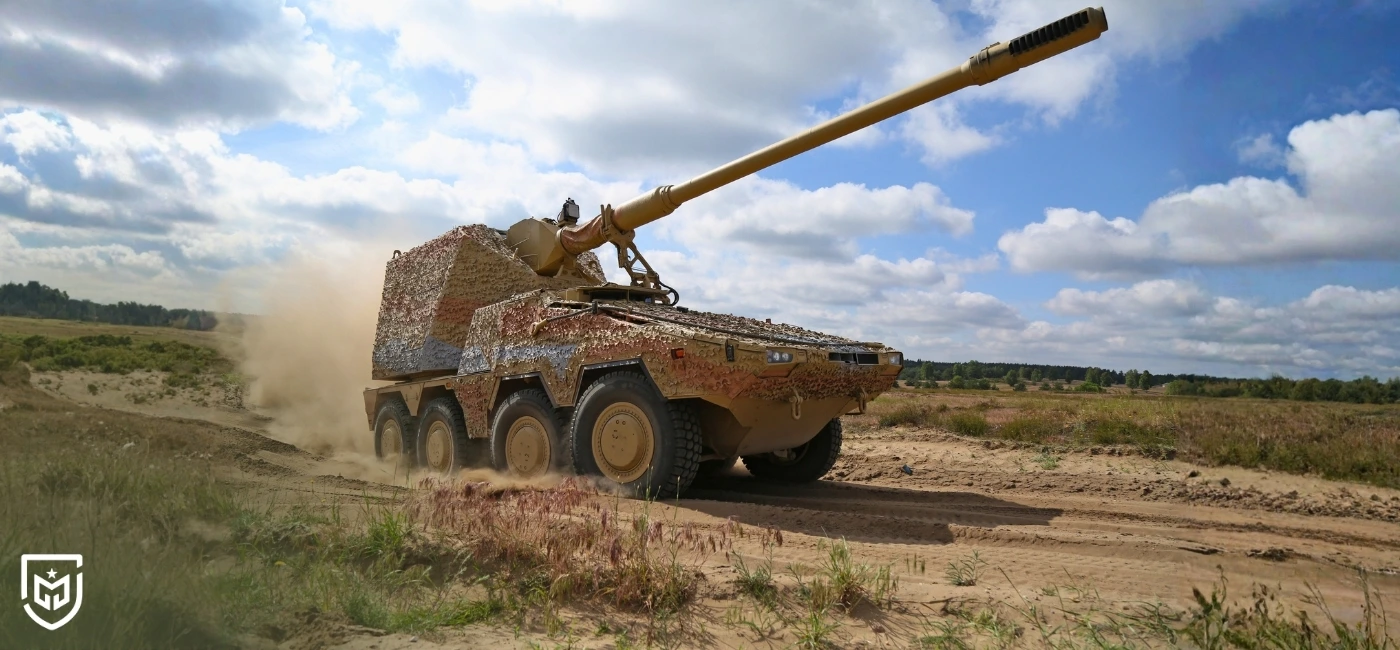
The joint RCH 155 programme between the United Kingdom and Germany goes beyond a standard procurement initiative and reflects a broader transformation in European land warfare doctrine. Modern battlefields increasingly demand artillery systems that combine long-range precision fire with high survivability, rapid relocation, and minimal logistical burden. The Boxer-mounted 155 mm Remote Controlled Howitzer is designed precisely around these requirements.
Developed by KNDS and Rheinmetall, the RCH 155 leverages the proven Boxer 8×8 armored platform to deliver exceptional strategic and tactical mobility. With a top road speed of 100 km/h and a range of up to 700 km, the system enables rapid concentration and dispersal of firepower—an essential capability in counter-battery and high-intensity conflict scenarios. Its ability to fire while on the move further enhances survivability by reducing exposure time after firing missions.
From an operational perspective, automation is one of the RCH 155’s most significant advantages. The system can be operated by a two-person crew, drastically reducing manpower requirements compared to legacy self-propelled howitzers. This not only lowers personnel risk but also aligns with European armed forces’ challenges related to recruitment, training, and sustainment. A maximum firing rate of eight rounds per minute, combined with a 360-degree firing arc and a potential range of up to 70 km, places the RCH 155 among the most capable wheeled artillery systems currently under development.
For the UK, the programme is particularly critical following the donation of all remaining AS90 self-propelled howitzers to Ukraine. While Archer systems provide a temporary solution, the selection of the RCH 155 by the UK Ministry of Defence demonstrates a clear intent to field a long-term, future-proof mobile fires platform. Germany’s participation, meanwhile, reinforces its commitment to modernizing Bundeswehr artillery while deepening industrial and operational integration with allies.
The joint testing framework—under which the UK will receive one demonstrator and Germany two—sets an important precedent for future European defence programmes. By sharing test data, infrastructure, and evaluation results, both nations aim to shorten procurement cycles and reduce overall costs. Strategically, this collaborative approach strengthens interoperability and supports the development of a more cohesive European land combat capability at a time of heightened security challenges.




 Süheyla Yıldız

Post Comment
Comments
No comments yet.
Related News
Altınay Defense Group Transitions to New Management Structure
BAE Systems and Lockheed Martin Unveil Blizzard Multi-Mission Unmanned Aircraft
Anduril's Ohio Facility Produces First YFQ-44A Fury Unmanned Combat Aircraft
BAE Systems Raises Outlook as Global Defense Demand Continues to Surge
South Korea's envoy highlights KAAN fighter jets as cornerstone of defense partnership with Türkiye
ASELSAN's Electro-Optical System Integrated into South Africa's Mwari Aircraft
TAI Chief: Turkey Shaping NATO's Future Security Architecture
Anduril Thunder: Autonomous Attack Helicopter with Level 5 Autonomy Capabilities