


Air Forces News
Global Developments


BREAKING NEWS

Baykar CEO Haluk Bayraktar participated in the "From Innovation to Serial Production: Building NATO's UAV Superiority" panel at the Defense Industry Forum during the 36th NATO Leaders Summit, emphasizing the importance of cooperation in unmanned aerial vehicles. Bayraktar stated that shorter development cycles, rapid production timelines, and high-capacity manufacturing are essential to meet the growing demand for UAVs in combat environments. He noted that in Turkey's approach, large-scale companies begin capacity building before demand emerges, while for new ventures and startups, the multi-billion-dollar market plays a critical role in establishing their own capabilities.
Baykar operates in 40 countries today, several of which are NATO members. Haluk Bayraktar outlined the objective of deepening relations with NATO nations while highlighting significant production capabilities established in Turkey. He emphasized that over the past 25 years, the company has undertaken the largest-scale investments in projects ranging from unmanned combat aircraft to strategic-class platforms, positioning Turkey as a global leader in UAV exports. The Leonardo Baykar Aerospace Systems joint venture demonstrates how the cooperation model functions in practice. This partnership combines Baykar's platform and system design expertise with Leonardo's advanced payloads, radar systems, and electronic components to create synergy.
The partnership model's core philosophy focuses on developing new technologies jointly rather than transferring existing intellectual property. Bayraktar emphasized the importance of building new intellectual property on top of each party's existing intellectual property and capabilities. Turkey's 25 years of investment experience demonstrates that establishing such capabilities from scratch elsewhere would require decades. However, through cooperation, advanced technology can be developed rapidly and competitive advantage can be established. This approach offers a new model for technology transfer and capacity sharing among NATO allies.
The Turkish defense industry ecosystem has expanded significantly over the past 20 years. The sector, which consisted of only 17 companies in 2002, now comprises more than 3,000 companies. Defense exports have grown from an annual 250 million dollars in 2002 to a weekly rate of 250 million dollars today, with total defense exports exceeding 10 billion dollars. This growth results from Turkey's localization achievements and research and development investments in defense technology. The sector's dynamic structure provides a suitable foundation for deepening cooperation with NATO.
Different production and cooperation models are required depending on UAV types. Bayraktar emphasized that UAVs have become fundamental elements in combat environments and that demand and necessity are clearly evident. While fighter-class UAVs and strategic-class platforms require alliances and cooperation, FPV (first-person view) capacity should be developed in every NATO nation. FPV systems, having high consumption rates similar to ammunition, require each country to establish its own production capacity. Conversely, cooperation on advanced-class platforms enables more efficient resource utilization and rapid establishment of technological superiority.


The cookies used on our website are used to provide you with a better user experience and to improve our website. You can manage your cookie preferences from the options below.
 Tolga Demirel
Post Comment
Comments
No comments yet.
Related News
Germany denies claims of MGCS tank project withdrawal
Thales Introduces HexaForce AI-Powered Command and Control System to Gulf Region
ÇEPNI Tactical UAV Family Enters Operational Service
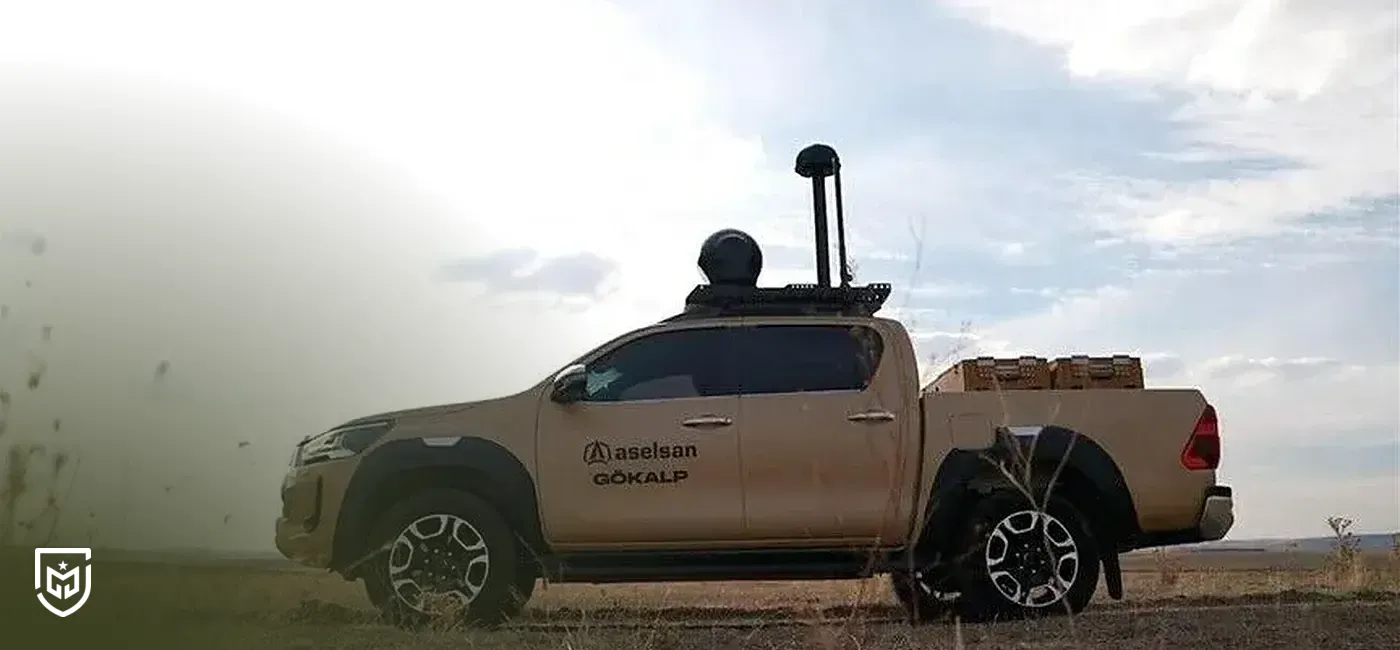
ASELSAN's Drone-Hunting System Completes Successful Demonstration
Romania Signs Contract for Airbus H225M Helicopter Procurement
ASELSAN's GÖKALP drone defense system completes successful demonstration
Ari Arms begins OR-4 rifle production in Azerbaijan
AKINCI UAV Successfully Tested with MORFOZ Guidance Kit