Land Forces News
Air Forces News
Global Developments

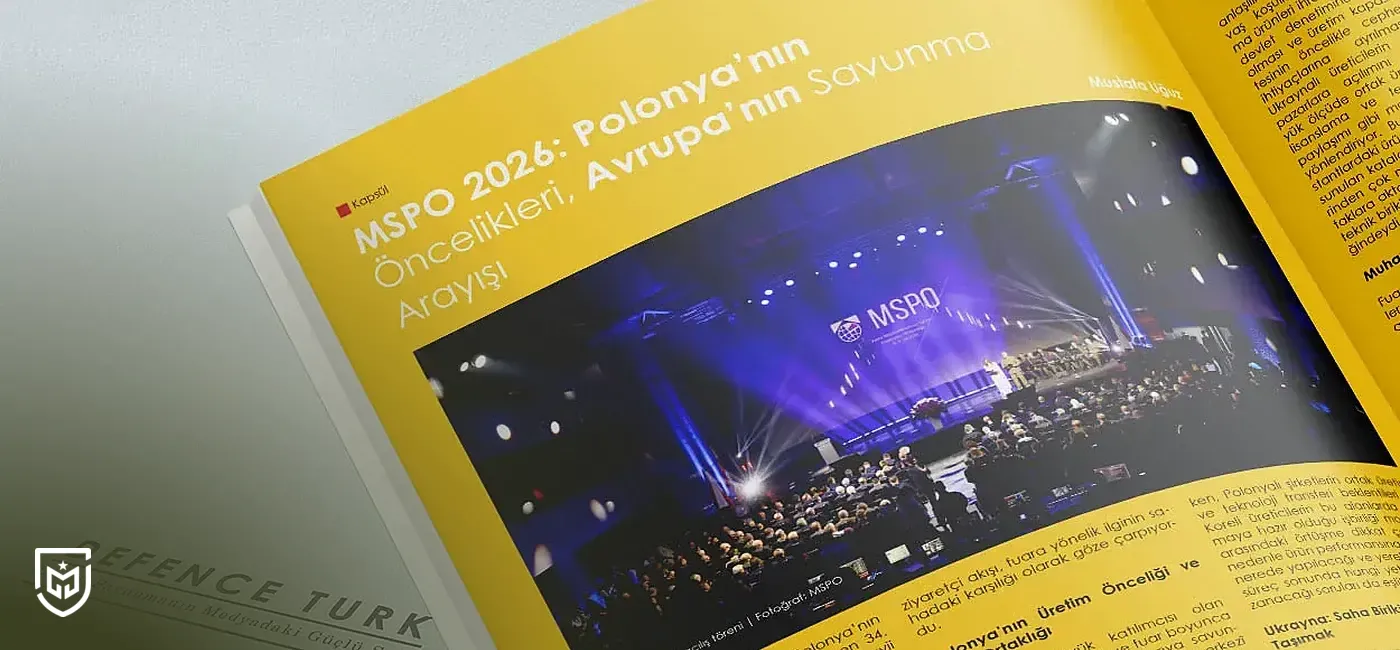
MSPO 2026: Poland's Defense Strategy and South Korean Partnership
Held September 8–11 in Kielce, Poland, the 34th International Defense Industry Fair MSPO emerged as one of Central and Eastern Europe's most comprehensive defense sector gatherings. The participation profile of approximately 1,200 companies from over 40 countries demonstrated that the fair functioned as more than a procurement showcase—it served as a platform for partnership development and technology transfer. The impact of the Russia-Ukraine conflict was evident across a broad spectrum, from land platforms to unmanned systems, training to logistics, while substantial Ukrainian company participation and prominent South Korean manufacturer booths emerged as defining characteristics of the event.
The extensive exhibition by PGZ and other Polish defense industry players clearly demonstrated the nation's central position within the defense ecosystem. The "domestic production" approach ensures that foreign system acquisitions include roles for local companies in manufacturing, integration, and maintenance operations. This preference is directly linked to the objective of converting increased defense expenditures into permanent domestic production capacity, maintenance infrastructure, and engineering capabilities. Consequently, Poland seeks to transition from being merely a weapons and systems importer to exercising influence over the processing and development phases of these products within the local ecosystem.
Hanwha Aerospace and Hyundai Rotem leading South Korean firms' substantial fair presence reflected strategic importance assigned to the Polish market. The scale of Korean representation, occupying an entire exhibition hall, demonstrated these nations' positioning efforts within Eastern Europe's defense marketplace. The alignment between Polish companies' expectations for joint production and technology transfer and Korean manufacturers' readiness to offer such cooperation models proved noteworthy. Beyond product performance, questions regarding production location and the technical capabilities local industry would ultimately acquire formed fundamental parameters of these partnerships.
The fair's intense visitor traffic and queuing at entrances reflected tangible interest in Central and Eastern Europe's defense sector. Polish Armed Forces requirements formed the fair's center of gravity, while similar procurement and modernization efforts by other NATO members in the region transformed the fair into a convergence point. Ukraine's combat experience directly influenced regional defense strategies, shaping both the fair's content and participant preferences. The overall atmosphere demonstrated that Eastern Europe's defense sector was undergoing rapid transformation.
Poland's "domestic production and technology transfer" strategy established a model for other regional nations, while the presence of experienced manufacturers like South Korea indicated that global defense industry dynamics were increasingly oriented toward Eastern Europe. This shift reflected both the region's growing defense budgets and the strategic importance assigned to local industrial capacity development alongside international partnerships.


 Tolga Demirel


Post Comment
Comments
No comments yet.
Related News
TEDEG Defense Exports Military Frequency Converter to NATO Ally
France Receives 27th A400M Atlas Military Transport Aircraft
Turkey's defense industry secures place at NATO's top table
Turkey-UK Defense Industry Council Holds Second Meeting in Ankara
Kızılelma Unmanned Combat Aircraft Inducted into Turkish Armed Forces
Bayraktar Kızılelma Enters Turkish Armed Forces Inventory
MKE ALPAY-D: Aerial Mine Clearance System for Infantry Operations
Kızılelma Unmanned Combat Aircraft Enters Service