Air Forces News
Electronic Systems
Global Developments

Apache Helicopters Could Become Drone Hunters as U.S. Army Tests Exploding 30 mm Ammunition
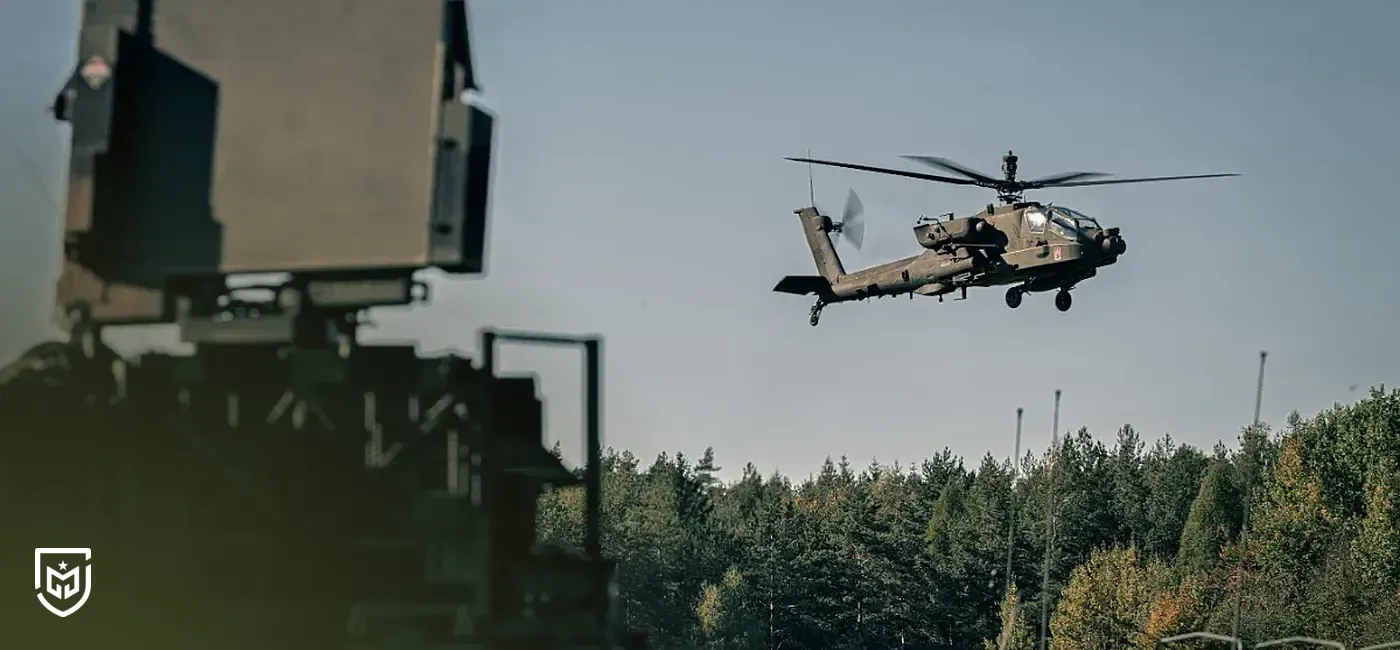
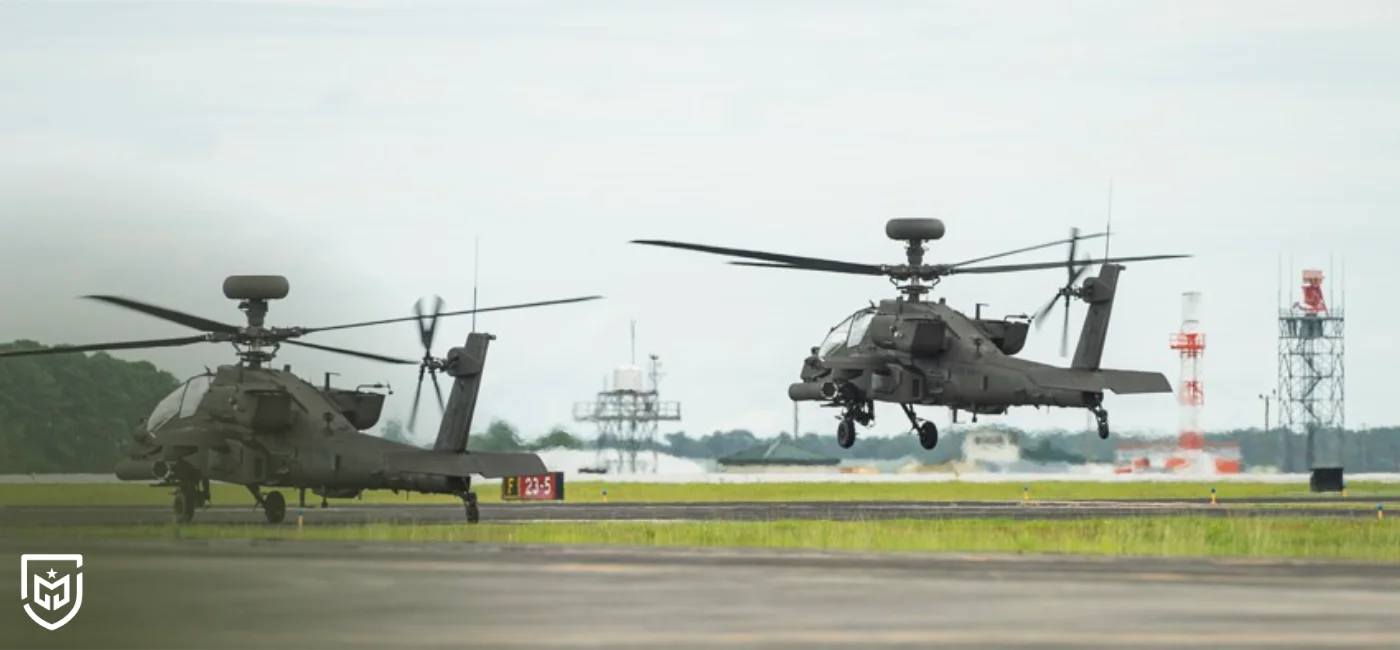
The U.S. Army is preparing the AH-64 Apache attack helicopter, originally developed decades ago to destroy Soviet tanks, for a new mission against unmanned aerial threats. According to Defense One, lessons from the war in Ukraine and conflicts in the Middle East have pushed the Army to explore how Apache helicopters can be used more effectively against drones. In this concept, the platform could be equipped with rockets and 30 mm proximity-fuzed ammunition to engage larger classes of unmanned aerial vehicles.
Major General Clair Gill, commander of the U.S. Army Aviation Center of Excellence, said during the Army Aviation Warfighting Summit in Nashville that the idea came directly from personnel in the field. Gill credited retired Chief Warrant Officer Daniel York, a former Apache training manager, with proposing that Apache helicopters be tested in counter-UAS missions. As part of Operation Flyswatter in 2025, Apache helicopters were tested against drones using air-to-ground missiles, Hellfire munitions and 30 mm proximity-fuzed rounds.
The new role for Apache helicopters comes as the U.S. Department of Defense is rapidly improving its counter-drone strategy. In the Russia-Ukraine War, unmanned aerial systems have become one of the defining elements of the battlefield. Similar threats have also appeared in the U.S. Central Command area of responsibility, making airspace protection an urgent requirement for all branches of the military.
The U.S. Army believes Apache helicopters may be especially useful against Group 3 and larger unmanned aerial systems. Group 3 drones generally weigh 55 pounds or more, while larger categories can include systems weighing over 1,000 pounds. Against such targets, using expensive air defense missiles may not always be cost-effective. Apache-fired rockets or 30 mm ammunition could provide a cheaper and more flexible alternative.
Brigadier General David Phillips, the Army’s program executive officer for aviation, said Apache’s value in this role comes from its mobility and range of weapons. The helicopter can move quickly across a broad operational area, intercept approaching threats and contribute to ground-based air and missile defense coverage from the air. Using lower-cost 30 mm rounds or rockets against larger drones could also create a much more favorable cost-exchange ratio than firing expensive missiles.
To support this approach, the Army placed an important order with Northrop Grumman for 30 mm proximity-fuzed ammunition. Major General Gill said the Army initially had only about 600 rounds available, but production has been increased quickly. Northrop Grumman has already produced 1,000 rounds, and the Army aims to raise the production rate further, potentially increasing it by about five times from its current level.
Apache’s drone-hunter role would also expand the helicopter’s traditional mission set. The platform has long been known for close air support, reconnaissance and attacks against armored targets. Now, the Army is looking at attack aviation not only as a force that supports ground units, but also as a flying sensor and shooter that can contribute to broader theater air defense.
This new mission concept is also linked to the future modernization of the Apache fleet. The Army is gradually retiring AH-64D models while continuing to acquire AH-64E helicopters. Officials say success in counter-drone missions would not necessarily change the Army’s acquisition strategy, but it would reinforce the modernization path for AH-64E Version 6 and beyond. Improved sensors, networked operations and suitable ammunition could allow Apache helicopters to take on a broader air defense role.
Using Apache helicopters against drones also highlights the changing balance between cost and capability on the modern battlefield. Firing expensive interceptors at small and medium-sized drones is not always sustainable. Proximity-fuzed 30 mm ammunition, rockets and adapted engagement tactics could offer a more economical option. For the U.S. Army, Apache’s possible role as a “drone hunter” is therefore not only an ammunition test, but also an important concept for integrating attack aviation into future air defense operations.








 Süheyla Yıldız

Post Comment
Comments
No comments yet.
Related News
SSB Sector Meeting: Focus on Supply Chain and Production Capabilities
Turkish defense industry signed 15 billion dollars in new contracts in 2026
SSB Hosts Second Supply Chain Strengthening Summit
Skyfall II Exercise: U.S. Army Demonstrates UAV Defense Capabilities in Germany
IDA Turkey 2026 Defense and Aviation Industrial Cooperation Days Launched
SSB Chief: Transparent Licensing Will Strengthen Defense Cooperation
STM's Swarm UAV System Demonstrates Operational Success at Ateş Serbest-2026
TUSAŞ Kamikaze UAV Systems Achieve Success in Exercise Ateş Serbest-2026