



Air Forces News


BREAKING NEWS
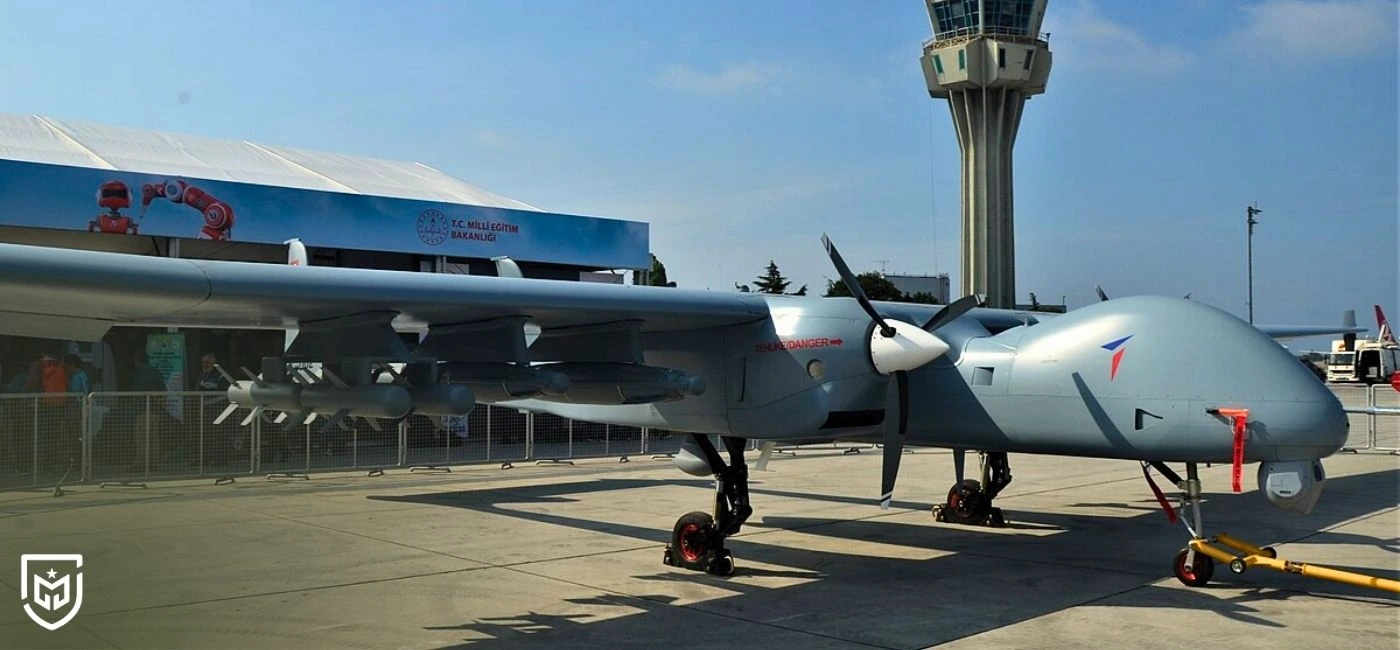
Turkey’s aerospace sector has marked another major milestone in indigenous aviation technology. Developed by Turkish Aerospace Industries (TUSAŞ), the AKSUNGUR Unmanned Aerial Vehicle (UAV) successfully reached 40,000 feet during a test flight powered by the TEI-PD170 engine, designed and produced by TUSAŞ Engine Industries (TEI). This achievement not only sets a new altitude record for the PD170 engine but also underscores Turkey’s growing ability to integrate national subsystems across its aerial platforms.
According to TUSAŞ, this flight was significant as it validated the performance of multiple indigenous components operating together at extreme altitude. Alongside the engine, the UAV carried ASELSAN’s AF500 electro-optical camera and ASPİLSAN’s heated national battery, both successfully completing their high-altitude trials. Operating at 40,000 feet involves drastic temperature and pressure variations, making the validation of these subsystems critical for future operational reliability.
TUSAŞ General Manager Mehmet Demiroğlu celebrated the success on social media, stating: “With AKSUNGUR’s 40,000-foot altitude test, we have achieved yet another milestone. Each success takes us higher, and we are stepping into the future with even greater strength. I am proud of this accomplishment and grateful to all our engineers and test teams.”
AKSUNGUR is a medium-altitude, long-endurance (MALE) UAV capable of carrying multiple payloads, from precision munitions to advanced reconnaissance systems. Just last week, it successfully conducted live-fire tests with ASELSAN’s LGK81 and LGK82 precision-guided munitions, hitting targets with pinpoint accuracy. The recent altitude milestone brings AKSUNGUR closer to the high-altitude, long-endurance (HALE) class—an important step for Turkey’s unmanned aviation ecosystem.
This accomplishment demonstrates the tangible results of Turkey’s defense strategy focused on self-reliance and domestic innovation. By integrating nationally developed engines, sensors, and power systems, Turkey is reducing foreign dependency while paving the way for future-generation UAVs and unmanned combat aircraft.


The cookies used on our website are used to provide you with a better user experience and to improve our website. You can manage your cookie preferences from the options below.
 Rabia Kılıç
Post Comment
Comments
No comments yet.
Related News
Skyfall II Exercise: U.S. Army Demonstrates UAV Defense Capabilities in Germany
STM's Swarm UAV System Demonstrates Operational Success at Ateş Serbest-2026
TUSAŞ Kamikaze UAV Systems Achieve Success in Exercise Ateş Serbest-2026
Fire Free-2026 Exercise Successfully Completed
Spain Plans to Purchase 15 Additional Hürjet Advanced Trainers
Baykar platforms demonstrated capabilities at Ateş Serbest-2026 exercise
Turkey and Spain to Develop Joint Version of Hürjet Aircraft
Unmanned Naval and Aerial Vehicles Demonstrated Integrated Command Control Coordination