


Naval Forces News
Global Developments


BREAKING NEWS
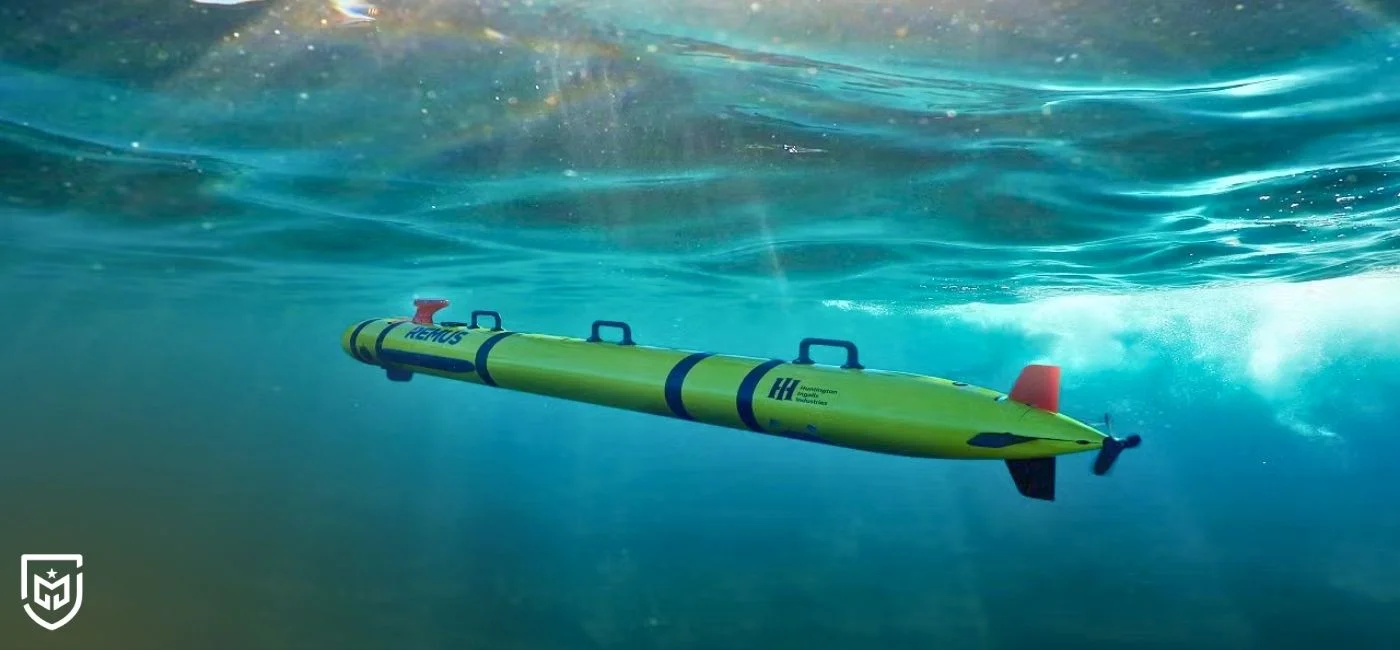
The ongoing conflict between Ukraine and Russia continues to serve as a real-world testing ground for emerging military technologies. Beyond unmanned aerial vehicles and surface drones, a new dimension has now entered the battlefield: unmanned kamikaze underwater vehicles. These systems signal a significant shift in how modern naval warfare and port security may evolve in the near future.
Footage released by the Security Service of Ukraine shows an attack carried out using unmanned maritime platforms inside Russia’s highly secured Novorossiysk Port. According to Ukrainian claims, a Russian submarine was struck by an unmanned kamikaze underwater vehicle, sustaining severe damage and becoming inoperable. Russian authorities confirmed an attempted attack but denied any damage to their submarine, stating that the sabotage effort had failed.
While it remains unclear whether the attack achieved its intended result, defense analysts emphasize that the real importance lies elsewhere. The use of an unmanned underwater kamikaze platform demonstrates that even heavily protected naval bases are vulnerable from beneath the surface. Unlike surface threats, underwater attacks are far more difficult to detect, monitor, and counter with existing defensive measures.
Experts point out that explosive-laden unmanned underwater vehicles approach targets covertly below the surface, where communication, navigation, and precise targeting are technically more challenging. However, advances in autonomy and guidance systems are gradually overcoming these limitations. Their relatively low cost and high strategic impact make them particularly attractive for asymmetric warfare.
Russia has reportedly deployed floating barriers and nets to protect the port against surface threats, yet underwater defenses remain limited. Countermeasures such as underwater sensor networks, sonar arrays, and specialized anti-underwater munitions are still in their early stages of deployment worldwide. As a result, many naval forces may need to reassess how they protect submarines, ports, and critical maritime infrastructure.
These developments are also closely followed by the Turkish defense industry. Companies such as HAVELSAN are known to be working on unmanned underwater vehicle concepts, with several designs already completed but not yet at the prototype stage. Analysts believe that real-world examples from the Ukraine–Russia war could accelerate these projects and push unmanned kamikaze underwater systems into operational service sooner than expected.
In the coming years, unmanned kamikaze underwater vehicles are likely to become a permanent and influential element of modern naval warfare, forcing nations to rethink both offensive and defensive maritime strategies.


The cookies used on our website are used to provide you with a better user experience and to improve our website. You can manage your cookie preferences from the options below.
 Rabia Kılıç
Post Comment
Comments
No comments yet.
Related News
Germany denies claims of MGCS tank project withdrawal
Thales Introduces HexaForce AI-Powered Command and Control System to Gulf Region
Romania Signs Contract for Airbus H225M Helicopter Procurement
Ari Arms begins OR-4 rifle production in Azerbaijan
Ireland selects Thales Ground Master radar for air surveillance capability
Greece reaches agreement with US for Stryker armored vehicles
German F125 Frigates to Receive IRIS-T SLM Air Defense System Integration
France successfully conducts first test of M51.3 submarine-launched ballistic missile