



Satellite and Space News
Global Developments


BREAKING NEWS
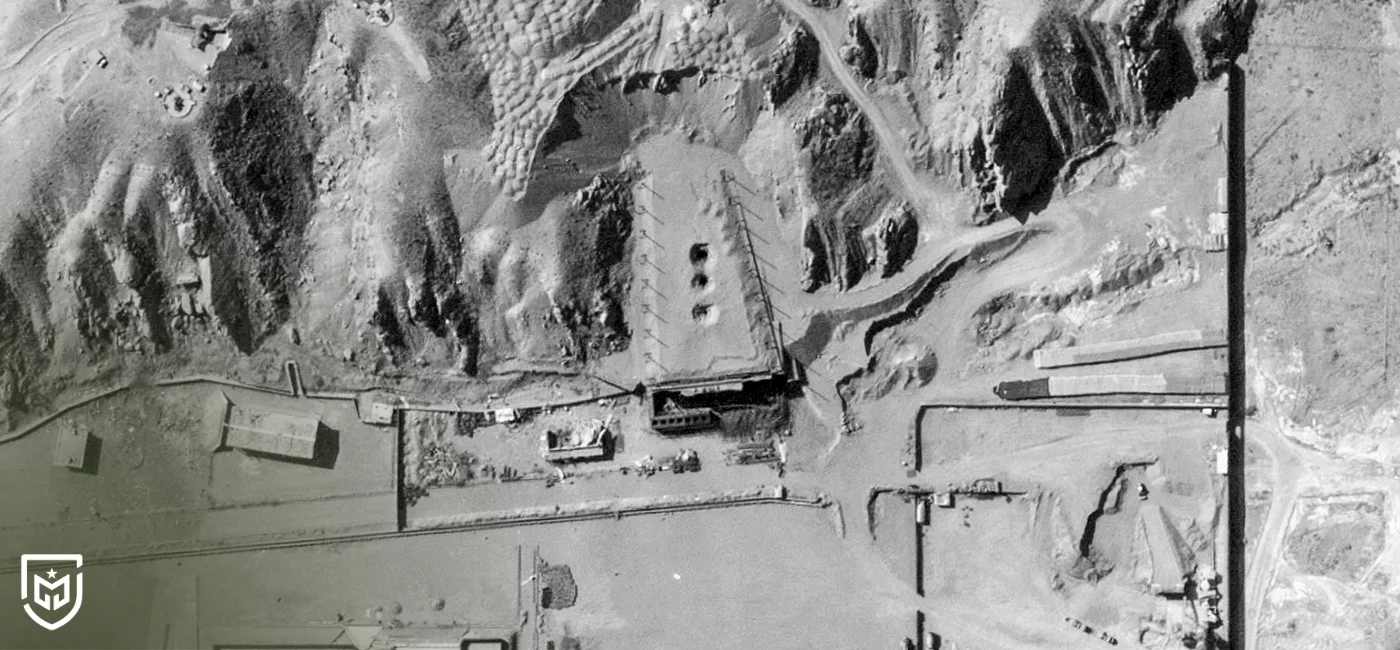
New images released by satellite imaging company Vantor have revealed that the Taleghan 2 facility, located in Iran’s Parchin area and alleged to be linked to the country’s nuclear program, was struck in a heavy air attack. In the high-resolution photographs published after the strike, three large impact points can be clearly seen on the site, drawing immediate attention to the precision and scale of the attack. Analysts say the visible damage pattern suggests that the operation may have involved advanced bunker-penetrating munitions rather than conventional bombs, highlighting the strategic importance of the target.
According to military experts, the strike marks are consistent with the possible use of the GBU-57/B Massive Ordnance Penetrator, a 30,000-pound bomb designed specifically to destroy deeply buried and reinforced underground structures. This weapon has frequently been associated with operations targeting hardened nuclear-related infrastructure. The fact that Taleghan 2 had reportedly undergone extensive fortification in recent months has increased speculation that a more powerful penetrator weapon was required to achieve the intended effect. By mid-January 2026, a new layer of concrete had reportedly been poured over the facility, and before the start of joint US-Israeli operations in late February, that reinforced section was covered with soil for added protection.
Earlier imagery shared by Vantor from November 14, 2025, and March 6, 2026, also illustrates the gradual strengthening of the site. While other parts of the broader Parchin complex appeared to have been targeted on March 6, Taleghan 2 itself did not seem to have been struck at that stage. This has led to assessments that the latest attack may have been part of a more deliberate and carefully selected targeting process. US Central Command declined to comment on whether GBU-57/B bombs were used against Taleghan 2 or any other target in Iran during the current operations. However, because the B-2 strategic bomber is the only aircraft capable of operationally delivering this weapon, attention has increasingly focused on its possible involvement.
Taleghan 2 has long been at the center of debate surrounding alleged nuclear weapons-related activities within the Parchin complex. Iranian officials have consistently denied accusations that the site supports nuclear weapons development, while Western assessments and some defense experts have claimed that it may have played a role in the production of specialized conventional explosives associated with such work. Israel reportedly targeted the facility in 2024, and additional strikes were carried out against parts of the Parchin complex during last year’s “12-Day War.” Even so, reports suggested that some critical infrastructure at the facility had later been rebuilt. It remains unclear whether the latest strike has completely disabled Taleghan 2, but the newly published satellite images strongly indicate that the site suffered significant damage and that pressure on Iran’s sensitive military infrastructure has entered a new phase.


The cookies used on our website are used to provide you with a better user experience and to improve our website. You can manage your cookie preferences from the options below.
 Süheyla Yıldız
Post Comment
Comments
No comments yet.
Related News
Altınay Defense Group Transitions to New Management Structure
BAE Systems and Lockheed Martin Unveil Blizzard Multi-Mission Unmanned Aircraft
Anduril's Ohio Facility Produces First YFQ-44A Fury Unmanned Combat Aircraft
BAE Systems Raises Outlook as Global Defense Demand Continues to Surge
South Korea's envoy highlights KAAN fighter jets as cornerstone of defense partnership with Türkiye
Swedish-Developed Lunar Neutrals Telescope Delivered to TÜBİTAK SPACE for Moon Mission-1
ASELSAN's Electro-Optical System Integrated into South Africa's Mwari Aircraft
TAI Chief: Turkey Shaping NATO's Future Security Architecture