






Naval Forces News
Global Developments


BREAKING NEWS
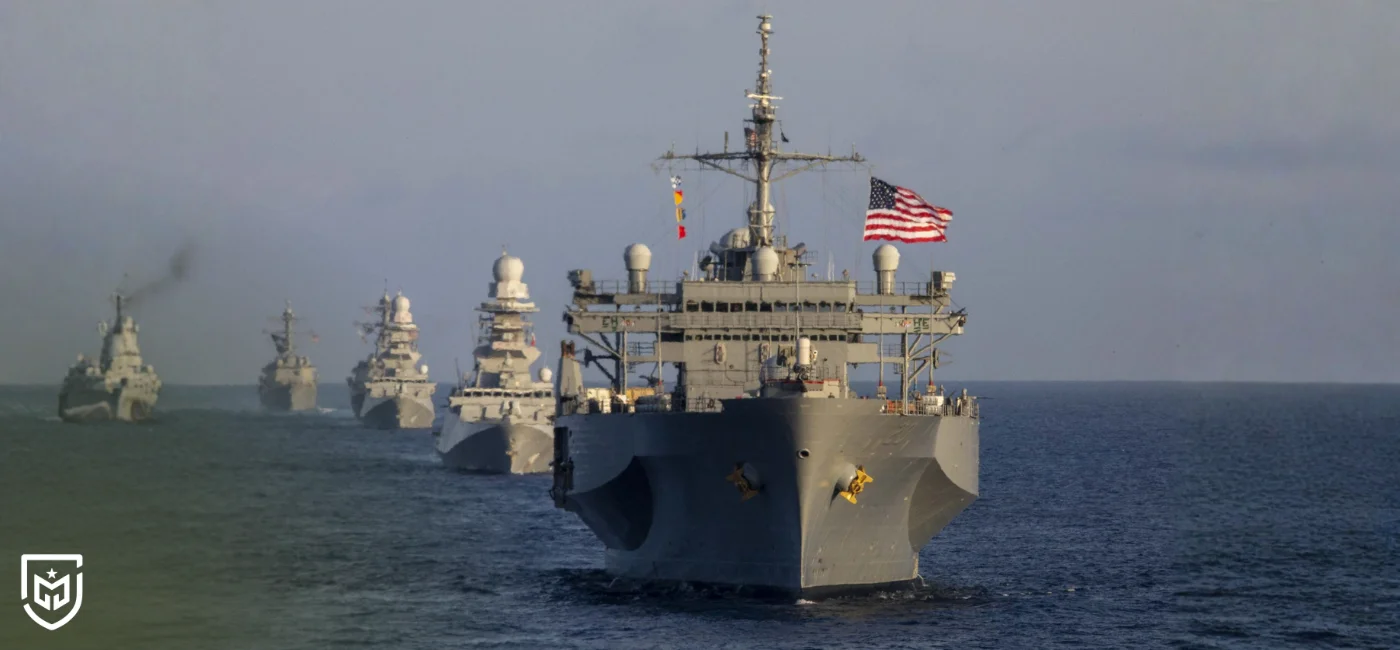
The U.S. Navy has launched one of its most comprehensive naval transformation efforts since the end of the Cold War with the release of its May 2026 Shipbuilding Plan. The initiative, called the “Golden Fleet,” aims not only to increase the number of warships but also to reshape shipyards, production infrastructure, maintenance capacity, unmanned systems and the broader naval warfare concept. The plan is designed to restore and strengthen American maritime superiority in an increasingly competitive global security environment.
According to the report, the U.S. Navy currently has 291 battle force ships, remaining below the legally mandated goal of 355 ships. Under the new plan, auxiliary vessels and unmanned maritime platforms will also be included in the broader force structure. With this approach, the total U.S. naval inventory is expected to exceed 450 platforms in the early 2030s. For fiscal year 2027, funding was requested for 34 manned warships and 5 unmanned platforms, while the five-year period covering FY2027-FY2031 includes plans for the procurement of 122 warships and 63 unmanned platforms.
One of the most striking messages in the plan is the shift from a peacetime production tempo to a war-preparedness production model. The U.S. Navy noted that although shipbuilding budgets have doubled over the past two decades, fleet size has not grown as expected. The main reasons for this problem are identified as bureaucracy, changing requirements, rising costs and delayed deliveries. The new strategy therefore focuses on building a faster, more flexible and more resilient shipbuilding ecosystem.
A major highlight of the plan is the next-generation “BBGN” battleship program. These nuclear-powered platforms are expected to go beyond the traditional destroyer concept by carrying hypersonic weapons, high-energy lasers, advanced electronic warfare systems and long-range missile capabilities. The U.S. Navy describes these ships as platforms capable of delivering large-scale firepower in high-intensity naval warfare while also serving as command-and-control hubs for task forces at sea.
Submarine production is another central pillar of the “Golden Fleet” plan. The U.S. administration defines submarine construction as one of the most critical areas of national security. For the FY2027-FY2031 period, approximately $62 billion is allocated for Columbia-class ballistic missile submarines, while around $63 billion is planned for Virginia-class attack submarines. Washington aims to reach a production pace of at least one Columbia-class and two Virginia-class submarines per year by 2031. To achieve this, billions of dollars will be invested in supply chains, skilled labor and production capacity.
The report also marks a major shift by formally defining unmanned maritime platforms as part of total naval strength. The U.S. Navy plans to procure 47 Medium Unmanned Surface Vessels during FY2027-FY2031, along with 16 Extra Large Unmanned Underwater Vehicles. These systems are expected to conduct missions such as reconnaissance, target detection, deception, electronic warfare and low-cost strike operations. Their use is intended to reduce the operational burden on high-value manned warships.
The plan also includes a major expansion of amphibious warfare capacity for the U.S. Marine Corps. During FY2027-FY2031, the Navy plans to build 5 LPD amphibious transport docks, 2 LHA amphibious assault ships and 23 Medium Landing Ships. The report emphasizes that keeping at least three Amphibious Ready Group and Marine Expeditionary Unit formations continuously deployed is a strategic requirement. This expansion supports rapid force projection, crisis response and operations in contested littoral regions.
To accelerate shipbuilding, the U.S. Navy is introducing an AI-supported digital production system called “ShipOS.” The system will allow real-time monitoring of production planning, material management, workforce allocation and maintenance processes. According to the report, pilot applications reduced submarine production planning time from 160 hours to under 10 minutes. This technology is expected to help reduce delays and improve efficiency across U.S. shipyards.
The “Golden Fleet” plan is also designed as a major industrial transformation program. The U.S. aims to increase the share of distributed production in shipbuilding from 10 percent to 50 percent. Under this model, more factories, private companies and suppliers across the country will be integrated into the ship production chain. As part of this effort, the “Factory 4” production facility in Alabama is receiving $900 million in public investment and $1.5 billion in private sector capital.
The U.S. Navy describes the plan as the largest naval construction effort since World War II. The “Golden Fleet” initiative aims not only to expand fleet numbers but also to restore American naval dominance, prepare the industrial base for wartime production demands and build a next-generation maritime architecture centered on unmanned systems, advanced weapons and digital shipbuilding. The program is expected to shape the future structure and strategic priorities of the U.S. Navy in the coming decade.The U.S. Navy has launched one of its most comprehensive naval transformation efforts since the end of the Cold War with the release of its May 2026 Shipbuilding Plan. The initiative, called the “Golden Fleet,” aims not only to increase the number of warships but also to reshape shipyards, production infrastructure, maintenance capacity, unmanned systems and the broader naval warfare concept. The plan is designed to restore and strengthen American maritime superiority in an increasingly competitive global security environment.
According to the report, the U.S. Navy currently has 291 battle force ships, remaining below the legally mandated goal of 355 ships. Under the new plan, auxiliary vessels and unmanned maritime platforms will also be included in the broader force structure. With this approach, the total U.S. naval inventory is expected to exceed 450 platforms in the early 2030s. For fiscal year 2027, funding was requested for 34 manned warships and 5 unmanned platforms, while the five-year period covering FY2027-FY2031 includes plans for the procurement of 122 warships and 63 unmanned platforms.
One of the most striking messages in the plan is the shift from a peacetime production tempo to a war-preparedness production model. The U.S. Navy noted that although shipbuilding budgets have doubled over the past two decades, fleet size has not grown as expected. The main reasons for this problem are identified as bureaucracy, changing requirements, rising costs and delayed deliveries. The new strategy therefore focuses on building a faster, more flexible and more resilient shipbuilding ecosystem.
A major highlight of the plan is the next-generation “BBGN” battleship program. These nuclear-powered platforms are expected to go beyond the traditional destroyer concept by carrying hypersonic weapons, high-energy lasers, advanced electronic warfare systems and long-range missile capabilities. The U.S. Navy describes these ships as platforms capable of delivering large-scale firepower in high-intensity naval warfare while also serving as command-and-control hubs for task forces at sea.
Submarine production is another central pillar of the “Golden Fleet” plan. The U.S. administration defines submarine construction as one of the most critical areas of national security. For the FY2027-FY2031 period, approximately $62 billion is allocated for Columbia-class ballistic missile submarines, while around $63 billion is planned for Virginia-class attack submarines. Washington aims to reach a production pace of at least one Columbia-class and two Virginia-class submarines per year by 2031. To achieve this, billions of dollars will be invested in supply chains, skilled labor and production capacity.
The report also marks a major shift by formally defining unmanned maritime platforms as part of total naval strength. The U.S. Navy plans to procure 47 Medium Unmanned Surface Vessels during FY2027-FY2031, along with 16 Extra Large Unmanned Underwater Vehicles. These systems are expected to conduct missions such as reconnaissance, target detection, deception, electronic warfare and low-cost strike operations. Their use is intended to reduce the operational burden on high-value manned warships.
The plan also includes a major expansion of amphibious warfare capacity for the U.S. Marine Corps. During FY2027-FY2031, the Navy plans to build 5 LPD amphibious transport docks, 2 LHA amphibious assault ships and 23 Medium Landing Ships. The report emphasizes that keeping at least three Amphibious Ready Group and Marine Expeditionary Unit formations continuously deployed is a strategic requirement. This expansion supports rapid force projection, crisis response and operations in contested littoral regions.
To accelerate shipbuilding, the U.S. Navy is introducing an AI-supported digital production system called “ShipOS.” The system will allow real-time monitoring of production planning, material management, workforce allocation and maintenance processes. According to the report, pilot applications reduced submarine production planning time from 160 hours to under 10 minutes. This technology is expected to help reduce delays and improve efficiency across U.S. shipyards.
The “Golden Fleet” plan is also designed as a major industrial transformation program. The U.S. aims to increase the share of distributed production in shipbuilding from 10 percent to 50 percent. Under this model, more factories, private companies and suppliers across the country will be integrated into the ship production chain. As part of this effort, the “Factory 4” production facility in Alabama is receiving $900 million in public investment and $1.5 billion in private sector capital.
The U.S. Navy describes the plan as the largest naval construction effort since World War II. The “Golden Fleet” initiative aims not only to expand fleet numbers but also to restore American naval dominance, prepare the industrial base for wartime production demands and build a next-generation maritime architecture centered on unmanned systems, advanced weapons and digital shipbuilding. The program is expected to shape the future structure and strategic priorities of the U.S. Navy in the coming decade.


The cookies used on our website are used to provide you with a better user experience and to improve our website. You can manage your cookie preferences from the options below.
 Süheyla Yıldız
Post Comment
Comments
No comments yet.
Related News
Germany denies claims of MGCS tank project withdrawal
Thales Introduces HexaForce AI-Powered Command and Control System to Gulf Region
Romania Signs Contract for Airbus H225M Helicopter Procurement
Ari Arms begins OR-4 rifle production in Azerbaijan
Ireland selects Thales Ground Master radar for air surveillance capability
Greece reaches agreement with US for Stryker armored vehicles
German F125 Frigates to Receive IRIS-T SLM Air Defense System Integration
France successfully conducts first test of M51.3 submarine-launched ballistic missile