Naval Forces News
Electronic Systems
Global Developments

US Navy launches AI and climbing robot era for ship maintenance
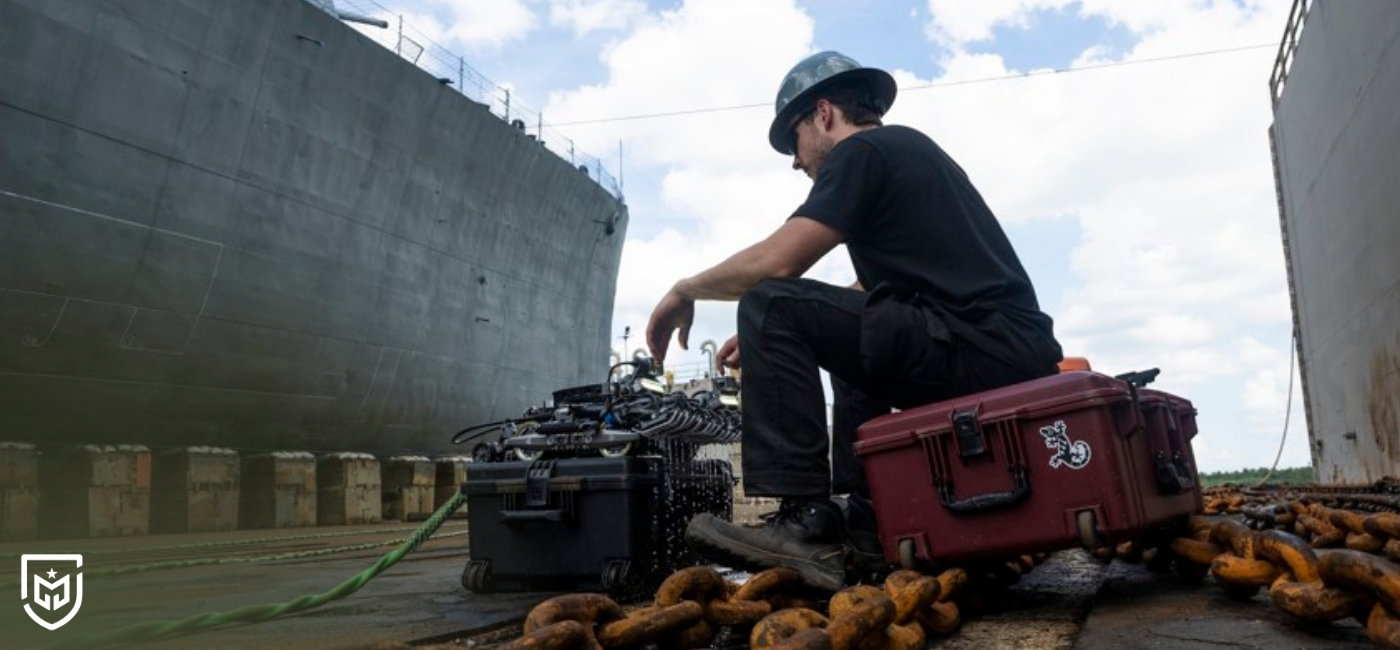
The US Navy is moving toward next-generation robotic systems and artificial intelligence-based analysis solutions in order to reduce delays in maintenance and repair processes and increase fleet readiness. According to a Defense One report published on March 17, 2026, the Navy and the US General Services Administration (GSA) awarded a $71 million contract to Gecko Robotics. Under the agreement, the company’s wall-climbing robots and unmanned aerial systems will be used to inspect ships, jets, and other military equipment. The company says these systems can identify maintenance needs up to 50 times faster and with greater accuracy than human inspectors.
The new solution is expected to be used particularly on destroyers, amphibious warships, and littoral combat ships. According to the report, the system is not limited to identifying current faults; it also supports predictive maintenance by estimating which components may fail in the future. This allows the Navy to prepare the right personnel, spare parts, and repair plans even before a ship enters dry dock or reaches the shipyard. US Navy Chief Technology Officer Justin Fanelli stated that defense and dual-use American companies can provide not only small efficiency gains, but also major leaps in outcome-based metrics.
Behind this initiative lies a serious maintenance crisis that the Navy has been trying to solve for years. The report notes that a significant portion of the US Navy’s approximately 290 combat ships are in maintenance at the same time; as of January 2026, 52 ships were undergoing repairs. NAVSEA Commander Admiral Jim Downey said that in 2025, only 41 percent of ships completed maintenance on schedule, well below the 71 percent target. The Navy aims to push that figure above 60 percent in 2026. This situation directly affects the tempo of global operations and stands out as a critical issue for US logistical endurance, especially in the context of a potential major naval competition with China.
Another noteworthy point in the report is that this technology could eventually be used not only for maintenance, but also across the production chain. Gecko Robotics executives emphasized that autonomy and robotic solutions may improve efficiency in upstream shipyard supply chains, including casting and forging processes. Such an approach could reduce the number of expensive parts being scrapped and support faster shipbuilding. The United States currently operates around 287 warships, while China has reached a fleet of about 400 ships, with the gap expected to widen further by 2030. In addition, China accounts for roughly 53 percent of global shipbuilding capacity, while the US remains below 1 percent. For that reason, the US Navy’s investment in AI-enabled maintenance and robotic inspection is being viewed not only as a technical modernization effort, but also as a strategic necessity in the broader naval power competition.





 Süheyla Yıldız

Post Comment
Comments
No comments yet.
Related News
Turkish defense firms ban foreign electric vehicles from campuses
Germany denies claims of MGCS tank project withdrawal
Thales Introduces HexaForce AI-Powered Command and Control System to Gulf Region
ÇEPNI Tactical UAV Family Enters Operational Service
ASELSAN's Drone-Hunting System Completes Successful Demonstration
Romania Signs Contract for Airbus H225M Helicopter Procurement
ASELSAN's GÖKALP drone defense system completes successful demonstration
Ari Arms begins OR-4 rifle production in Azerbaijan