Land Forces News
Weapons and Ammunition
Global Developments

US Army Receives First XM8 Carbines as Testing Phase Begins
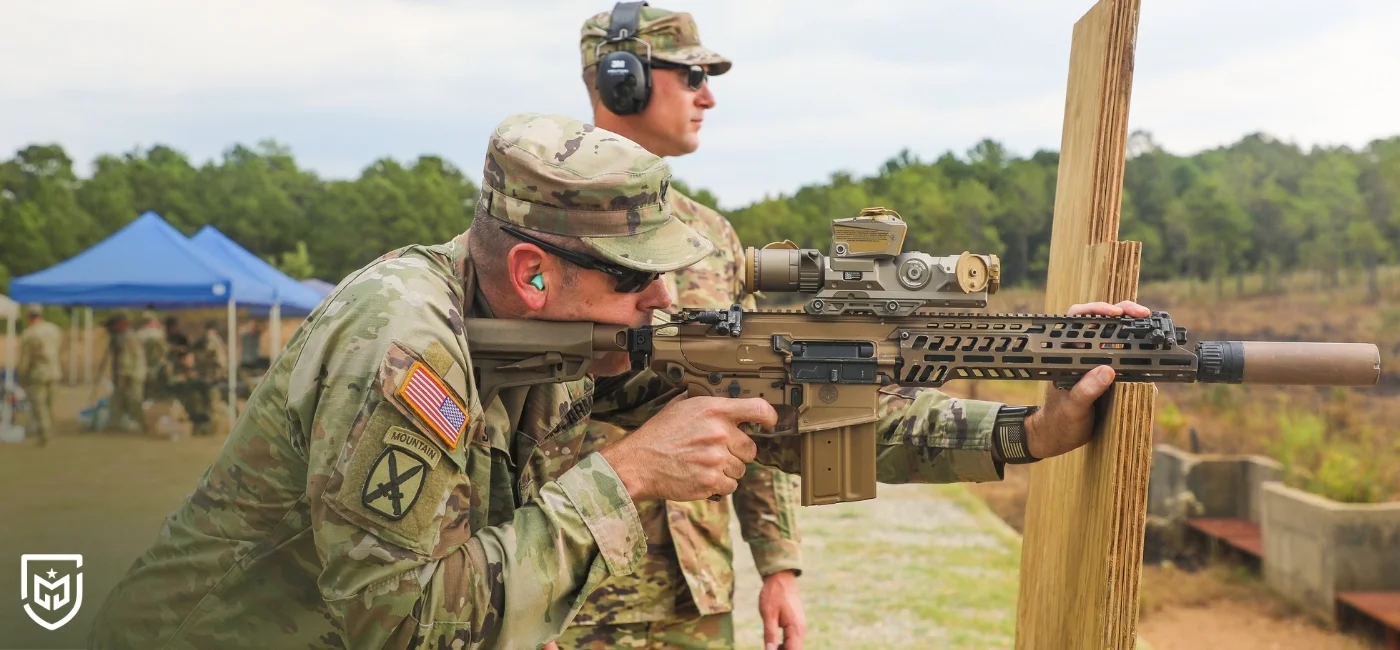
The US Army has taken delivery of the first batch of SIG Sauer’s XM8 carbine as part of its broader infantry weapons modernization effort. The move marks an important step in the Army’s search for a weapon better suited to close-quarters combat while maintaining the lethality improvements introduced by the M7 rifle. Rather than replacing the M7 entirely, the XM8 is being positioned as a more compact and maneuverable variant designed for troops operating in tighter environments where mobility and speed are critical.
The development of the XM8 reflects concerns raised over the M7’s suitability for short-range engagements. Although the M7 offers stronger long-range performance and improved lethality through its 6.8×51 mm ammunition, its overall weight, reduced ammunition capacity, and larger size have generated criticism among soldiers and defense observers. These concerns have become especially relevant in urban and close-combat scenarios, where a heavier rifle can limit agility and endurance. In response, the Army and SIG Sauer moved to create a more compact weapon that preserves much of the M7’s firepower while addressing the handling demands of close-range operations.
From a technical standpoint, the XM8 features an 11-inch barrel, compared with the M7’s 13-inch barrel, giving the weapon a shorter overall profile. The carbine also incorporates a shorter but thicker suppressor and a simplified upper structure, helping reduce total weight by roughly half a kilogram. Even so, the complete system still weighs around 4 kilograms with suppressor attached, which means some questions remain about whether it fully meets expectations for a lightweight close-combat carbine. To offset earlier criticism over combat load and ammunition capacity, the XM8 is also expected to make use of 25-round magazines and lighter ammunition configurations.
The new weapon highlights the challenge of balancing two very different battlefield requirements in a single platform. On one hand, the Army wants a carbine that can deliver high maneuverability and rapid handling in confined environments. On the other, it aims to preserve the precision, lethality, and range advantages associated with the M7 and the broader Next Generation Squad Weapon program. The XM8 therefore represents an effort to bridge the gap between a traditional compact carbine and a modern battle rifle, combining mobility with enhanced terminal performance.
More broadly, the XM8 should be viewed as part of the US Army’s ongoing attempt to reshape infantry combat capability through a wider package of modernization efforts. This includes not only new rifles and carbines, but also updated ammunition concepts, improved fire-control systems, and a more digitally integrated battlefield architecture. If testing confirms the expected benefits, the XM8 could become a key component of the Army’s future close-combat arsenal and play an important role in determining how American infantry units balance lethality and maneuverability in the years ahead.







 Süheyla Yıldız

Post Comment
Comments
No comments yet.
Related News
SSB Sector Meeting: Focus on Supply Chain and Production Capabilities
Turkish defense industry signed 15 billion dollars in new contracts in 2026
SSB Hosts Second Supply Chain Strengthening Summit
SSB Chief: Transparent Licensing Will Strengthen Defense Cooperation
Görgün: Turkish-German defense partnership to be revitalized with new vision
Spain Plans to Purchase 15 Additional Hürjet Advanced Trainers
Turkey and Spain to Develop Joint Version of Hürjet Aircraft
Romanian Corvette Conducts Black Sea Exercises