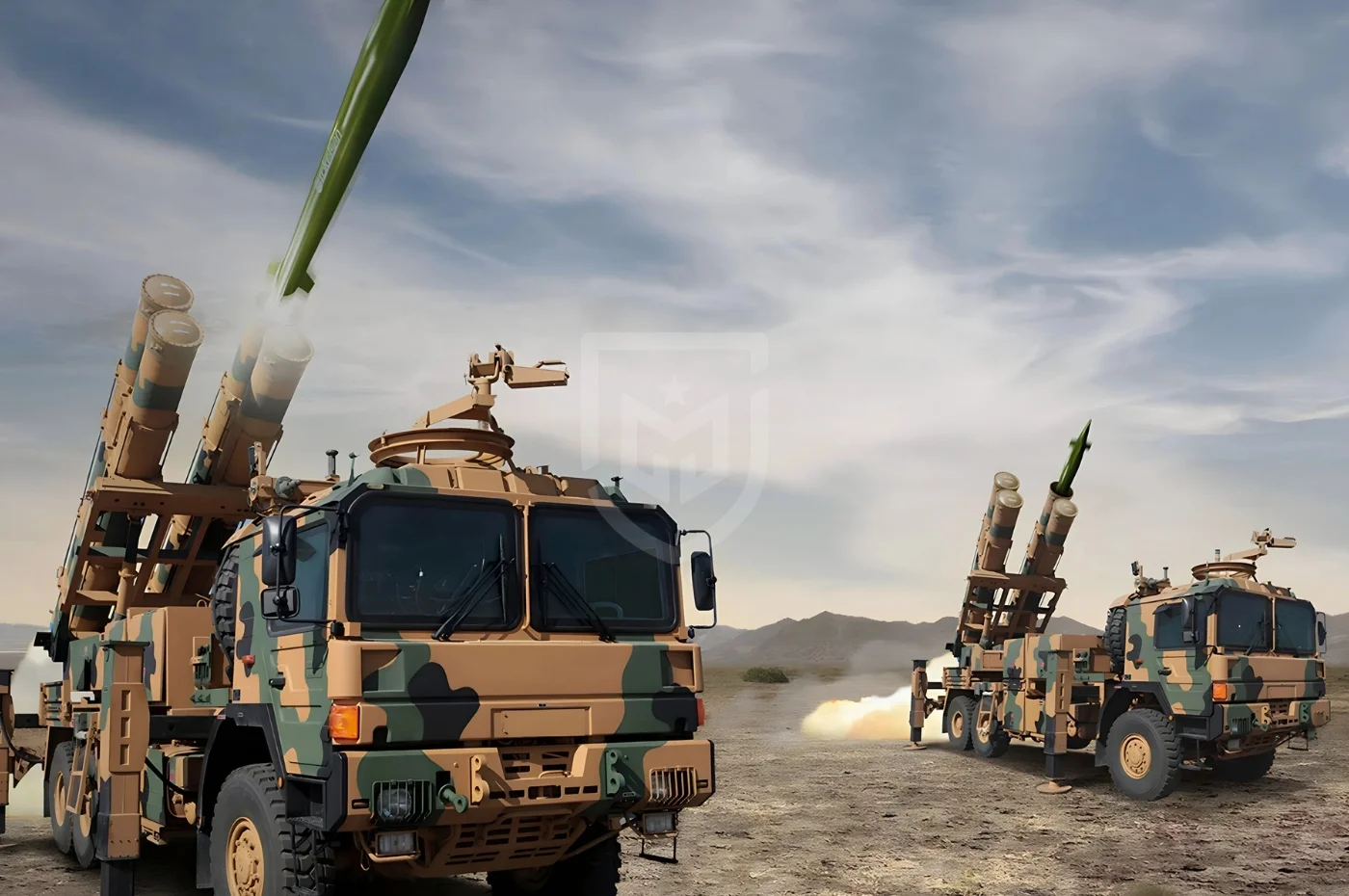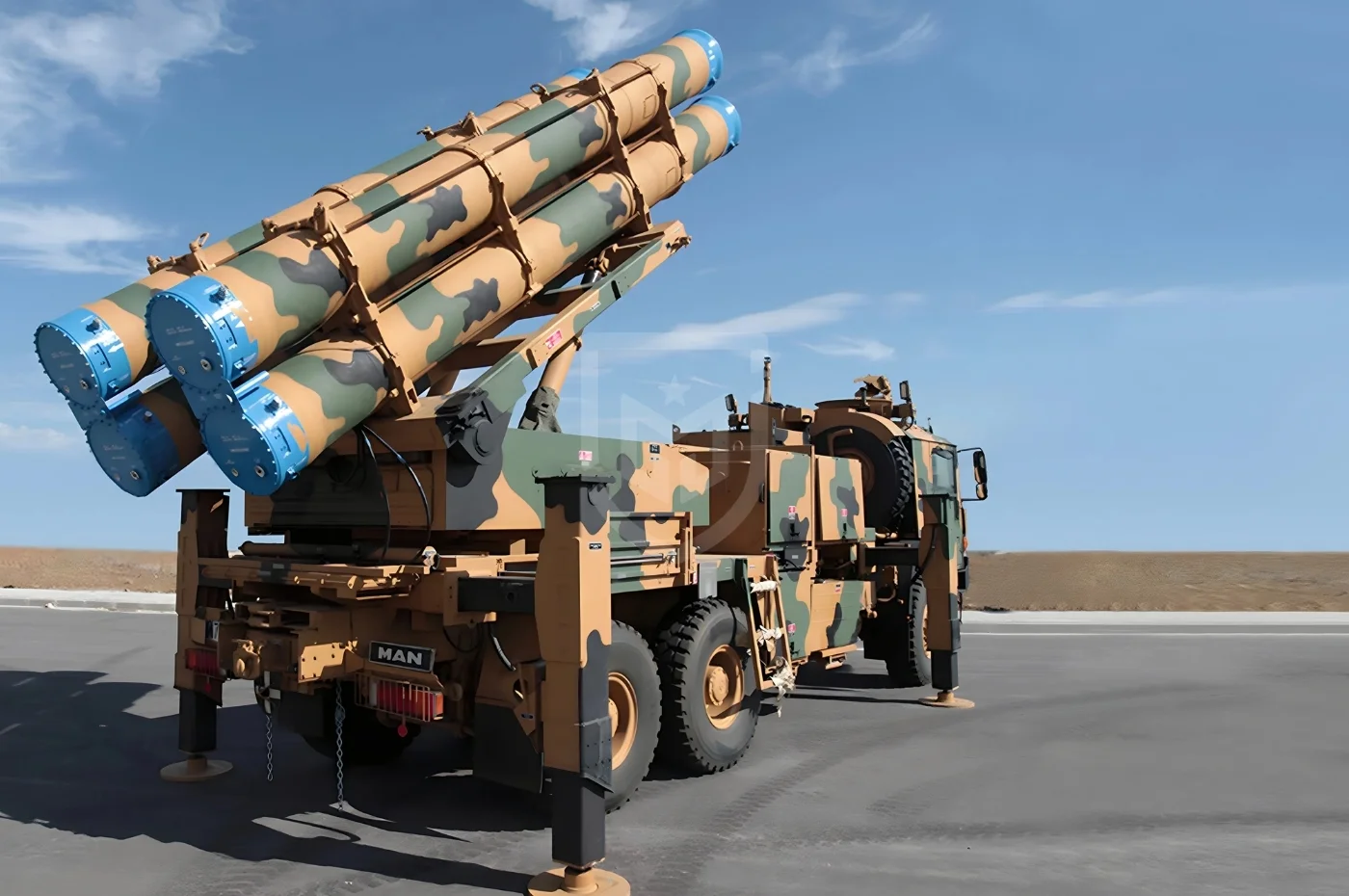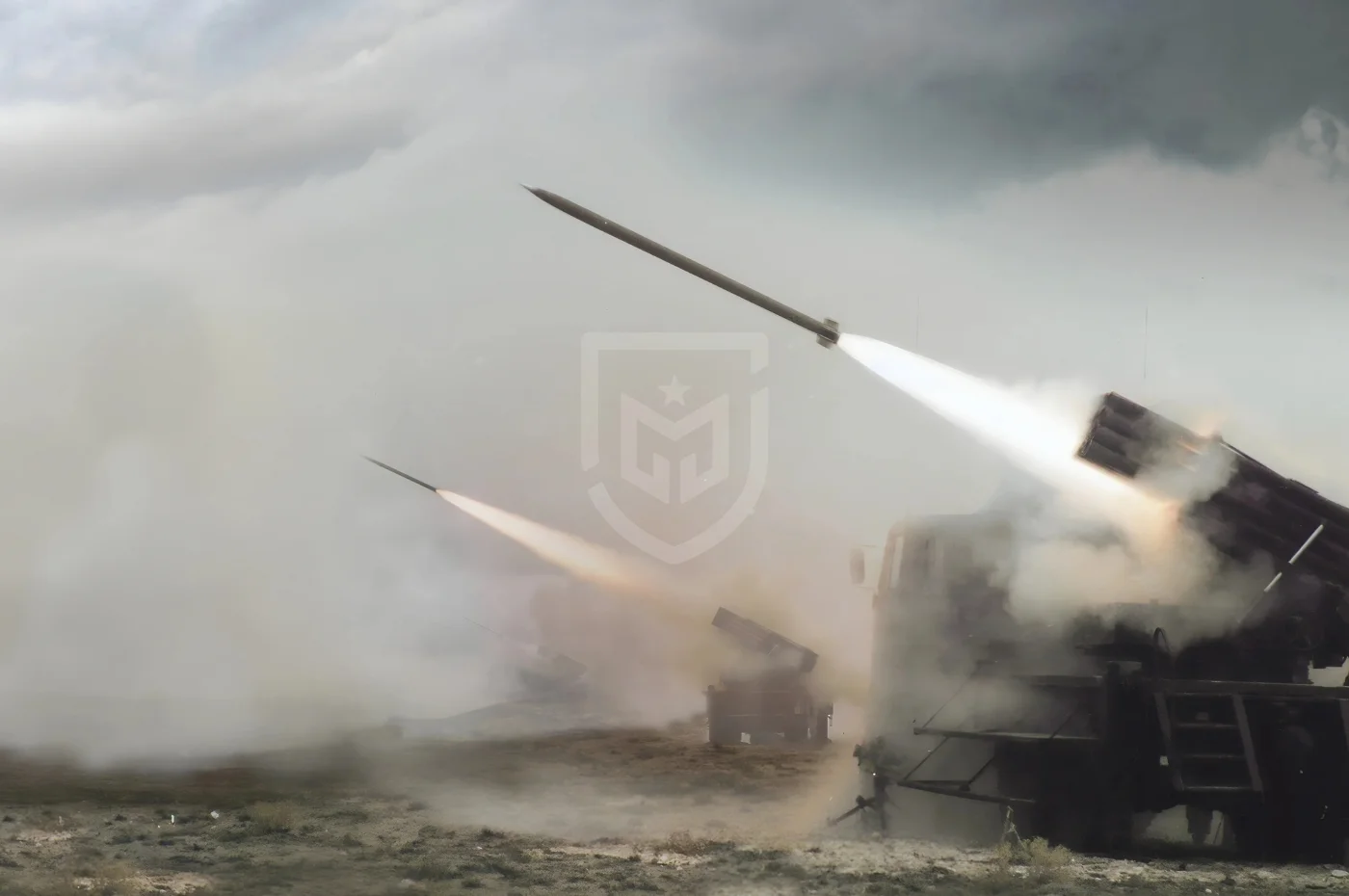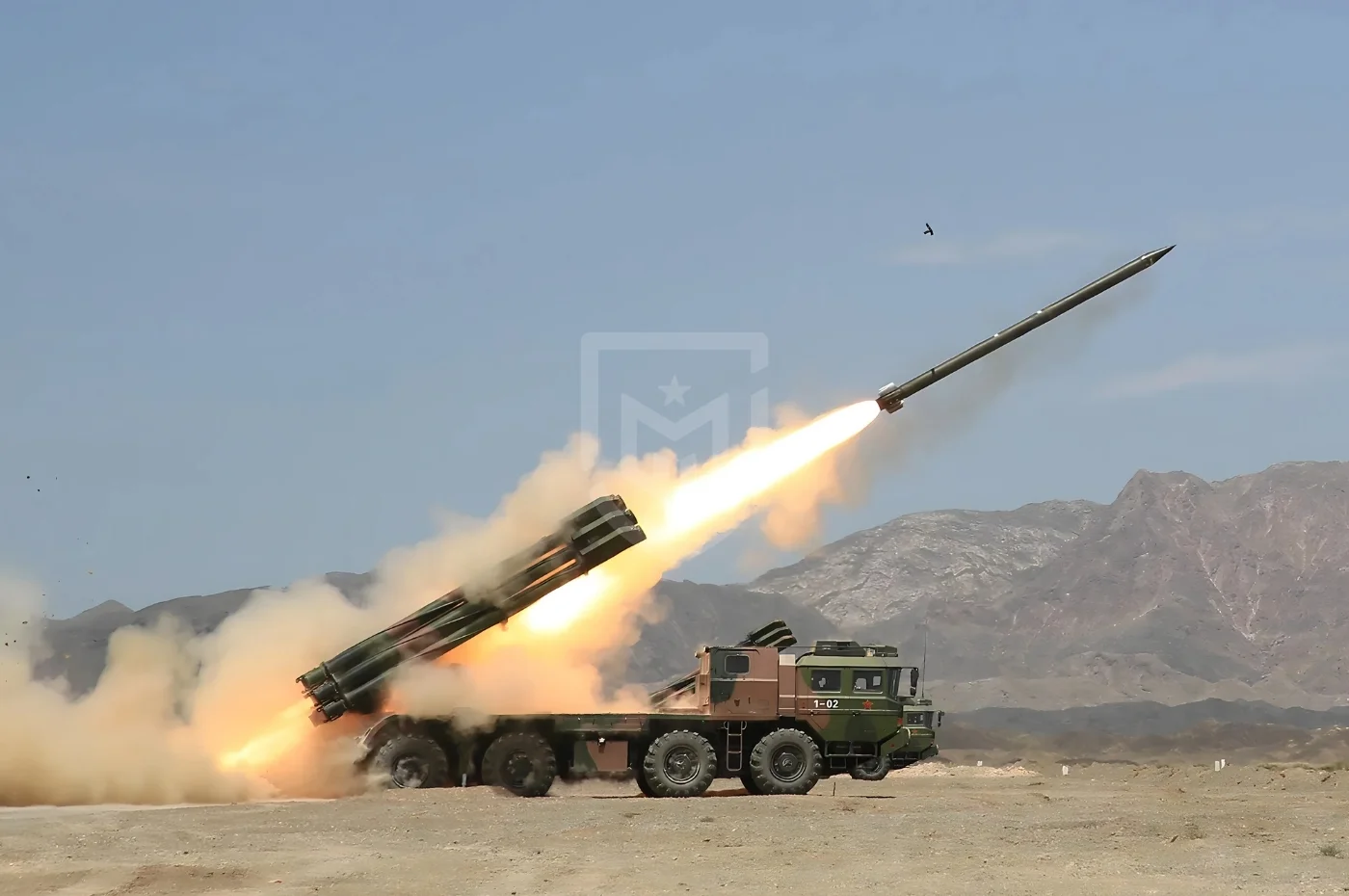
TR-300 Kasırga represents Türkiye’s evolution in 300 mm class multiple launch rocket systems (MLRS), bridging the operational gap between conventional artillery rockets and short-range tactical ballistic missiles. The system combines high-volume area fire capability with precision-guided strike functionality in its K+ variants.
Operational Purpose and Role
The primary mission of TR-300 is deep fire support against high-value targets located well behind enemy lines. Typical targets include:
- Long-range radar systems
- Surface-to-air missile (SAM) batteries
- Troop assembly areas
- Logistics depots and ammunition storage sites
- Command, control, and communication centers
With its guided configuration, the system enables precision engagement of coordinate-defined fixed targets, minimizing collateral damage while maintaining substantial lethality.
Doctrine and Concept of Use
TR-300 is deployed at brigade, division, or corps-level artillery formations. Its doctrinal roles include:
- Deep fires and operational-level interdiction
- SEAD/DEAD contribution (Suppression/Destruction of Enemy Air Defenses)
- Area denial and battlefield shaping
- Counter-battery fire
The system can operate within a network-enabled battlespace, receiving targeting data from UAVs, reconnaissance elements, and radar-based target acquisition systems.
System Architecture
The TR-300 ecosystem consists of:
- Rocket munitions (Block-II, Block-III, K+ guided variants)
- Mobile launcher platform
- Fire control and command-control infrastructure
In guided variants, the rocket incorporates:
- INS (Inertial Navigation System)
- GNSS-supported navigation
- Electromechanically actuated aerodynamic control surfaces
This architecture allows mid-course trajectory correction and significantly improves accuracy compared to unguided systems.
Survivability and Protection Concept
Survivability is based on:
- High tactical mobility (shoot-and-scoot capability)
- Short firing preparation time
- GNSS-jam-resistant navigation architecture
The system is designed to rapidly displace after firing to reduce vulnerability to counter-battery fire.
Accuracy and Engagement Process
For guided Block-II and Block-III variants:
- ≤ 10 m CEP accuracy
- 20–120 km range (variant dependent)
- ≥ 70 m lethal radius
Typical engagement sequence:
- Target coordinate acquisition
- Data upload to fire control system
- Ballistic computation and programming
- Launch
- Mid-course INS/GNSS correction
- Terminal impact
Advantages Against Modern Threats
Advantages:
- Long-range strike capability beyond conventional tube artillery
- High precision with low collateral damage potential
- Electronic counter-countermeasure resistance
- Flexibility: area saturation and precision strike within the same family
Limitations:
- Ballistic trajectory exposes rocket to potential interception
- Public sources do not indicate an active terminal seeker
- Flight time longer than tactical ballistic missile systems
Detailed Technical Specifications
Dimensions and Weight
Block-II
- Diameter: 300 mm
- Weight: 660 kg
Block-III
- Diameter: 300 mm
- Weight: 585 kg
Range
- Block-II: 20 – 90 km
- Block-III: 30 – 120 km
Guidance and Control
- INS (Inertial Navigation System)
- GNSS-supported guidance
- Electromechanical actuation system
- Jam-resistant navigation architecture
Propulsion
- Composite solid propellant
Warhead
Block-II
- 180 kg high-explosive fragmentation (steel ball) warhead
- ≥ 70 m lethal radius
Block-III
- 105 kg high-explosive fragmentation warhead
- ≥ 70 m lethal radius
Accuracy
- ≤ 10 m CEP (guided variants)
Command & Control Integration
- Compatible with modern artillery fire control systems
- Network-enabled targeting capability
- Integration with UAV and reconnaissance assets (concept-level public information)
Deployment and Mobility
- Mounted on tactical wheeled launcher vehicles
- Short setup and displacement time
Detailed personnel and logistical data are not publicly disclosed.
Frequently Asked Questions
What is TR-300 Kasırga used for?
- It is used for long-range deep-strike and area saturation missions. It provides operational-level firepower against high-value and time-sensitive targets.
What is the maximum range?
- Block-III reaches up to 120 km, while Block-II has a maximum range of 90 km.
Is TR-300 guided?
- Yes. It is available in both unguided and K+ guided configurations. Guided versions use INS with GNSS support.
What targets can it engage?
- It is effective against radar systems, air defense units, logistics hubs, troop concentrations, and command centers.
How accurate is it?
- Guided variants achieve ≤10 meters CEP, significantly improving precision compared to traditional MLRS rockets.
How does it compare to similar systems?
- In the 300 mm MLRS class, TR-300 stands out with its 120 km range and ≤10 m CEP combination, positioning it competitively in the long-range precision rocket segment.
Sources
- ROKETSAN official product brochures and publications
- Public defense industry exhibition releases
- Open-source technical documentation