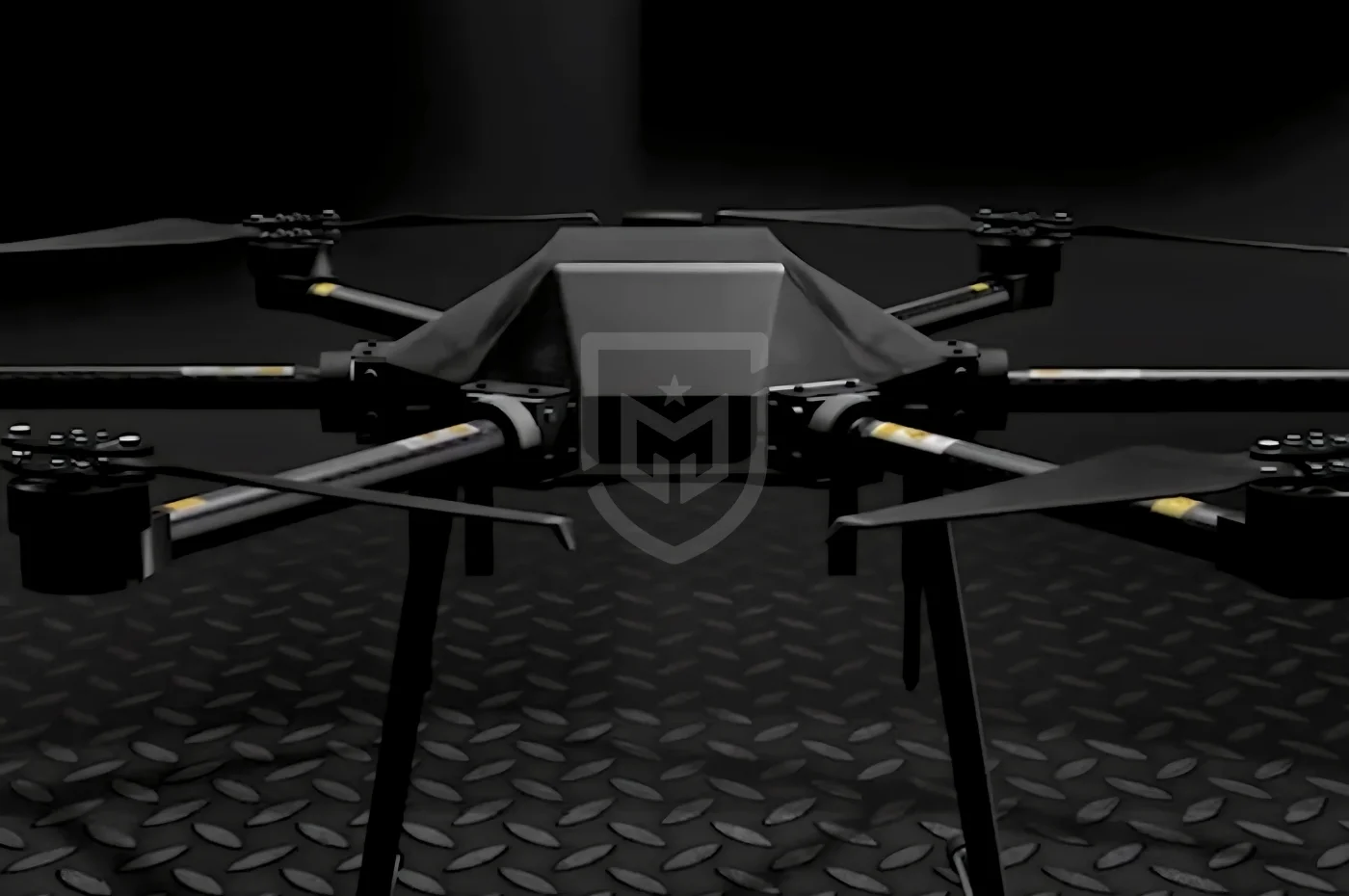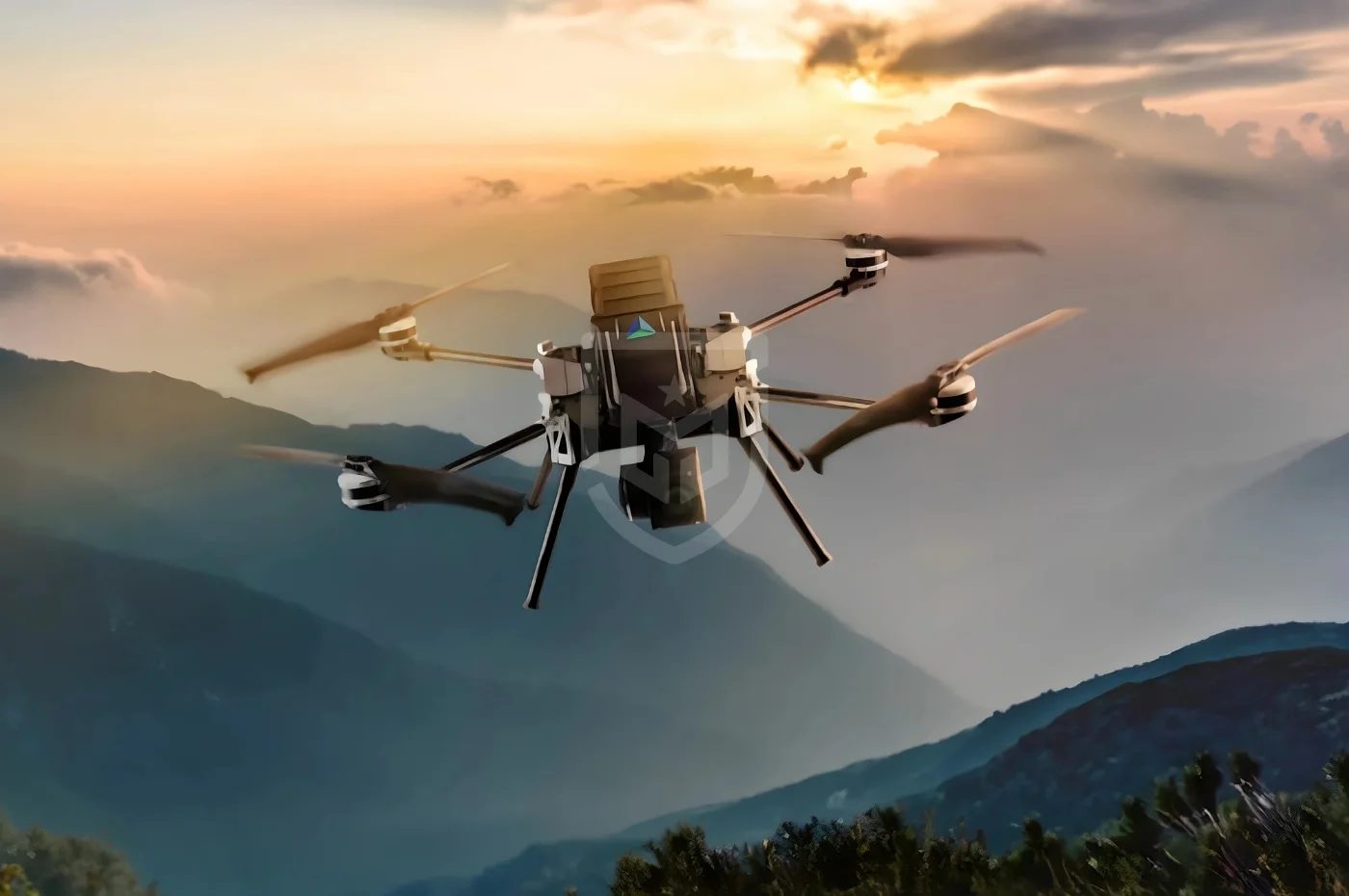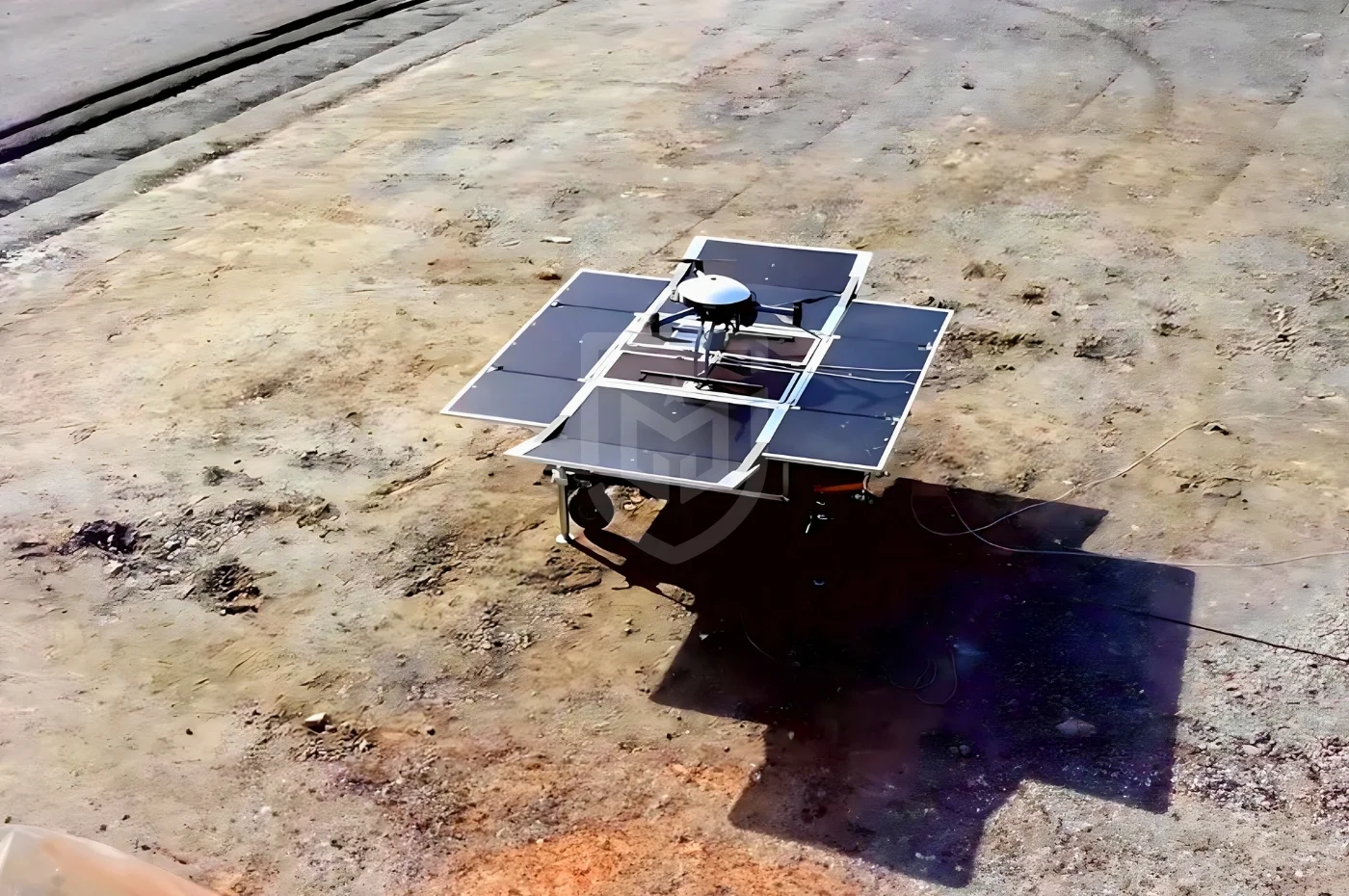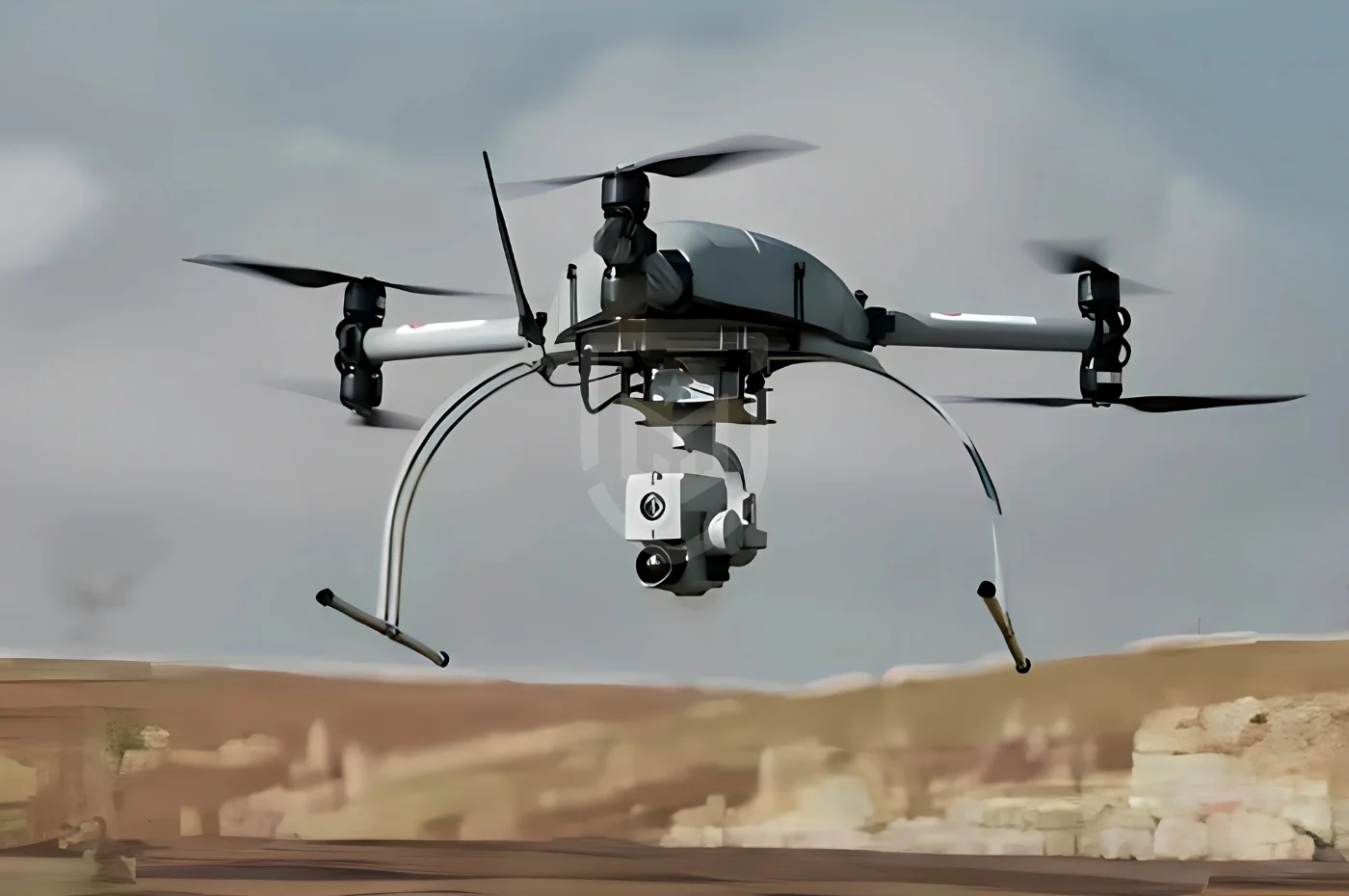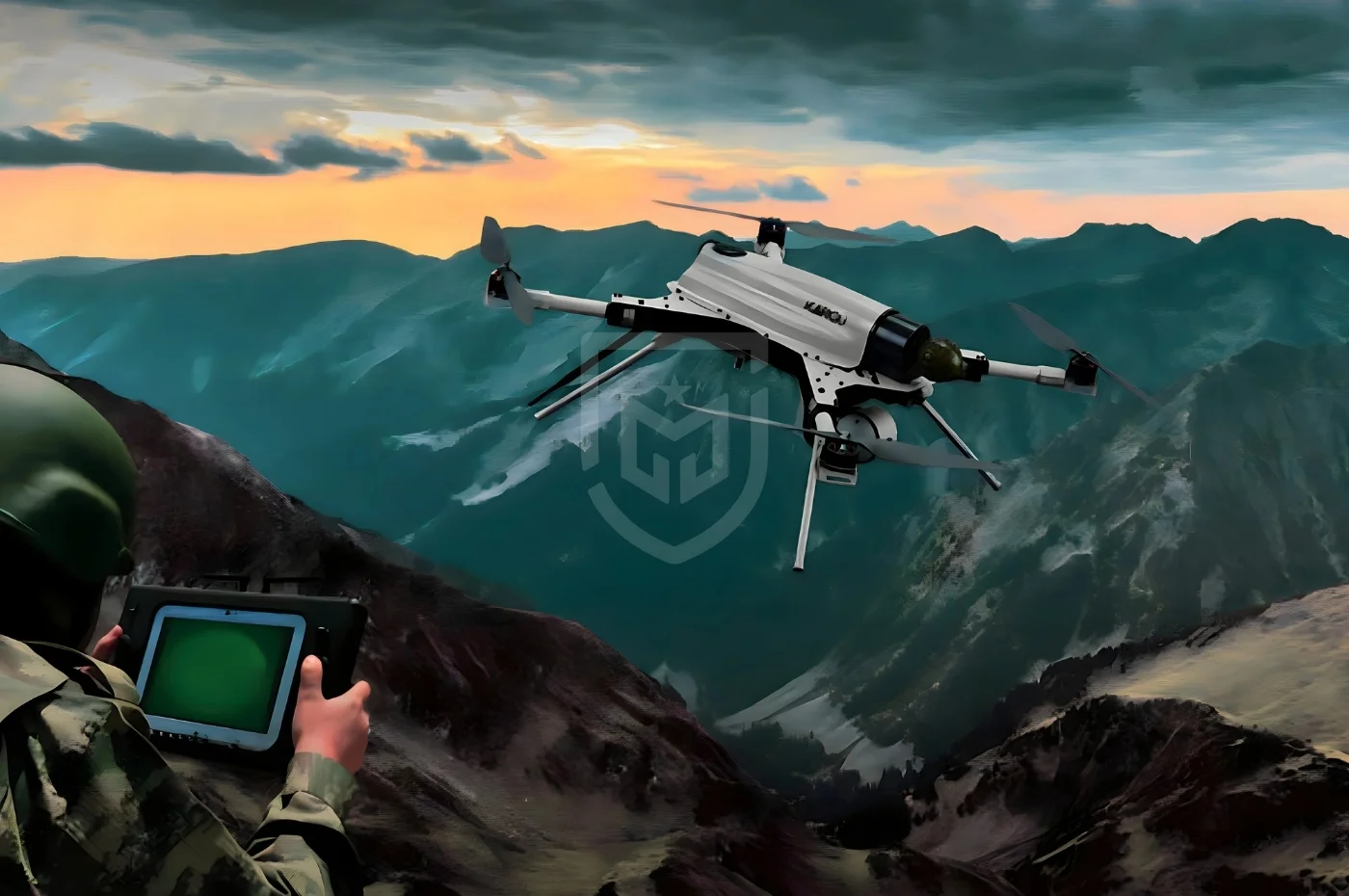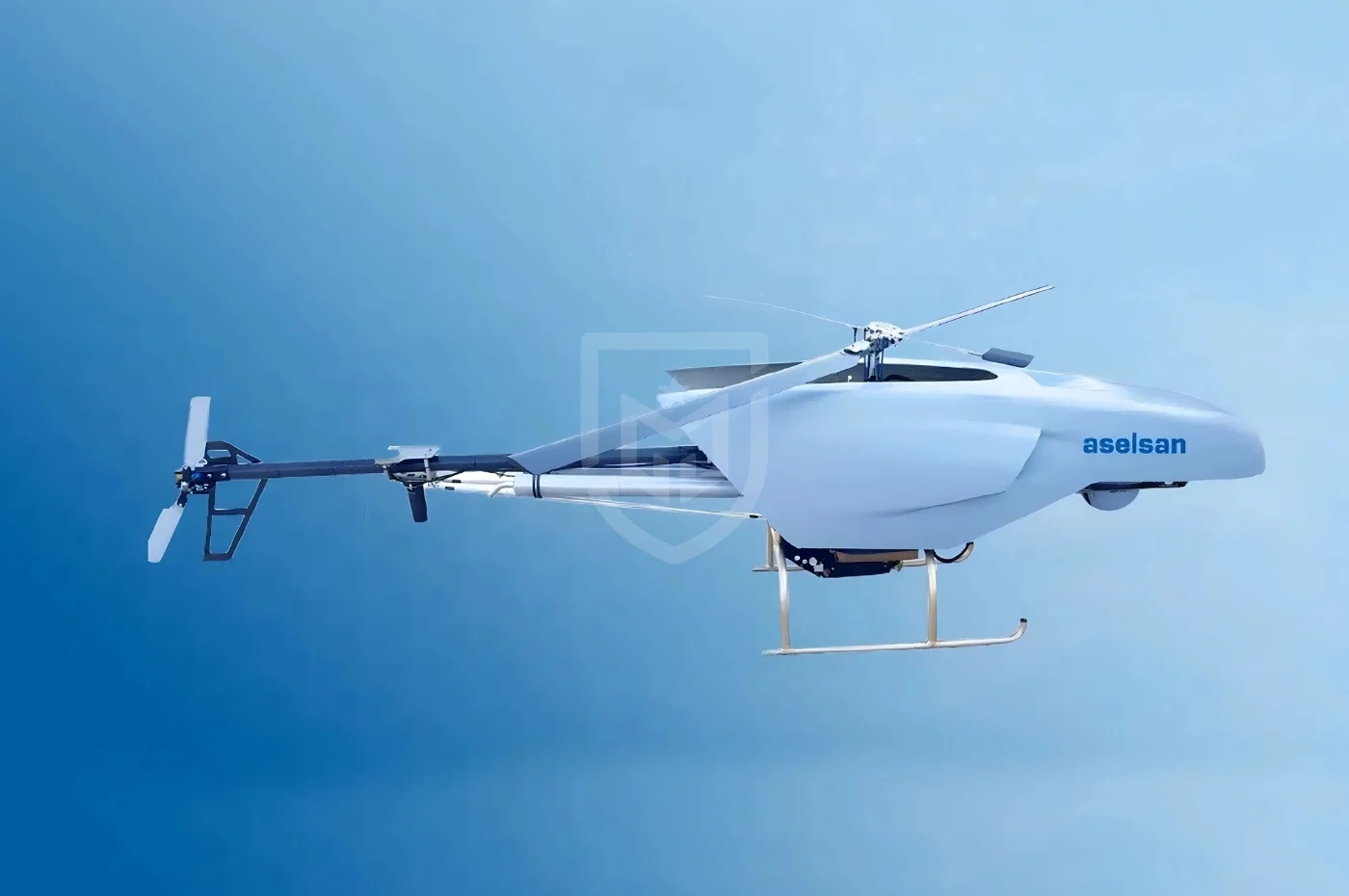
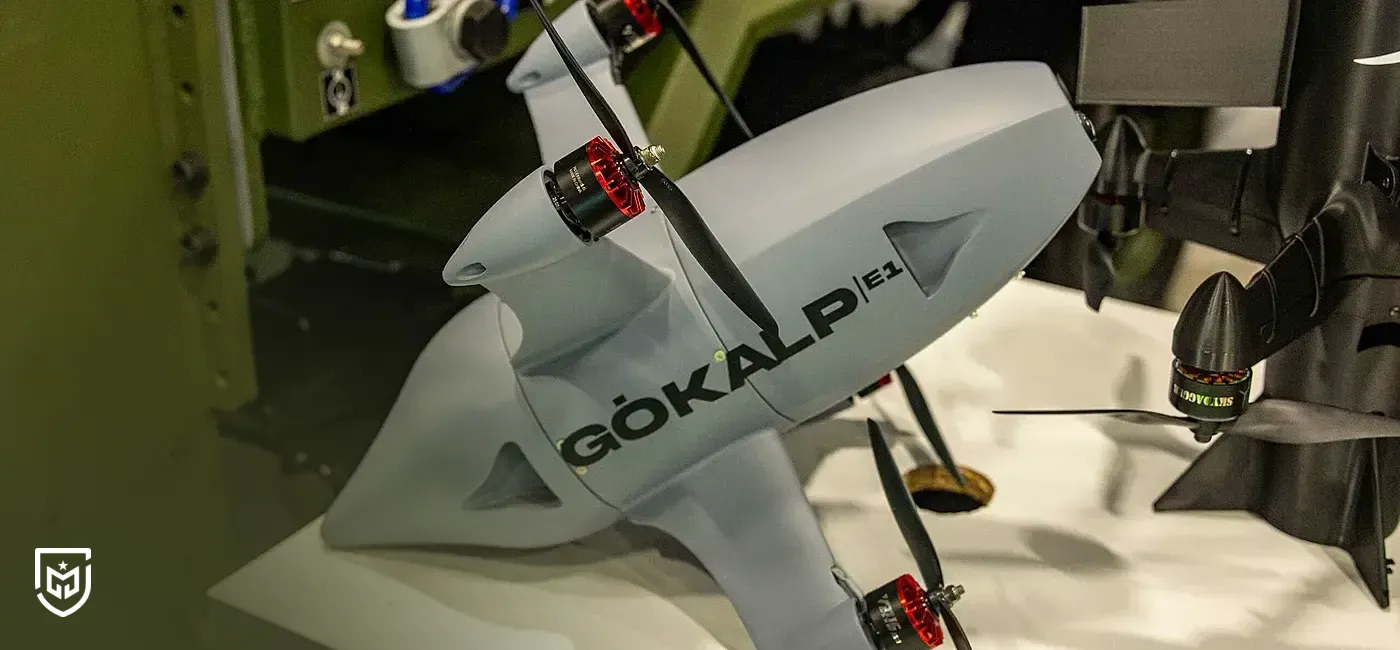
The Multi-Purpose Multicopter Project focuses on low-altitude, high-precision, and high-stability aerial operations. Unlike fixed-wing UAVs, these rotary-wing platforms offer vertical take-off and landing (VTOL), hover capability, and superior maneuverability in confined environments.
Operational Purpose and Role
The multicopter family is intended for:
- Tactical and sub-tactical intelligence, surveillance, and reconnaissance (ISR),
- Electro-optical based real-time aerial observation,
- Civilian missions such as mapping, inspection, media production, and infrastructure monitoring.
Doctrine and Concept of Operations
These systems are typically deployed in:
- Short-range, ground-control-station-centric missions,
- Rapid reaction scenarios with minimal setup time,
- Single-platform, single-mission tasking concepts.
In military doctrine, such multicopters are commonly used for:
- Base and perimeter surveillance,
- Area and convoy overwatch,
- Persistent EO-supported observation at low altitude.
Platform Architecture
Geomatics multicopters feature:
- Multiple motor configurations ranging from 2 to 16 motors,
- Modular airframe and arm design,
- Interchangeable gimbal-based payload integration.
Flight control relies on sensor fusion from inertial, positioning, and environmental sensors processed by the onboard flight computer.
Survivability and Protection
These platforms are not classified as hardened or armored military UAVs. Survivability is achieved through:
- Redundant multi-motor configurations enabling controlled landing after partial motor failure,
- Advanced stabilization and auto-balance algorithms.
Electronic warfare resistance, anti-jamming, or low-observability features are not disclosed in open sources.
Precision, Reaction Time, and Coverage
- High positional accuracy due to multicopter architecture,
- Stable hover with vibration-reduced imaging,
- Support for gimbal-mounted EO cameras with up to 30x optical zoom (payload dependent).
Flight endurance, operational radius, and maximum altitude vary by configuration and are not publicly disclosed with verified figures.
Variants and Configurations
Confirmed multicopter configurations include:
- T Copter – 2 motors
- Y Copter – 3 motors
- Quad Copter – 4 or 8 motors
- Hexa Copter – 6 motors
- Octo Copter – 8 motors
- Dedoca Copter – 12 motors
- Coaxial Copter – 16 motors
This range enables scalability in payload capacity, redundancy, and mission endurance.
Operational Use and Inventory
There is no publicly confirmed military inventory data regarding active service users. Civilian deployment and training activities are verifiable.
Detailed Technical Information
Dimensions and Weight
- Varies by model
- Exact figures are not publicly disclosed
Power System
- Rechargeable Lithium Polymer (Li-Po) batteries
- Reference to 220V-powered continuous operation applies to ground-based operation, not verified airborne endurance
- Claims of 8-hour flight endurance cannot be independently confirmed
Performance
- Hover capability: Yes
- Range, ceiling, and endurance: Not publicly available
Sensors and Avionics
- Gyroscope
- Accelerometer
- Magnetometer
- GNSS (GPS)
- Ultrasonic sensors
- Barometric pressure sensor
Target Detection and Tracking
- EO-based imaging via stabilized gimbal
- Automated target tracking capability: Not publicly disclosed
Payload and Gimbal
- Modular gimbal architecture
- EO camera integration
- Support for high optical zoom payloads
Command and Control
- Ground Control Station (manual / semi-autonomous operation)
- Data link type and range: Not publicly disclosed
Deployment and Mobility
- Rapid setup from vehicle-mounted or portable configurations
- Optimized for quick mission readiness
Personnel and Training
- Minimum single-operator concept
- SHGM-approved UAV-0 and UAV-1 training programs available
Frequently Asked Questions
What is this multicopter system used for?
- It is designed for low-altitude ISR, surveillance, imaging, and technical inspection missions requiring precision hover and stable payload operation.
Is it suitable for military use?
- Yes, architecturally it is suitable for military missions, but weaponization or battlefield hardening features are not publicly documented.
Is the flight endurance really 8 hours?
- The 8-hour figure refers to ground-powered operation via external electricity. Battery-powered flight endurance of this duration is not publicly verified.
Which payloads can be integrated?
- Gimbal-compatible EO cameras and zoom-capable imaging systems.
Is it mobile or fixed?
- Fully mobile, deployable from vehicles or portable ground control setups.
What are comparable systems?
- Industrial multicopters from DJI and tactical rotary UAVs from the US and Israel. Geomatics systems stand out with local development and wide configuration diversity.
Sources
- Publicly available Geomatics promotional materials
- Turkish SHGM UAV classification and training regulations
- Open-source technical literature on rotary-wing UAV systems