Operational Purpose and Role
KORKUT is designed to provide short-range air defense (SHORAD) for mobile land forces. Modern battlefields are saturated with low-altitude threats such as:
- Tactical and mini/micro UAVs
- Attack helicopters
- Low-flying aircraft
- Cruise missiles
- Air-to-ground guided munitions
Within a layered air defense architecture, KORKUT operates in the lower tier, serving as a last-line or close-in defense solution for maneuvering armored formations.
Its tracked and amphibious platform enables it to move alongside mechanized units, ensuring continuous air defense coverage during offensive and defensive operations.
Doctrine and Concept of Operations
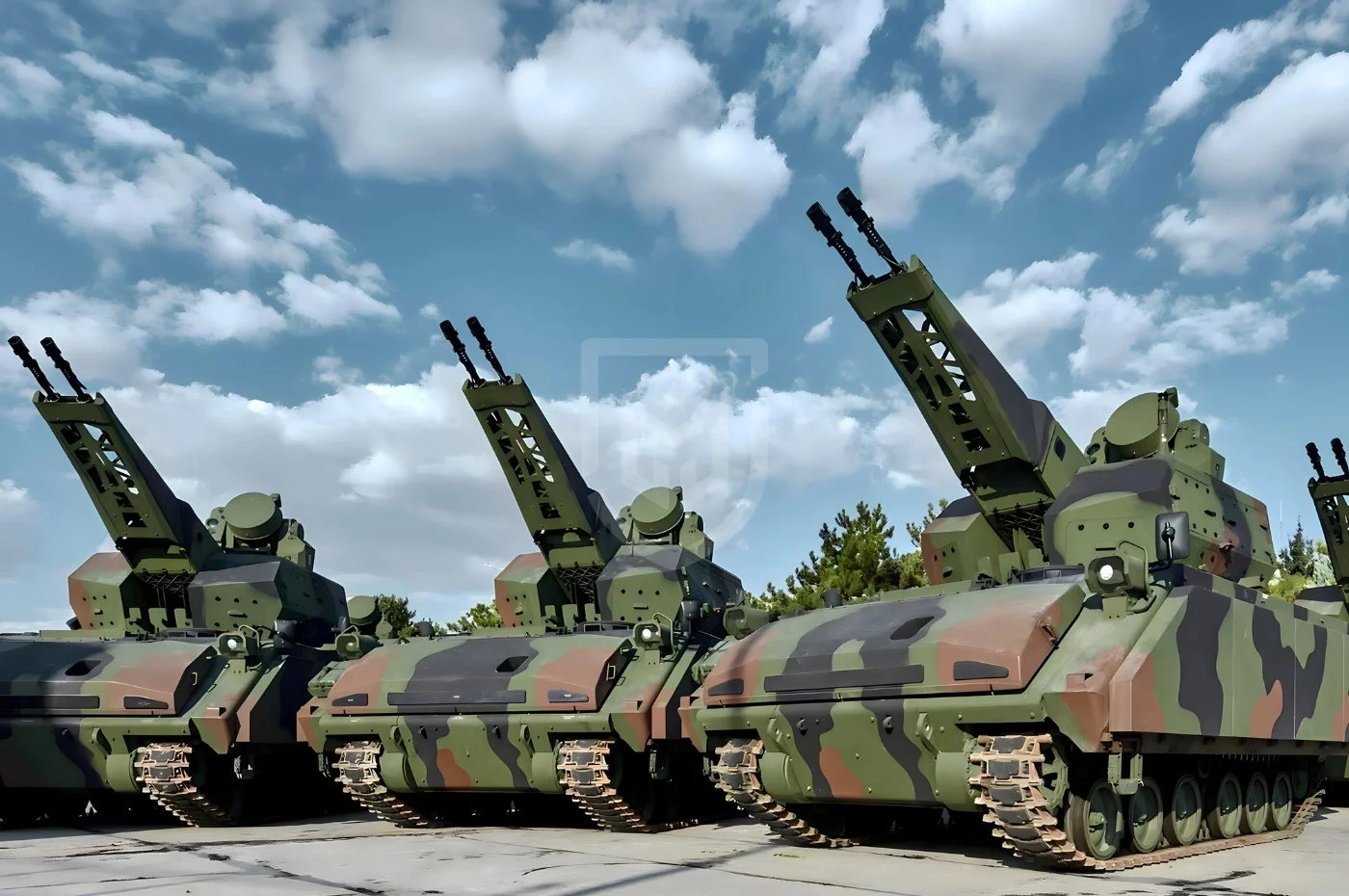
A standard KORKUT battery consists of:
- 3 × Weapon System Vehicles (SSA)
- 1 × Command and Control Vehicle (KKA)
The Command and Control Vehicle is equipped with a 3D search radar responsible for airspace surveillance, target detection, and threat evaluation. Target data is distributed digitally to the weapon vehicles.
Each SSA is equipped with:
- Fire control radar
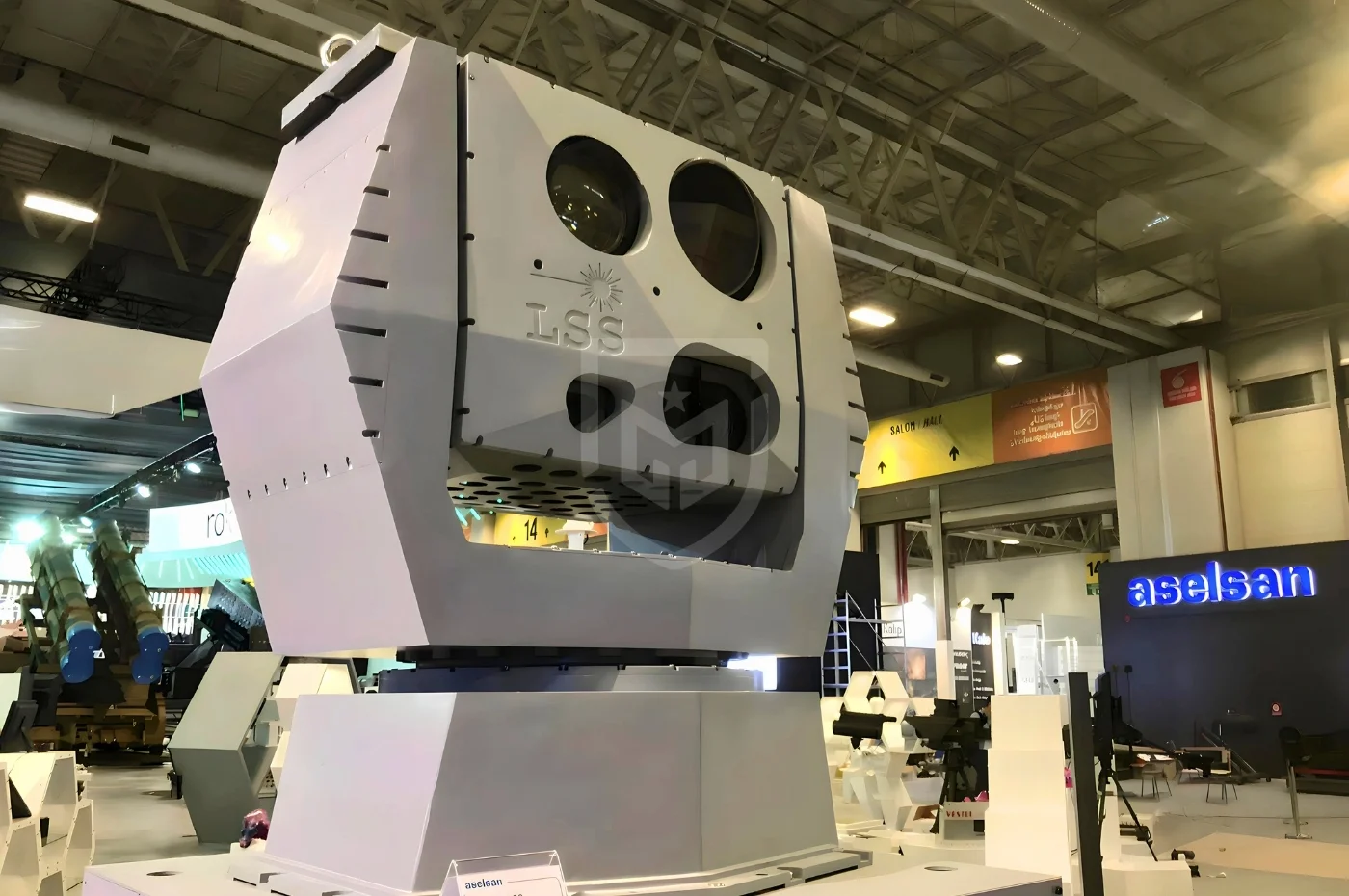
- Electro-optical sensor suite
- Twin 35 mm cannons
This distributed sensor-effector architecture provides:
- Survivability through dispersion
- Reduced single-point vulnerability
- Network-centric engagement capability
Platform Architecture
KORKUT is integrated on an amphibious tracked armored chassis developed by FNSS.
Core subsystems include:
- Twin 35 mm KDC-02 automatic cannons
- Fire control radar
- Electro-optical sensors (day camera, thermal imager, laser rangefinder)
- Automatic Linkless Ammunition Feeding Mechanism
- Digital command and control network
- 3D search radar (on CCV)
Survivability and Protection Concept
- Armored tracked platform
- Distributed battery structure
- On-the-move firing capability
- Short reaction time
- Electronic counter-countermeasure (ECCM) capabilities (technical details not publicly disclosed)
These characteristics enhance both kinetic and electronic survivability in contested environments.
Engagement Process
- 3D radar detects and tracks aerial targets
- Threat classification and prioritization
- Target assignment to weapon vehicles
- Precision tracking via fire control radar and EO sensors
- Programming of airburst ammunition at muzzle exit
- Proximity airburst near target
The programmable airburst round releases a dense cloud of tungsten sub-projectiles, significantly increasing lethality against small UAVs and fast-moving aerial threats.
Advantages Against Modern Threats
- High rate of fire against drone swarms
- Lower cost per engagement compared to missile systems
- Effective airburst capability
- Full mobility with armored units
- Reduced dependency on expensive interceptor missiles
Limitations
- Shorter engagement range compared to missile-based SHORAD systems
- Limited effectiveness against high-altitude targets
- Not designed for ballistic missile defense
Operational Status
KORKUT has entered service with the Turkish Land Forces. Serial production and deliveries have been publicly confirmed. Detailed export data remains limited in open sources.
Detailed Technical Specifications
Armament
- 2 × 35 mm KDC-02 automatic cannons
- Combined rate of fire: approx. 1100 rounds/minute
- Automatic linkless ammunition feed system
Ammunition
- 35 mm programmable airburst (fragmentation) rounds
- Conventional high-explosive rounds
- Programmable at muzzle exit
Effective Range
- Approx. 4 km effective engagement range
- Engagement altitude: approx. 3–4 km band (open-source data)
Sensors
- Fire control radar
- Electro-optical tracking system
- 3D search radar (battery level)
Radar frequency band and detailed detection parameters are not publicly disclosed.
Target Tracking
Capable of tracking and prioritizing multiple targets simultaneously. Exact tracking capacity is not publicly disclosed.
Command and Control
- Network-enabled architecture
- Digital data link between vehicles
- Integration into higher-level air defense command structures
Mobility
- Tracked, amphibious platform
- Compatible with mechanized formation speeds
- Engine and powerpack details not fully disclosed publicly
Crew
- Crew configuration details are limited in open sources.
Frequently Asked Questions
What is KORKUT used for?
- KORKUT provides mobile low-altitude air defense for mechanized and armored land forces, protecting them from UAVs, helicopters, cruise missiles, and guided munitions.
What is its engagement range?
- Its effective engagement range is approximately 4 km, depending on ammunition type and engagement conditions.
Can it fire while moving?
- Yes. The stabilized turret allows accurate firing while the vehicle is in motion.
Is it effective against drone swarms?
- Yes. Its high rate of fire combined with programmable airburst ammunition makes it particularly effective against UAV swarm threats.
How does it differ from missile-based systems?
- Gun-based systems offer significantly lower cost per shot and high-volume fire capability, but they have shorter range compared to missile systems.
Does it operate independently?
- KORKUT can operate autonomously but is optimized for battery-level networked operations with centralized radar support.
Sources
- ASELSAN official product documentation
- ASELSAN annual reports
- Turkish Presidency of Defense Industries (SSB) public releases
- Turkish Land Forces inventory disclosures