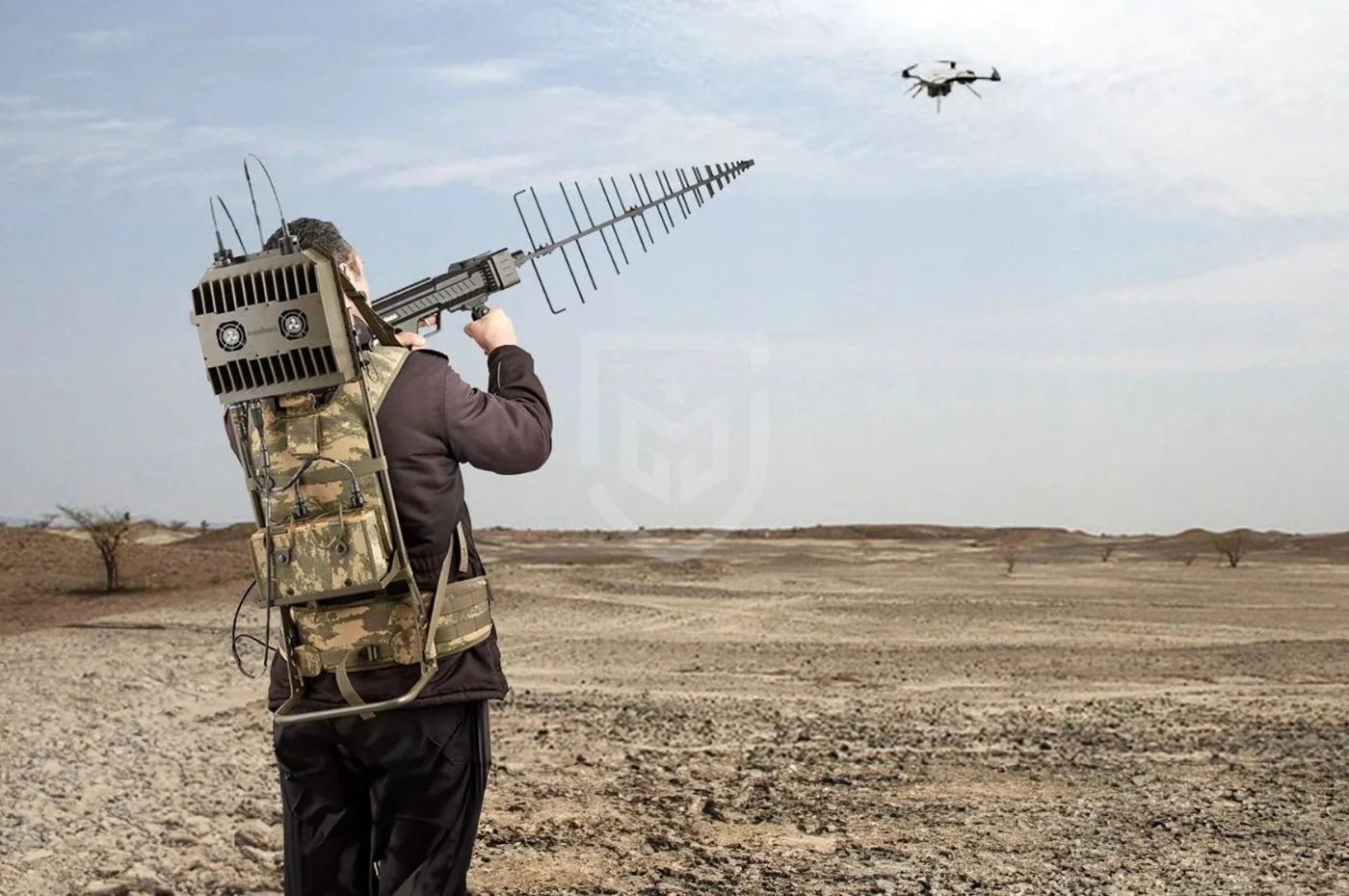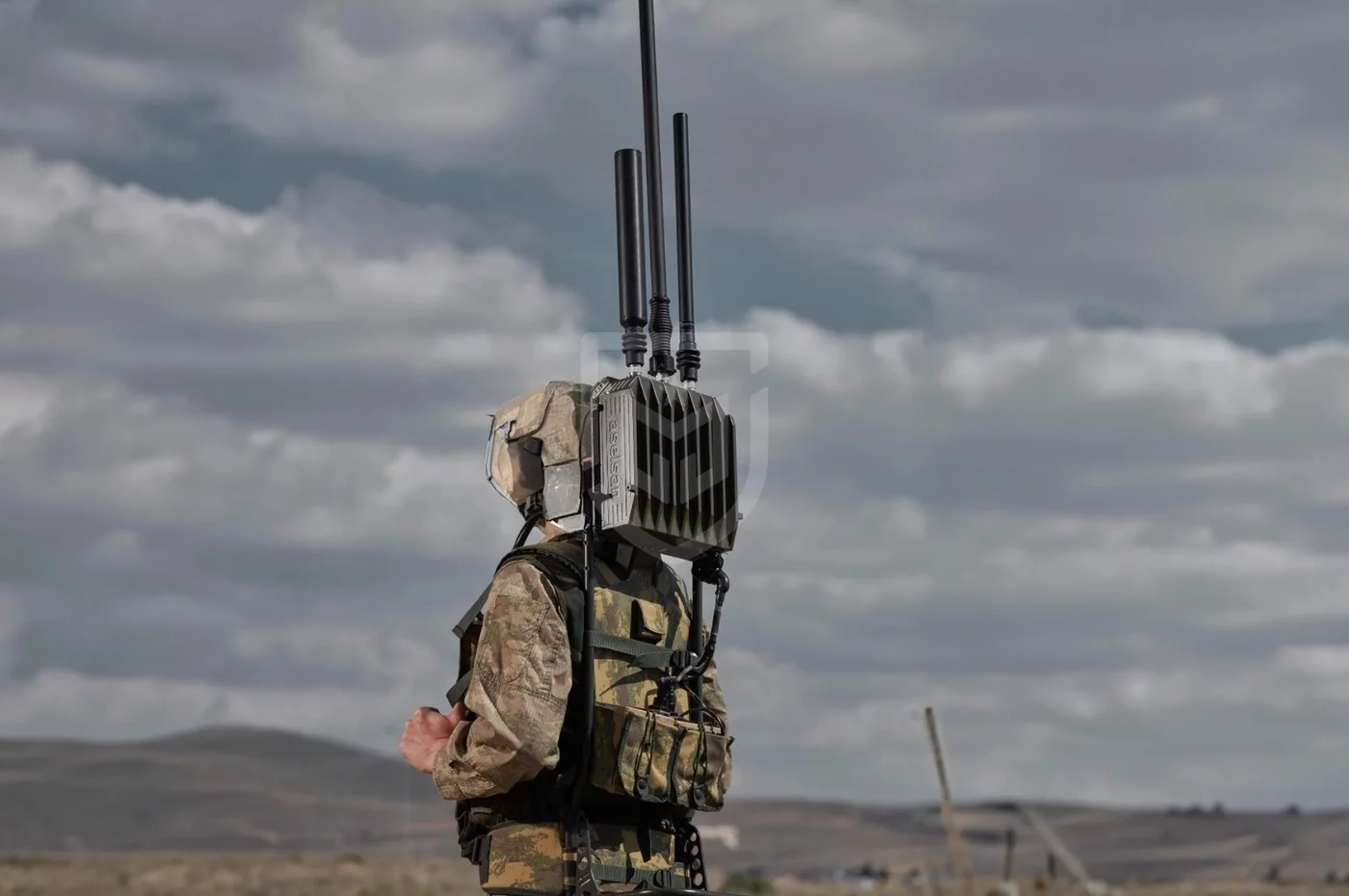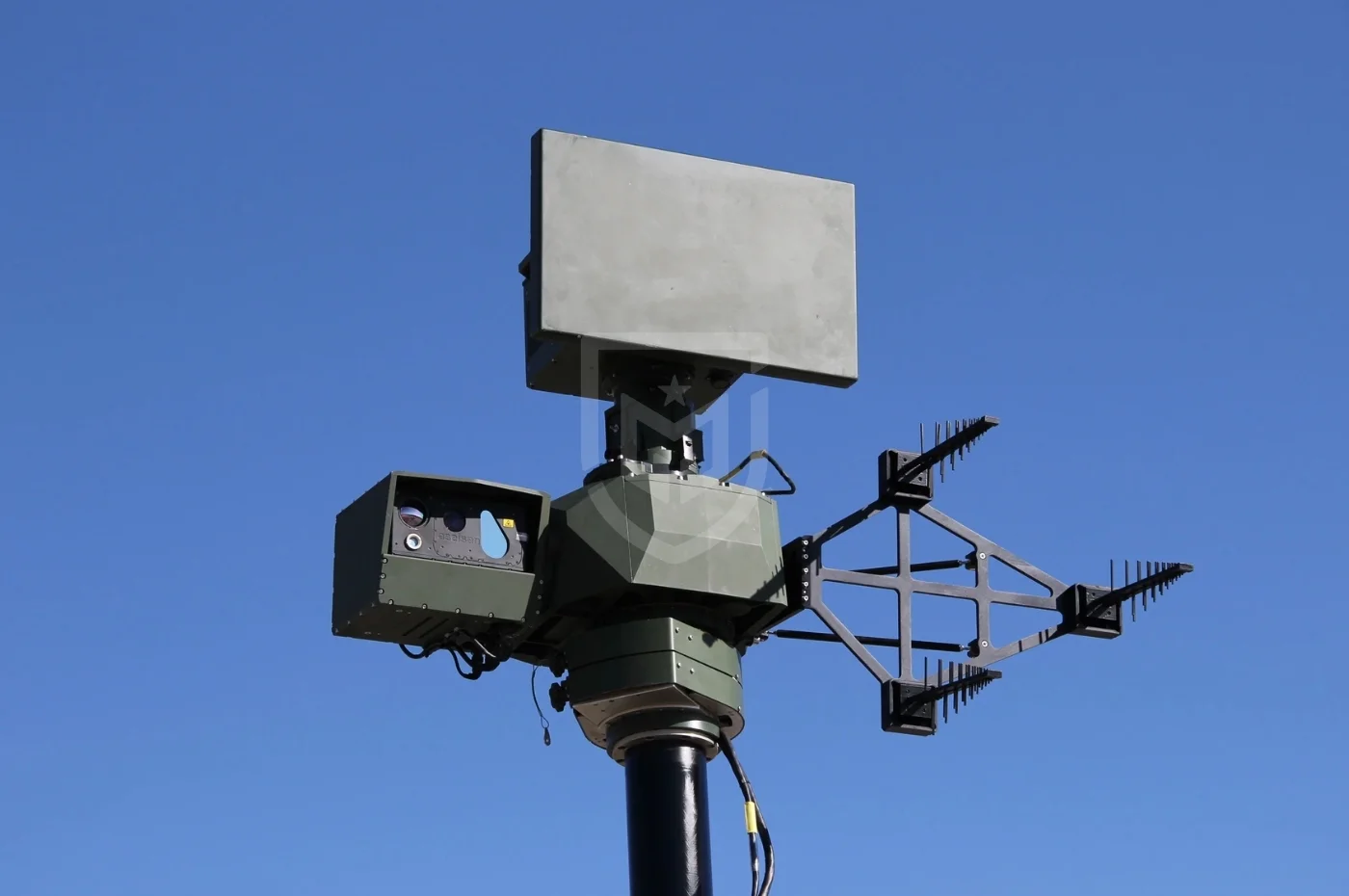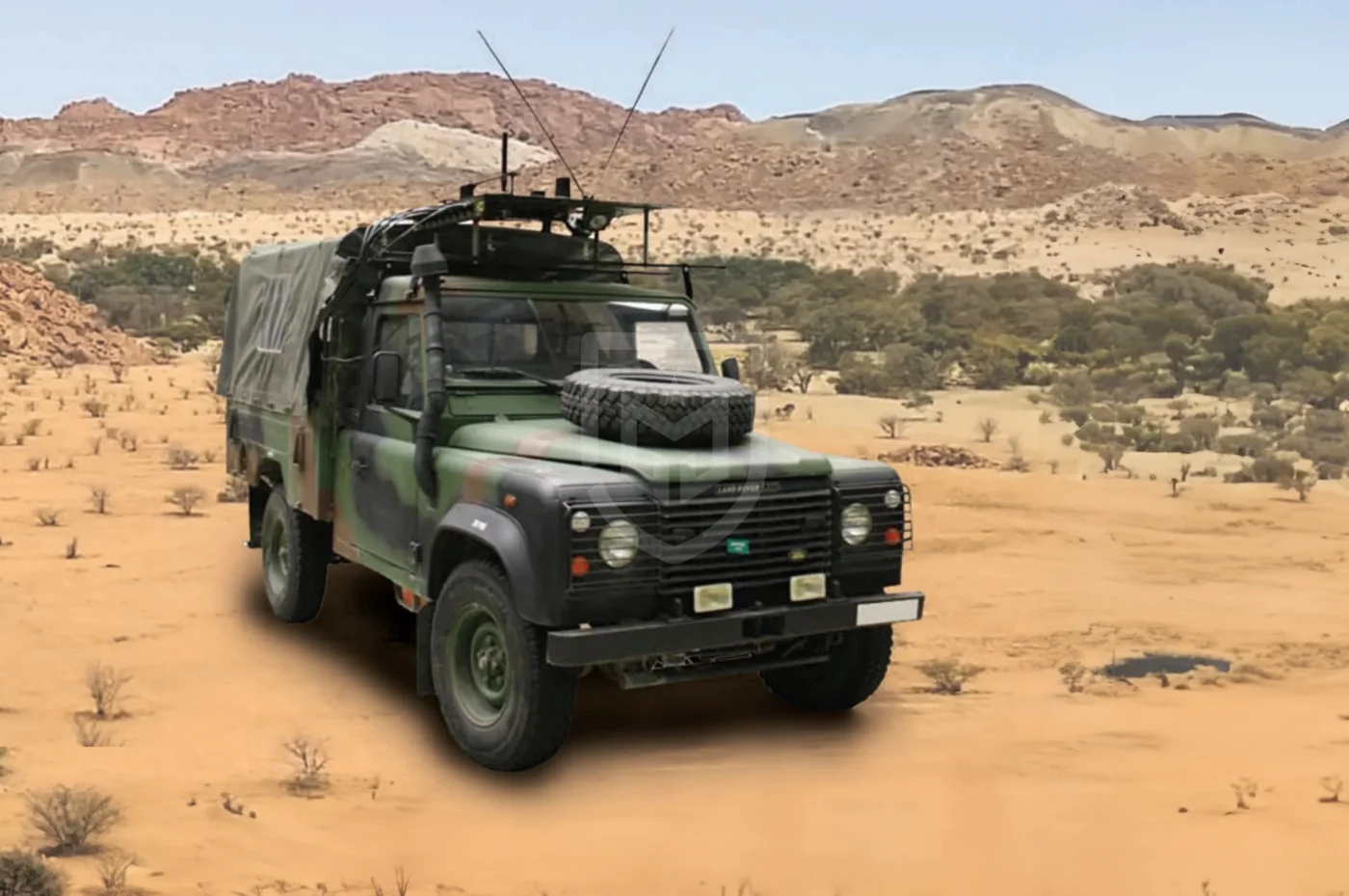

IHASAVAR™ was developed in response to the rapidly increasing threat posed by commercial and tactical mini-UAVs in asymmetric warfare and homeland security environments. Unlike kinetic counter-drone systems, IHASAVAR™ employs non-kinetic electronic attack methods, aiming to deny control and navigation capability rather than physically destroying the target.
Operational Purpose and Role
The system is designed to:
- Prevent unauthorized reconnaissance over sensitive facilities
- Neutralize explosive-laden mini-UAV threats
- Support VIP and convoy protection missions
- Secure temporary high-profile events
- Provide rapid tactical response against low-altitude drone incursions
IHASAVAR™ forces the target UAV to lose control, trigger return-to-home mode, hover, or execute forced landing depending on the drone’s internal fail-safe logic.
Doctrine and Concept of Use
IHASAVAR™ is categorized as a portable tactical counter-UAS electronic attack system. It is typically deployed as part of a layered air defense or C-UAS architecture.
Operational workflow:
- Detection (via radar, EO/IR system, or visual spotting)
- Target acquisition by operator
- Selection of appropriate jamming profile
- Directed RF suppression
- Neutralization through signal denial
The system can operate independently or as a component of integrated ASELSAN counter-drone ecosystems.
System Architecture
IHASAVAR™ consists of:
- Multi-band RF jamming module
- DDS-based FPGA-controlled sweep jammer
- High-gain directional antenna system
- Li-Ion battery power unit
- Handheld control unit
- Built-in Test (BIT) capability
The Direct Digital Synthesis (DDS) and FPGA architecture enables programmable frequency sweeping and adaptive interference across wide spectrum bands.
Jamming Mechanism
The system targets:
- Remote control command links
- GPS / GLONASS navigation signals
- Telemetry and video data transmission channels
Its capability to jam multiple frequency bands simultaneously makes it effective against modern commercial drones using frequency-hopping techniques.
Survivability and Safety
- MIL-STD-810 compliant (rain, humidity, dust, vibration, shock)
- Designed for operation between -30°C and +50°C
- ICNIRP-compliant SAR levels for operator safety
The system is ruggedized for field deployment in harsh environmental conditions.
Advantages Against Modern Threats
Strengths:
- Non-kinetic neutralization
- Minimal collateral damage risk
- Rapid deployment capability
- Programmable multi-profile jamming
- Wide frequency coverage
Limitations:
- Limited effectiveness against fully autonomous UAVs without RF dependency
- Ineffective against fiber-optic tethered drones
- Effective range depends on environmental conditions and target transmission power (exact operational range is not publicly disclosed)
Variants and Integration
Publicly available information primarily describes the baseline portable configuration. Detailed block upgrades or variant specifications are not publicly disclosed.
IHASAVAR™ is designed to be integrated within broader ASELSAN counter-UAS architectures and can complement radar and electro-optical detection systems.
Detailed Technical Specifications
Frequency Bands
- 400 – 3000 MHz
- 5700 – 5900 MHz
These bands cover common commercial drone control and data links.
RF Output Power
Combined with directional antenna gain, this enhances effective jamming distance.
Jamming Type
- DDS-based
- FPGA-controlled sweep jamming
Enables:
- Wideband frequency sweeping
- Resistance against frequency-hopping systems
- Programmable tactical profiles
Antenna System
- High-gain directional antennas
- Multi-band architecture
- Built-in VSWR protection
Directional energy concentration improves effectiveness against targeted UAVs.
Power System
- Li-Ion battery powered
- Minimum 1.5 hours continuous transmission
Battery replacement logistics are not publicly detailed.
Environmental Resistance
- Operating temperature: -30°C to +50°C
- Storage temperature: -40°C to +60°C
- MIL-STD-810 compliant
Programmability
- 100+ configurable jamming profiles
- Scenario-based configuration
- Handheld control and monitoring unit
Electronic Protection and Safety
- ICNIRP SAR compliant
- Built-in Test (BIT) capability
- Internal VSWR protection
Frequently Asked Questions
What does IHASAVAR™ do?
- It electronically neutralizes drones by disrupting control, navigation, and data links without physically destroying the platform.
What is its operational range?
- The exact effective range is not publicly disclosed. Performance depends on antenna gain, environmental conditions, and the UAV’s transmission power.
What types of drones can it counter?
- It is effective against RF-controlled commercial and tactical mini-UAVs. Effectiveness against fully autonomous RF-independent platforms may be limited.
Can it jam multiple frequency bands simultaneously?
- Yes. It supports multi-band jamming and wideband coverage within its specified frequency ranges.
Is it mobile or fixed?
- It is a handheld, rifle-type portable system designed for mobile tactical use.
Is it safe for operators?
- Yes. It complies with ICNIRP SAR standards and is designed with operator safety in mind.
How does it compare to similar systems?
- Comparable systems include portable drone jamming rifles developed internationally. IHASAVAR™ differentiates itself through programmable multi-band architecture and FPGA-based sweep jamming capability.
Sources
- ASELSAN official product publications
- ASELSAN promotional and technical brochures
- Public defense industry documentation
- Open-source technical specifications